 Hoffman Soft Water
Quick Summary: A boiler makeup softener drops hardness to near zero for cheap scale control on mid-pressure boilers below roughly 900 psi, but it leaves silica, chlorides, and sodium behind, so blowdown stays high. Reverse osmosis strips 99 percent of dissolved solids, which slashes blowdown and handles high-pressure or high-purity steam systems, though it costs more and needs skilled operators. The sweet spot for many Ohio plants running hard groundwater (15 to 25 gpg) is a softener ahead of RO in series, getting the cost savings of ion exchange with the near-total solids removal of membranes.
Run a mid-pressure steam boiler on Ohio's 15-25 gpg groundwater, and a boiler makeup softener usually wins on cost and simplicity. Push higher chloride, silica, or alkalinity through the system, and reverse osmosis earns its keep. This guide compares a boiler makeup softener against RO on hardness, dissolved solids, blowdown, operating cost, and footprint, drawing on treatment work across Ohio's hardest-water plants. Often, the best answer is both, stacked in series.
Boiler Makeup Softener vs Reverse Osmosis at a Glance
| Boiler makeup softener | Reverse osmosis for boiler makeup | |
|---|---|---|
| Primary job | Remove hardness (Ca, Mg) from makeup water | Strip dissolved ions, silica, and organics |
| Hardness removal | Drives hardness to near zero (<1 gpg) | 99+ percent of hardness and total ions |
| Dissolved solids removal | Limited - chlorides, silica, sodium pass through | Removes 99+ percent of dissolved solids |
| Best boiler pressure | Low to mid pressure (up to ~900 psi) | Mid to high pressure or high-purity steam |
| Operating cost drivers | Salt, regeneration water, brine discharge | Membrane replacement, energy, reject water |
| Best fit | Mid-pressure boilers on hard well or city water | High-pressure boilers, strict water chemistry, water reuse |
How Boiler makeup softener and Reverse osmosis for boiler makeup Compare
Boiler makeup softener
An ion-exchange system that swaps calcium and magnesium for sodium, driving hardness to near zero before water reaches the tubes. It suits mid-pressure boilers, especially those fed by hard well or city water. Operating costs center on salt, regeneration water, and brine discharge.
Key strengths
- Hardness to near zero (<1 gpg)
- Fits low to mid pressure boilers (up to ~900 psi)
- Simple, proven operation
Reverse osmosis for boiler makeup
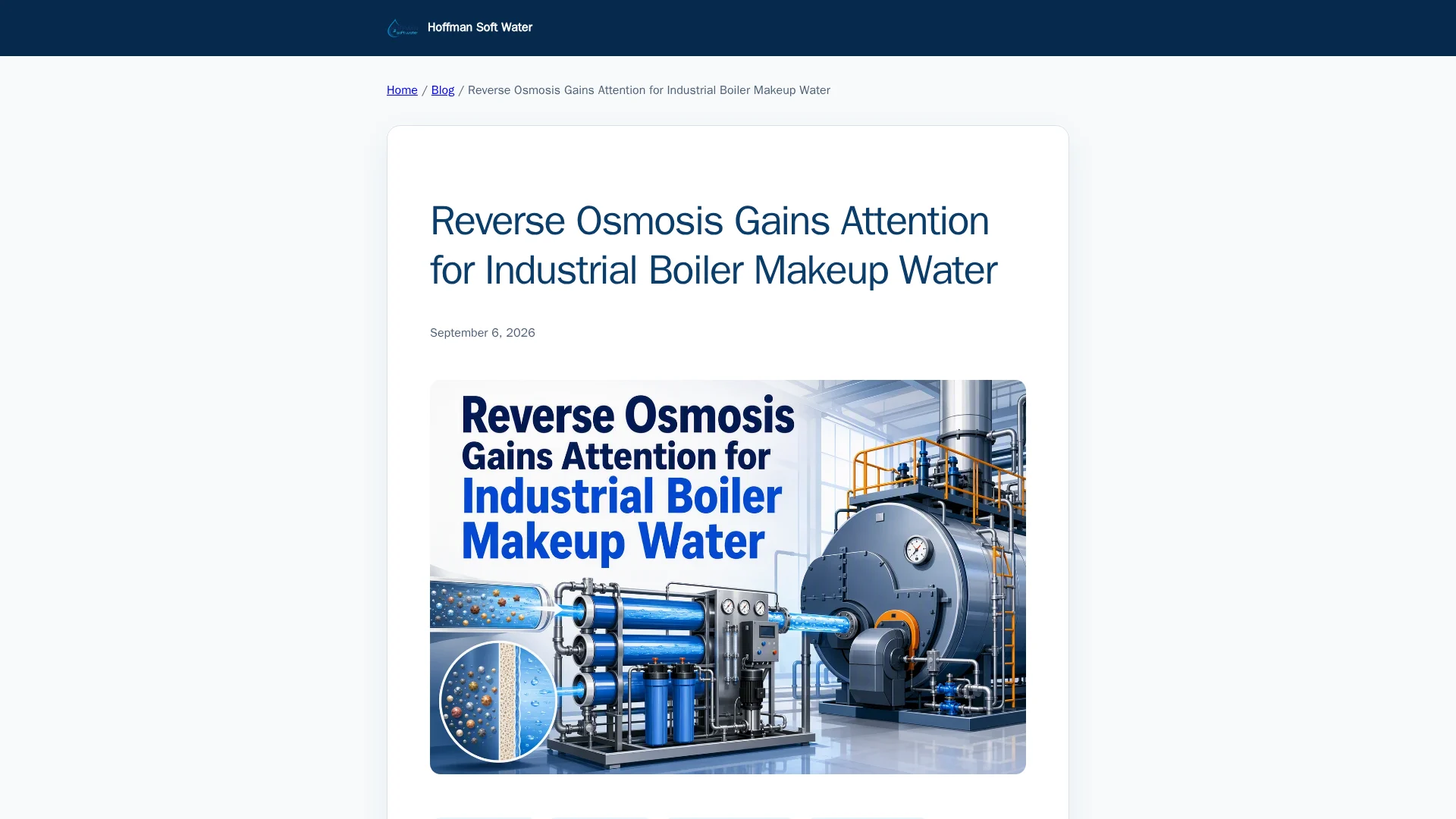
A membrane system that strips 99+ percent of dissolved ions, silica, and organics from makeup water. It targets high-pressure boilers and operations needing strict water chemistry or reuse. Ongoing costs come from membrane replacement, energy, and reject water.
Key strengths
- Removes 99+ percent of dissolved solids
- Built for mid to high pressure steam
- Cuts blowdown and carryover-related corrosion
How Each Technology Stops Scale on Boiler Tubes
What a softener catches - and what it leaves behind
A boiler makeup softener uses ion exchange resin to swap calcium and magnesium for sodium. With hardness driven to near zero (<1 gpg), calcium carbonate scale can't form on tubes. But silica, sodium, and chlorides pass straight through, so they still concentrate in the boiler and can cause deposits or corrosion at high cycles. For most low to mid-pressure systems, that trade-off is manageable, as covered in industrial water softener sizing for high-volume plants.
What RO adds on top of softening
Reverse osmosis pushes makeup water through a membrane that strips 99+ percent of dissolved solids, including silica and chlorides. That means far fewer total ions entering the boiler, so blowdown drops and cycles of concentration rise. RO water is also corrosive on its own, so systems typically feed it through polished piping or blend it back with softened water.
Key point: A softener removes the scale-formers. RO removes nearly everything, including the ions a softener leaves behind.
Blowdown, Energy, and Operating Cost Tradeoffs
Where the softener bill actually hides
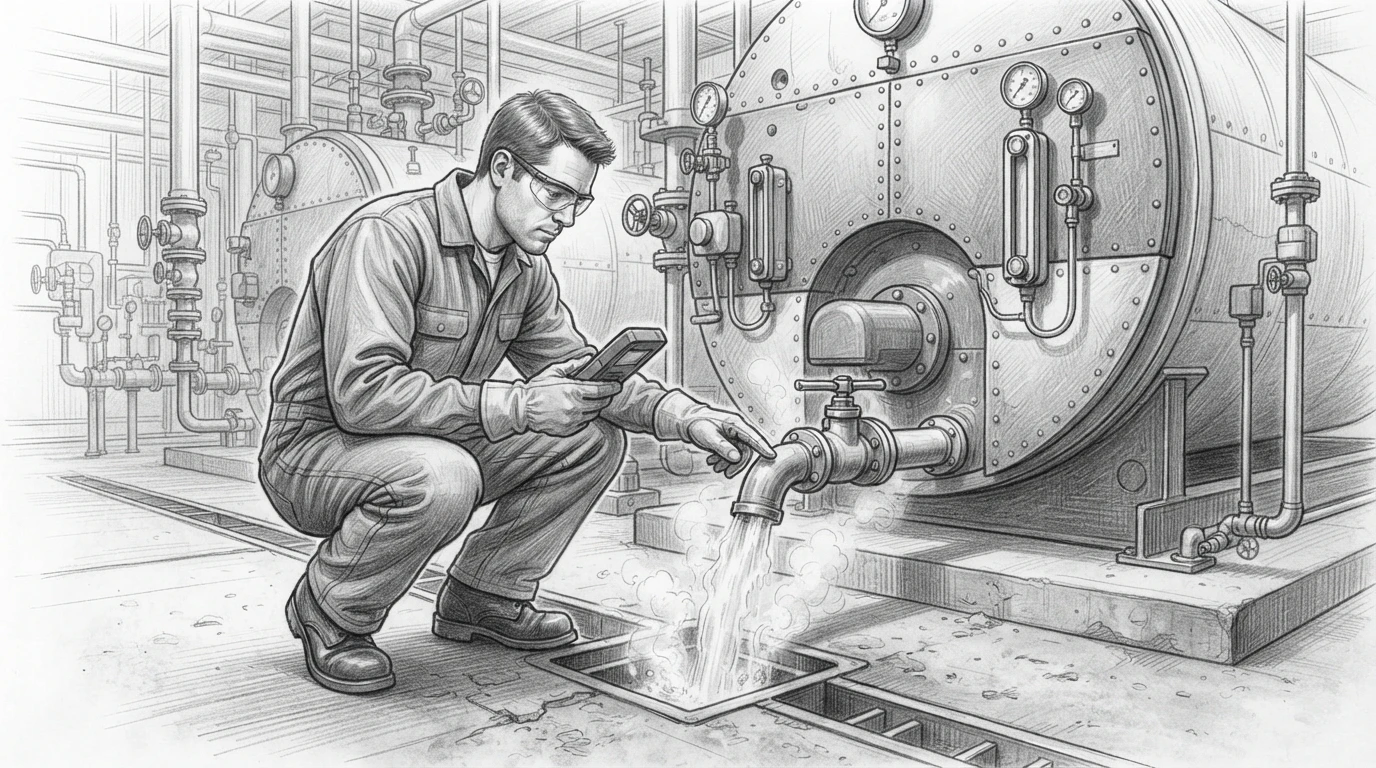
A softener looks cheap until you add up salt deliveries, regenerant wastewater, and the higher boiler protection program costs that come with carrying dissolved sodium. Because sodium still passes through, TDS stays high, so you dump more blowdown and the heat in it.
Why RO can pay back through blowdown savings
RO removes about 99 percent of dissolved solids, so cycles of concentration climb and blowdown volume drops sharply. Less blowdown means less heat lost down the drain, lower fuel use, and smaller chemical doses. Many plants find the membrane cost is offset by those savings.
| Cost item | Softener | RO |
|---|---|---|
| Blowdown volume | Higher | Much lower |
| Fuel for blowdown heat | Higher | Lower |
| Salt and regenerant waste | Ongoing | None |
Site Conditions in Ohio That Tip the Decision
Source water, boiler pressure, and condensate return
Ohio groundwater often runs 15 to 25 grains per gallon, so a softener alone may not hold up at higher cycles. Above roughly 900 psi, or when silica and chlorides are high, RO earns its cost. Strong condensate return cuts makeup volume and favors a simpler softener setup.
Footprint, sewer limits, and operator skill
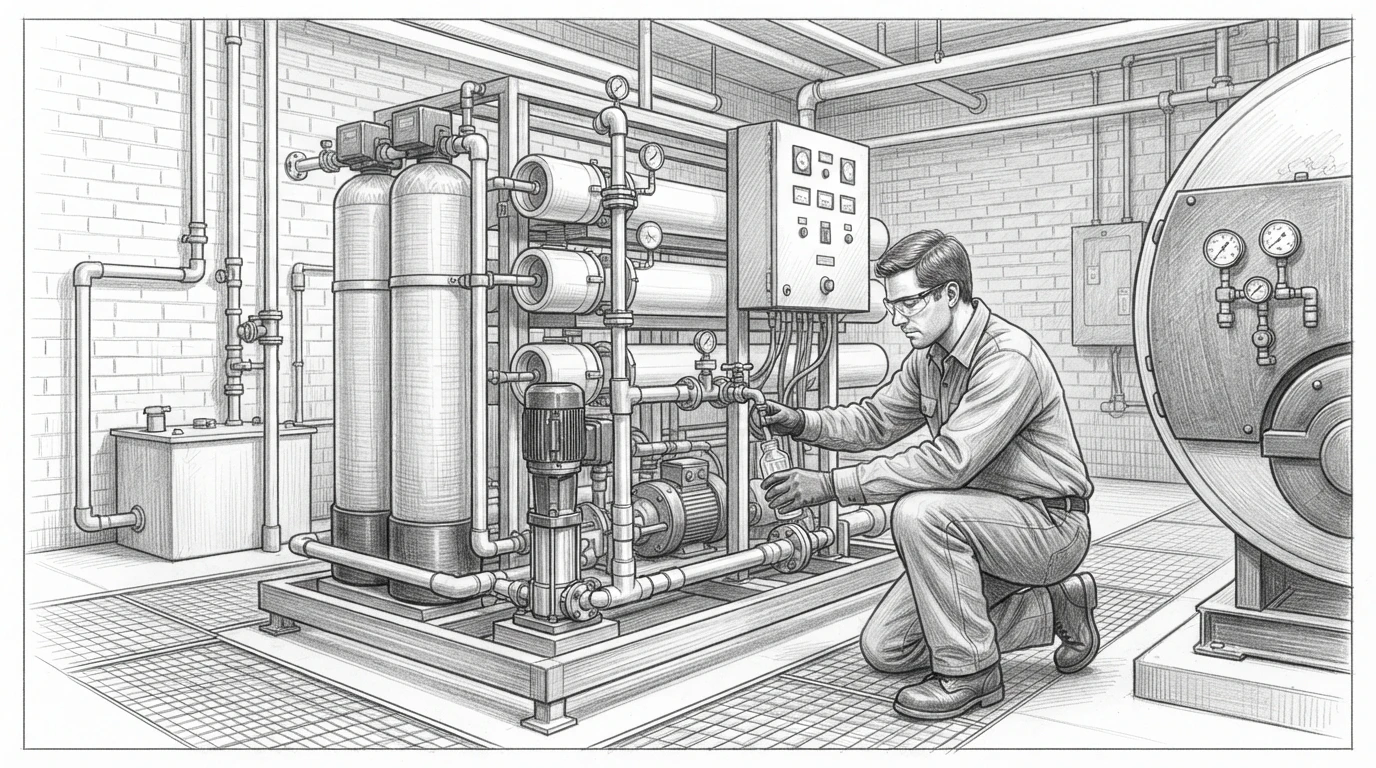
Softeners need brine tank space and a sewer discharge path; check local brine disposal limits first. RO needs more floor space, pretreatment, and skilled operators for membrane care. A plant without a water technician on site usually gets better results from a softener with monitoring support.
Which Should You Choose - Softener, RO, or Both?
Pick a boiler makeup softener if your boiler runs below ~900 psi and your water hardness is moderate. Choose RO when silica, chlorides, or high pressure demand near-total solids removal. For high-cycle or mid-pressure systems, softening ahead of RO often delivers the best balance of cost and protection.
For facilities matching that last case, a staged boiler pretreatment setup is worth reviewing with your water treatment partner before you buy either system alone.
Hard water is eating your boiler. Hoffman Soft Water designs the right pretreatment for your pressure and water quality. Request a free water assessment today.
Frequently Asked Questions
Q1: What is the best softener for industrial boiler makeup?
A duplex ion-exchange softener sized for continuous flow, driving hardness below 1 gpg, suits most boilers under ~900 psi on Ohio's hard water.
Q2: Can I use RO without a softener?
Not usually. Softening ahead of RO prevents scale fouling on the membranes themselves, extending their life.
Q3: Does RO reduce boiler blowdown?
Yes. Removing 99+ percent of dissolved solids raises cycles of concentration, cutting blowdown volume and fuel lost with it.
Wrap-Up
A softener solves scale cheaply below ~900 psi; RO handles silica, chlorides, and higher pressure while cutting blowdown. Match the choice to your water chemistry, and consider both in series for the best protection.