 Hoffman Soft Water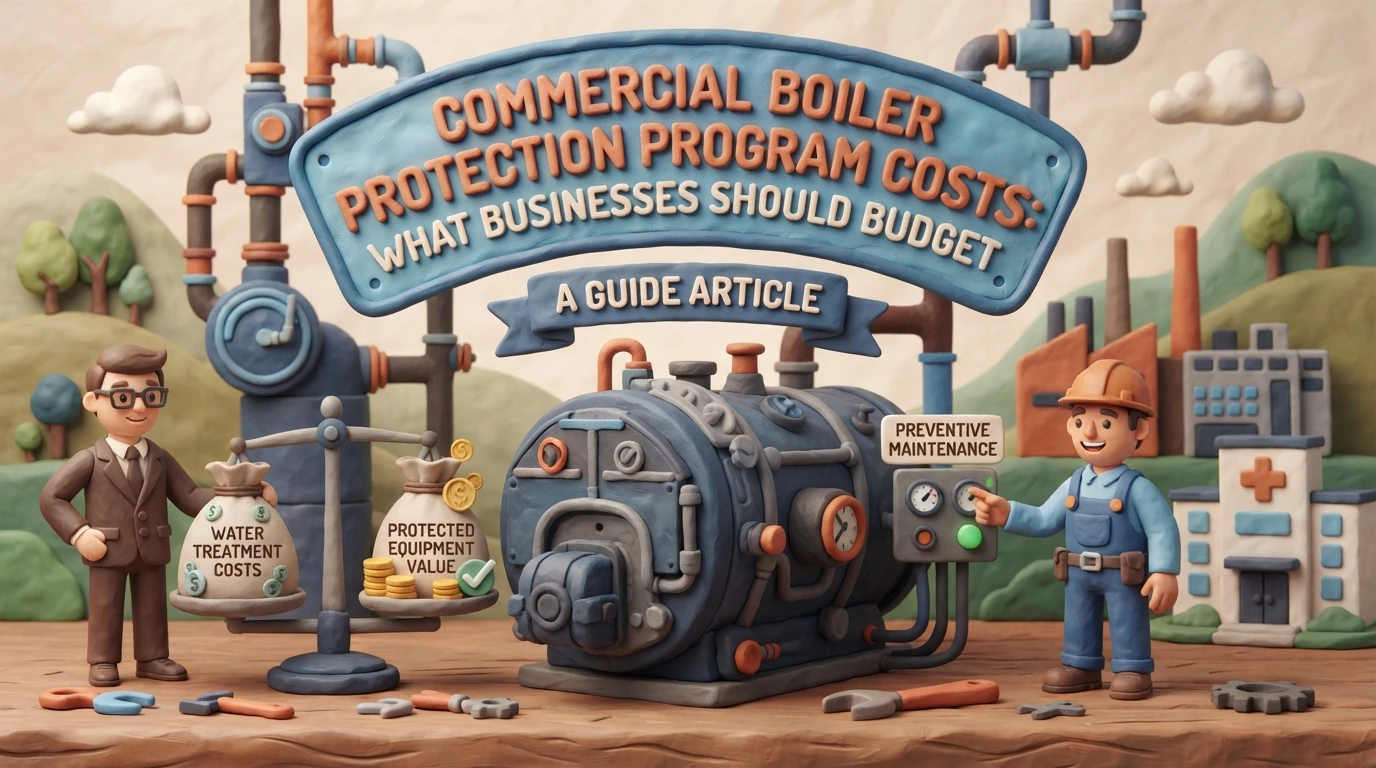
Quick Summary: Most businesses underestimate boiler protection costs because spending hides across four layers: capital equipment, recurring chemistry, service labor, and a 10-15% risk reserve. At Ohio's 15-25 gpg hardness, a 300 HP boiler can run $600 a month in chemistry alone, with scale quietly inflating fuel and downtime costs ten times higher, so budgets should be built from a local water analysis rather than copied from national soft-feed templates. Hoffman Soft Water sizes programs to Ohio's specific conditions and can validate vendor quotes against your lab report rather than a generic per-HP number.
A 300 HP steam boiler fed with unsoftened Ohio water can burn through $600 a month in chemistry, and scale still drives fuel and downtime costs ten times higher. Most facilities underestimate this because commercial boiler protection spending hides in four separate layers: equipment, chemicals, service labor, and a risk reserve. This guide breaks down each layer for Ohio's 15-25 gpg hardness band, so your boiler maintenance budget matches real conditions instead of guesswork.
Build a Four-Layer Cost Model for the Program
Treat commercial boiler protection as four stacked budgets: capital, chemistry, labor, and a risk reserve. Splitting them keeps one overrun from hiding the real problem.
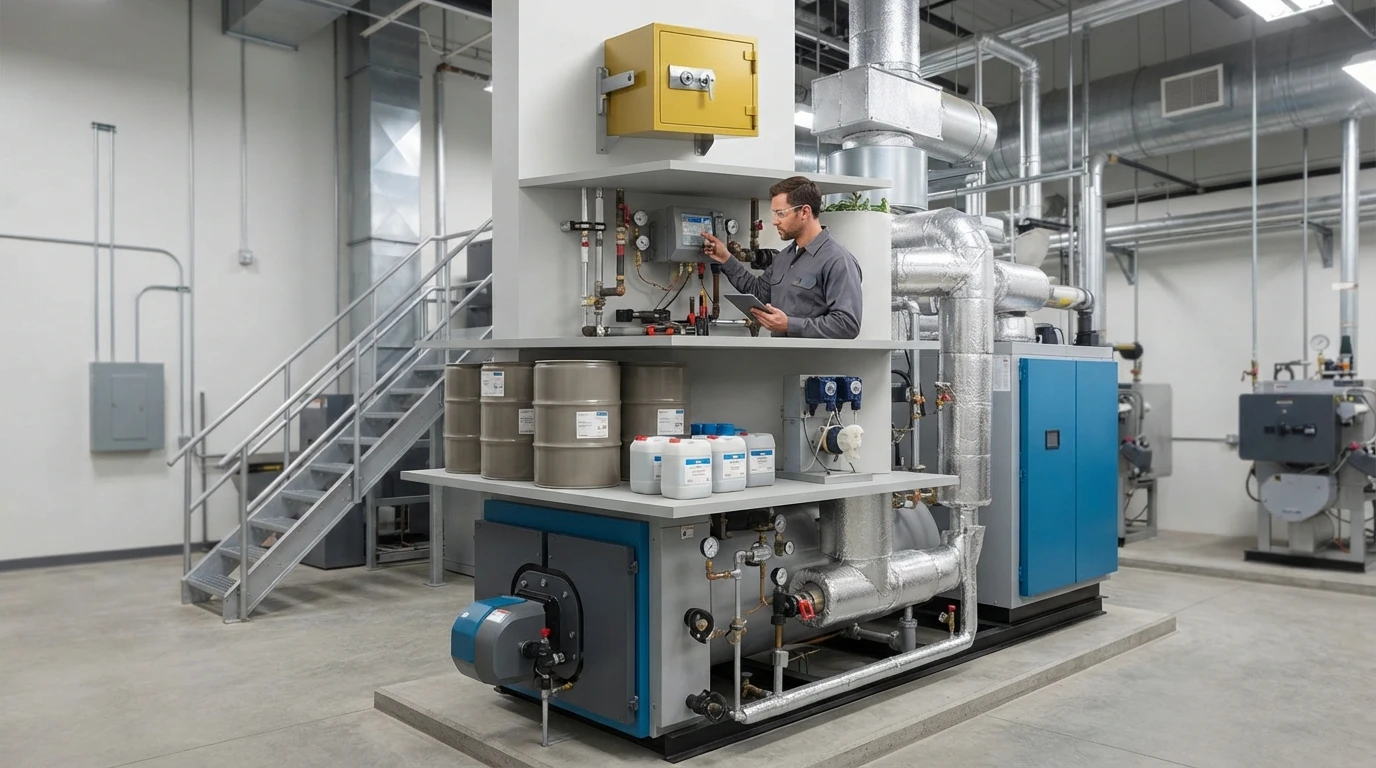
Capital Layer: Pretreatment Equipment and Feed Skids
Budget first for equipment that removes hardness before it reaches the boiler. A softener or treatment skid sized for 15-25 gpg feedwater is the biggest single line item, but it lowers every layer after it.
Recurring Layer: Chemistry, Consumables, and Monitoring
Chemistry is your steady monthly cost. It covers oxygen scavengers, scale inhibitors, condensate treatment, test reagents, and salt or regenerant. A poorly protected 300 HP boiler can burn $600 a month and still lose fuel to scale, which is why boiler chemical monitoring belongs in this layer, not as an add-on.
Service Layer: In-House Labor vs. Contracted Visits
Compare what internal staff actually spend on testing and dosing against contracted service visits. Most plants mix both: daily in-house checks plus quarterly water treatment reviews by a specialist.
Adjust the Budget for Local Feedwater Conditions
Hardness Multipliers vs. Soft-Feed Baselines
Published boiler budgets assume soft feedwater. Ohio plants draw 15-25 gpg water, so multiply the chemistry and labor layers rather than copy a national figure. Harder feedwater means more regenerations, more chemical, and more monitoring hours. Softening at the front end cuts those layers; see how high-hardness systems compare before you size the skid.
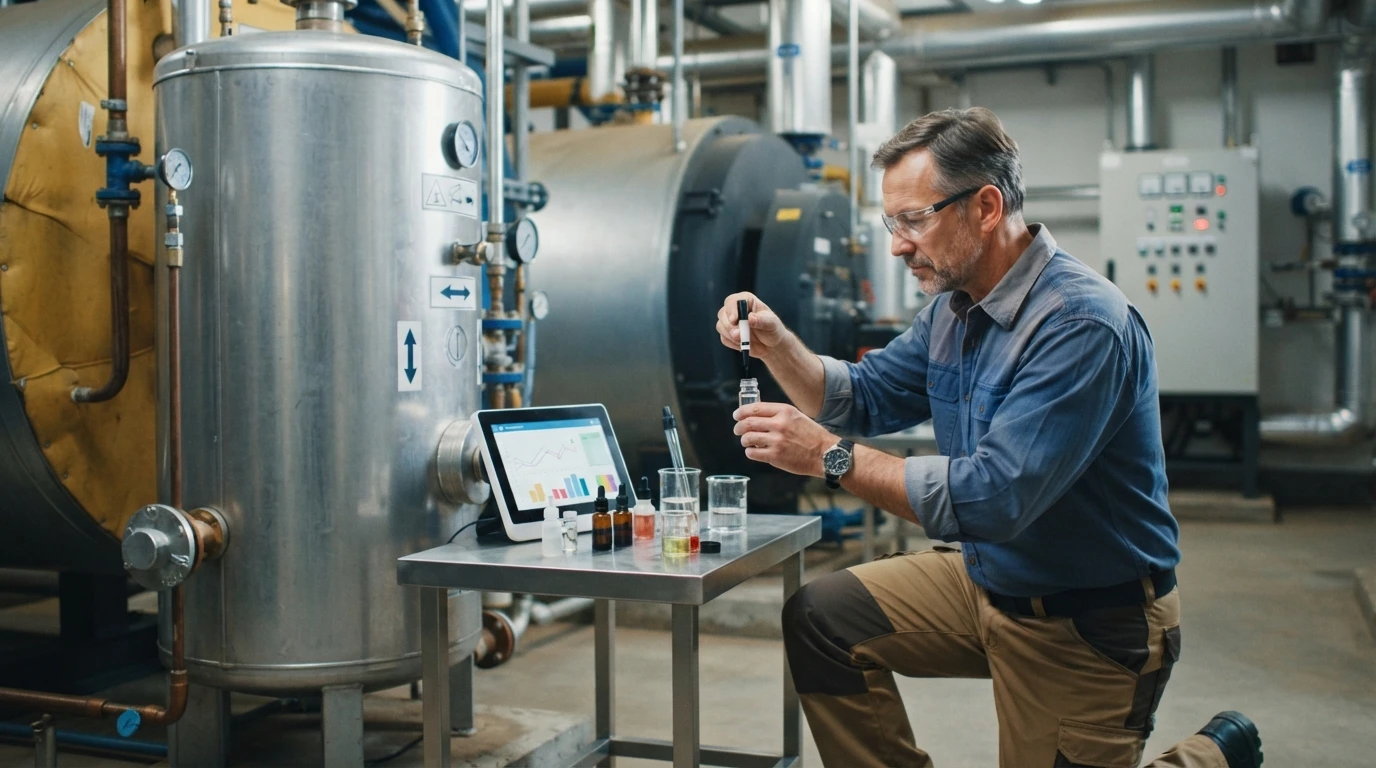
Blowdown, Fuel, and Hidden Water Costs
Hardness hides in the operating budget, not the invoice. Blowdown rates typically run 4-8% of feedwater and climb toward 10% with high solids, sending heated water and treatment dollars straight down the drain according to the Department of Energy. Even 1/32" of scale cuts heat transfer enough to raise fuel bills. Budget for that hidden line, then treat it as recoverable.
Validate Vendor Quotes Against the Model
Read the Per-HP Number in the Eyes Clients Actually Get
Divide each quote by boiler horsepower so bids line up. A 300 HP boiler should cost a predictable amount per HP for chemistry and service combined. If one vendor sits far below the band, ask what was cut: monitoring visits, tests, or reserve chemicals.
Stress-Test the Quote with Your Water Analysis
Hand every bidder your lab report. At Ohio's 15-25 gpg, quotes copied from soft-water regions will undersize softeners and chemistry doses. Providers doing proper commercial boiler water treatment for Ohio facilities will size the program from your numbers, not a national template. Reject any quote that never mentions hardness.
Budget for Risk and Reserve the Right Contingency
Sizing the Reserve as a Percentage of Recurring Spend
The risk layer covers the surprises: emergency service calls, off-spec water events, sensor failures, and unplanned chemical recharges. A workable rule is to reserve 10-15% of your annual chemistry and labor spend. For a boiler running $7,200 a year in chemistry, that means roughly $700-1,100 set aside. At Ohio's 15-25 gpg hardness, lean toward the higher end, because hard feedwater makes upsets more likely. Track your actual callouts for one year, then reset the percentage. A reserve you never touch becomes next year's budget relief, not waste, and the right boiler protection strategies shrink it over time.
Ready to budget against Ohio's real 15-25 gpg water instead of national averages? Hoffman Soft Water will size your boiler protection program to your facility. Request a quote today.
Frequently Asked Questions
Q1: How much do commercial boiler protection programs cost?
Budget four layers: equipment, chemistry, labor, and a reserve. A 300 HP boiler alone can cost $600 monthly in chemistry, before capital and service.
Q2: Does Ohio water hardness really change my budget?
Yes. At 15-25 gpg, expect more softener regenerations, higher chemical use, and extra monitoring hours than national soft-water figures assume.
Q3: How large should my contingency reserve be?
Reserve 10-15% of annual chemistry and labor spend, leaning toward the higher end for hard feedwater.
Conclusion
Budget boiler protection in four layers: capital equipment, chemistry, service labor, and a 10-15% reserve. At Ohio's 15-25 gpg hardness, adjust chemistry and labor upward instead of trusting national figures, then size every quote from your own water analysis.