 Hoffman Soft Water
Quick Summary: Reverse osmosis is gaining traction for industrial boiler makeup water because it removes dissolved solids that softeners leave behind, which can cut blowdown, scale, and corrosion. However, RO doesn't replace softening, deaeration, or internal chemistry, and it needs solid pretreatment to avoid membrane fouling. Operators should base decisions on site-specific data like makeup quality, condensate return, and boiler pressure, not a fixed schedule. Monitoring conductivity, hardness, and chemical residuals remains essential for success.
Plants are rechecking boiler feedwater treatment as 2026 guidance and trade coverage highlight RO's ability to remove dissolved ions softeners leave behind. That can cut solids, blowdown, scale, corrosion, and water loss. Still, the right boiler feedwater treatment depends on pressure, source water, condensate return, and steam use. This review tests whether RO improves boiler feedwater treatment or creates an incomplete, costly train.
Why RO Is Moving Beyond High-Purity Power Applications
The Contaminants Softening Does Not Remove
Softening removes hardness minerals, mainly calcium and magnesium. It does not remove most dissolved salts, silica, chloride, sodium, or many dissolved organics. Those carry into boiler makeup water and can raise corrosion, deposits, and blowdown needs.
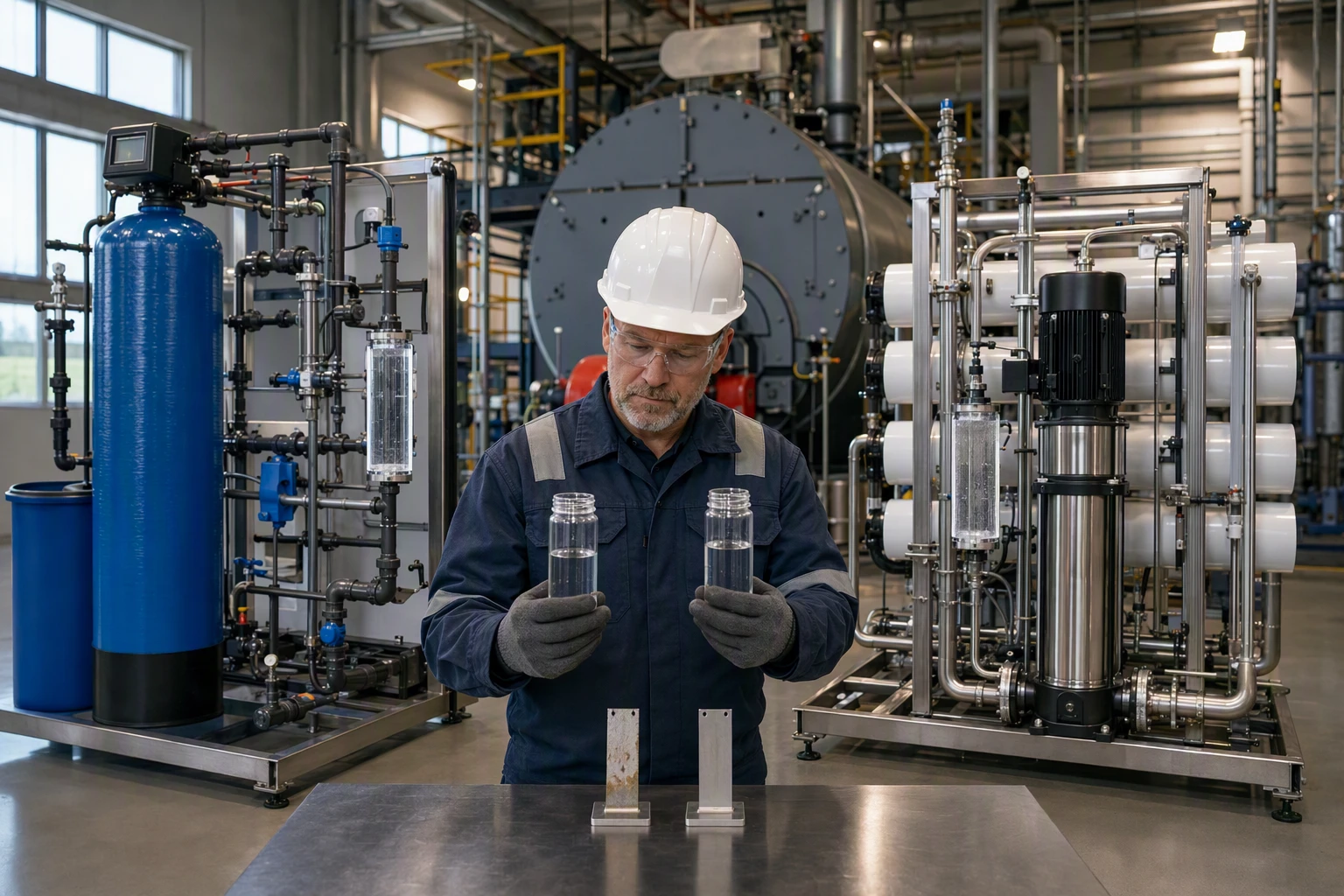
Tip: Test raw water first. An RO system needs solid pretreatment to avoid membrane fouling.
What RO Can Improve
RO adds a barrier for dissolved contaminants that softeners leave behind. EPA research found RO can reduce inorganic compounds and support reuse applications in plant water systems. EPA's power-water review also stresses pretreatment and reject-water planning.
| Treatment | Main job |
|---|---|
| Softener | Removes hardness |
| RO | Reduces dissolved solids |
| Deaerator | Removes dissolved gases |
Also Read: 7 Commercial Boiler Protection Solutions for Ohio Manufacturers
Is RO the Best Treatment for Your Industrial Boiler?
The Site Data That Should Drive the Decision
RO fits when dissolved solids, silica, alkalinity, or chloride force frequent blowdown. Test makeup water, returned condensate, steam pressure, peak demand, and sewer limits first. The DOE notes that blowdown control depends on boiler-water quality.
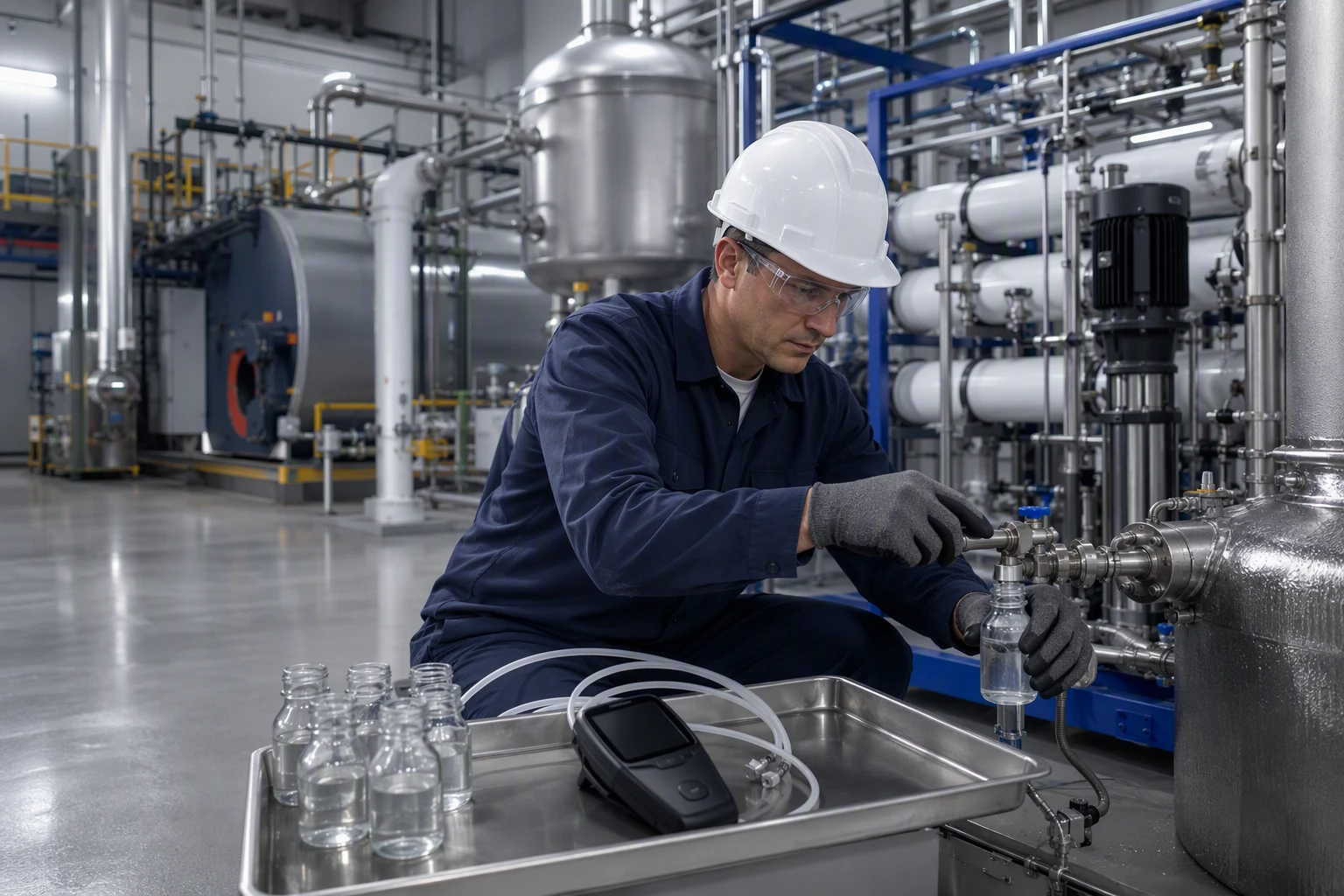
Tip: Size treatment for worst-case makeup flow, not average use.
When Softening, RO, and Polishing Work Together
A softener protects RO membranes from hardness. RO cuts dissolved solids. Final polishing and a deaerator manage remaining ions and corrosive gases. DOE reports that deaeration removes dissolved oxygen and carbon dioxide from feedwater. Use ongoing chemistry checks and internal treatment with either setup.
| Need | Best treatment |
|---|---|
| Hardness control | Softener |
| Low dissolved solids | RO |
| Oxygen control | Deaerator |
Also Read: 7 High-Hardness Water Treatment Systems for Industrial Facilities
The Main Tradeoffs Operators Need to See Before Installation
Pretreatment Protects the Membrane
RO membranes need clean, stable feedwater. Test hardness, iron, silica, chlorine, and suspended solids first. Use filtration and softening where the analysis calls for it. DOE notes that pretreatment helps membranes run efficiently and last longer. See DOE's RO guidance.
Warning: RO does not replace deaeration, feedwater monitoring, or internal boiler chemistry.
Savings Depend on the Whole Water Balance
Lower dissolved solids can cut blowdown, chemicals, and fuel use. But RO also needs power, cleaning, membrane replacement, and a plan for concentrate discharge or reuse.
| Check | Why it matters |
|---|---|
| Recovery rate | Sets reject-water volume |
| Condensate return | Changes makeup demand |
| Blowdown target | Drives fuel and water savings |
- Compare total water and sewer costs.
- Include operating and service costs.
- Size storage for peak steam demand.
Also Read: Boiler Scale Prevention vs Corrosion Control: Which Comes First?
How Industrial Boiler Makeup Treatment Reached This Point
From Hardness Control to Dissolved-Solids Control
Softening still matters because hardness drives scale. But plants also must control dissolved salts that remain after hardness removal. As steam leaves the boiler, those solids build up in the drum. DOE guidance warns that excess dissolved solids can cause foaming, carryover, deposits, and wasted heat.
- Softening targets calcium and magnesium.
- RO lowers many dissolved salts.
- Blowdown removes what still concentrates.
RO supports a treatment train. It does not replace deaeration, chemical feed, or proper blowdown.
Monitoring Remains the Deciding Factor
Better makeup water only helps when operators track actual boiler chemistry. Conductivity gives a fast signal of dissolved-ion buildup and can guide automatic blowdown. DOE recommends matching blowdown control to water quality, not a fixed schedule.
| Check | Why it matters |
|---|---|
| Makeup conductivity | Confirms pretreatment performance |
| Boiler conductivity | Guides dissolved-solids control |
| Chemical residuals | Helps prevent corrosion and scale |
Protect boiler uptime with a complete pretreatment plan. Hoffman Soft Water designs RO, softening, and filtration systems for Ohio facilities.
Frequently Asked Questions
Q1: What is the best treatment for industrial boiler feedwater?
The best setup matches boiler pressure, makeup quality, and condensate return. It often combines softening, reverse osmosis, deaeration, monitoring, and internal chemistry.
Q2: Does reverse osmosis replace a water softener?
No. RO can reduce dissolved solids, but softening may still protect RO membranes from scale.
Q3: What should operators monitor after RO?
Track conductivity, hardness, silica, pH, flow, and membrane pressure drop.
Conclusion
RO can improve boiler makeup quality and cut blowdown. Success still depends on pretreatment, deaeration, chemistry, and monitoring. The DOE notes that pretreatment protects membrane performance.