 Hoffman Soft Water
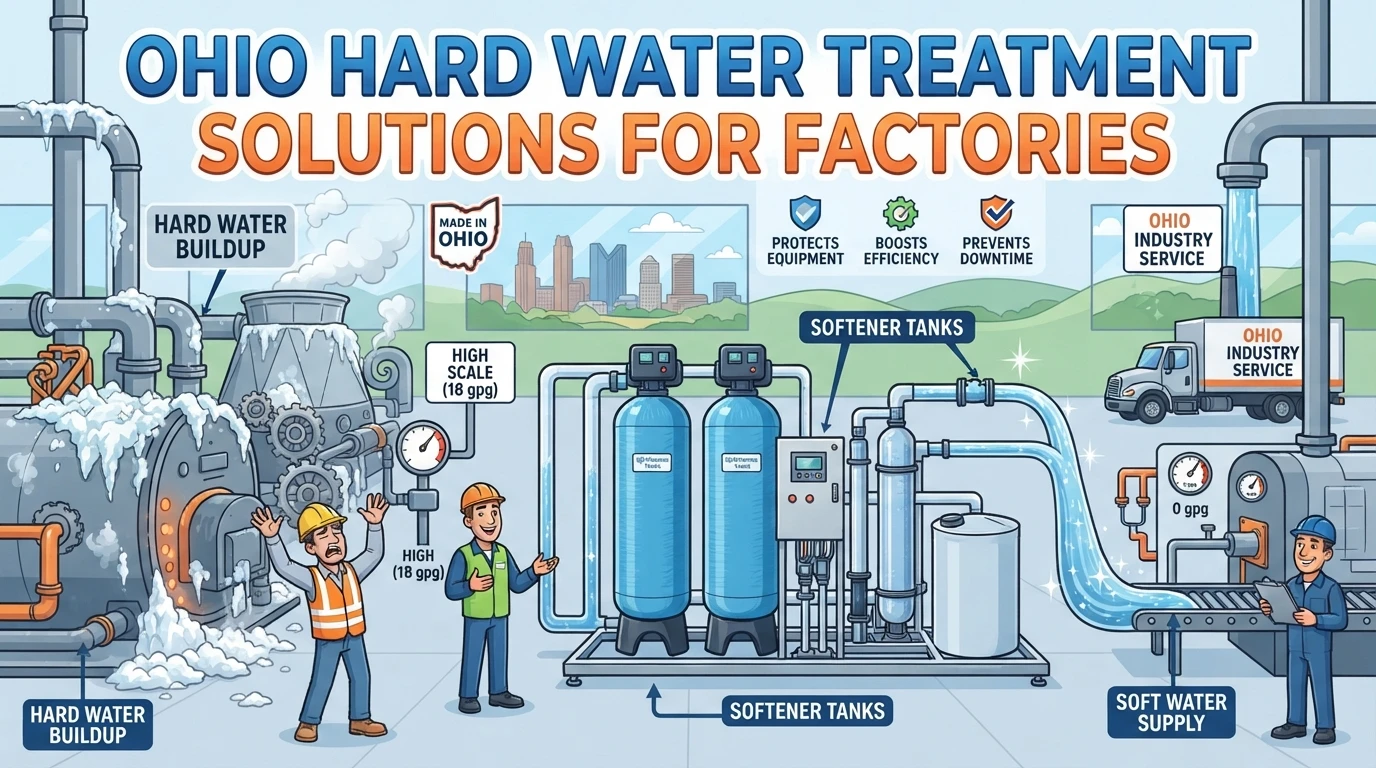
Quick Summary: Ohio factories need layered treatment for water that commonly measures 15 to 25 grains per gallon: ion exchange softening for scale control, filtration for iron and other contaminants, and reverse osmosis where high purity is required. Systems should be sized for peak demand with duplex redundancy and a 20 to 30 percent growth buffer, then verified through regular hardness testing. Hoffman Soft Water provides engineered, site-specific systems based on each plant's water quality and process requirements.
A boiler fed municipal water near 20 grains per gallon can lose heat transfer efficiency within one operating season, and no new tube or chemical feed will fix it. Ohio hard water treatment starts upstream, at the softener, before scale forms. This guide matches each technology to a specific factory application and shows how an engineer-led, site-specific design outperforms a catalog purchase.
Ohio's Hardness Reality and What It Does to Factory Equipment
Why Ohio Water Reaches the High-Hardness Range
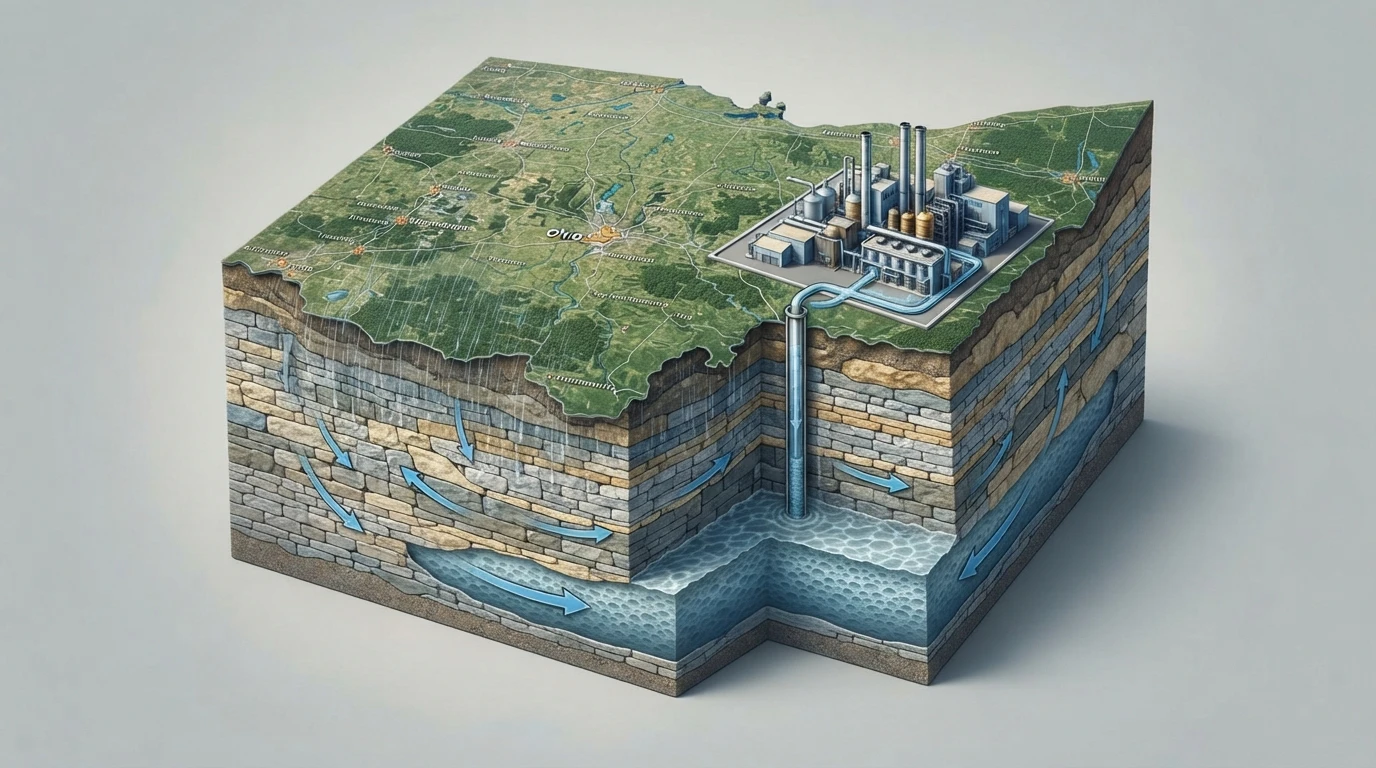
Most of Ohio draws water from limestone and dolomite aquifers. Rain picks up calcium and magnesium as it seeps through those rock layers, so municipal and well supplies routinely test between 15 and 25 grains per gallon (roughly 256 to 428 ppm as calcium carbonate). Anything above 10 gpg counts as very hard.
Scale, Corrosion, and Efficiency Loss in Boilers, Cooling Towers, and Membranes
Untreated hard water damages equipment in four ways:
- Boiler scale - calcium and magnesium bake onto heat surfaces and cut boiler scale prevention margins fast.
- Cooling tower fouling - fill media clogs and blowdown rates climb.
- Reverse osmosis membrane scaling - precipitation shortens membrane life.
- Corrosion - uneven deposits set up oxygen-poor cells that pit steel.
These losses stack, and that's why high-hardness water treatment for industrial facilities is specified per site rather than bought from a catalog. Hardness here is a design input, not a guess, and engineers who work with Ohio data can match industrial water softening alternatives to each system's actual load.
What Treatment Solutions Ohio Factories Recommend
Ohio plants treating water at 15 to 25 gpg generally use three technology layers:
- Industrial water softening systems for boiler feed, process rinse water, and cooling make-up. Constraint: salt handling and regeneration scheduling.
- Filtration and specialty pretreatment for cooling towers, product contact water, and disinfection. Constraint: match media to the contaminant.
- Reverse osmosis membrane systems for high-purity, pharmaceutical-grade, and low-silica boiler make-up. Constraint: pretreatment quality and concentrate disposal.
Engineered Industrial Softening as the Baseline
Ion exchange softening removes the calcium and magnesium that scale boilers and foul heat exchangers. High-hardness plants size duplex units so one regenerates while the other keeps running, which prevents downtime mid-shift. Proper sizing starts with flow rate and grain load, as explained in this overview of high-capacity softener selection.
Filtration and Specialty Pretreatment for More Than Hardness
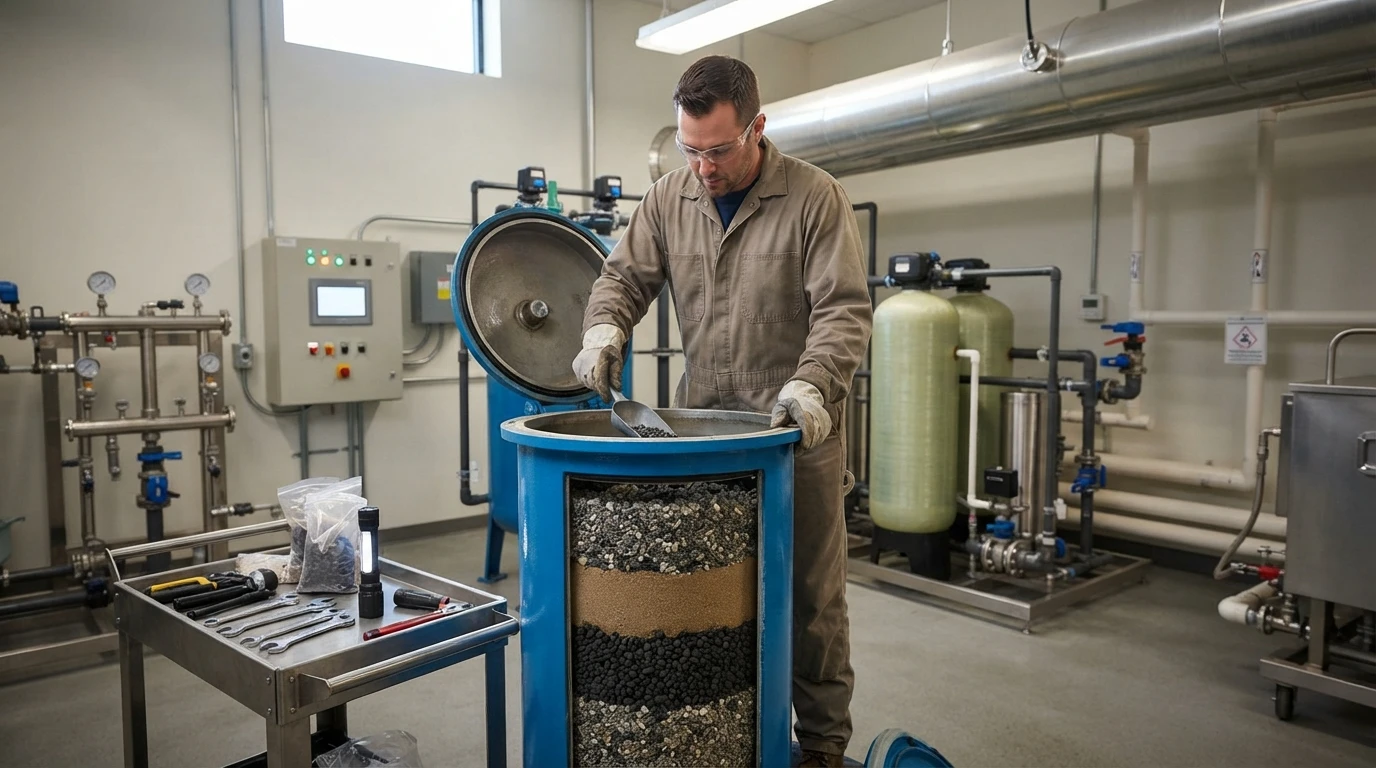
Softening will not catch iron, sediment, chlorine, or bacteria. Multi-media filters, cartridge units, iron removal, and UV disinfection handle those loads, protecting cooling tower basins and food-grade rinse lines. Choose media based on a current water test, not a catalog default.
Membrane Systems for High-Purity and Boiler Make-Up
Reverse osmosis pushes water through a semi-permeable membrane, stripping dissolved minerals before they reach a boiler or cleanroom. It cuts blowdown rates and chemical use, but only when softeners and filters upstream protect the membranes from scaling and fouling.
Matching the System to Your Application and Demand
Set Water Quality Targets by Process, Not by Facility
A boiler feed line, a food washdown, and a lab rinse need different hardness limits, so set targets per process. Boilers often need under 1 gpg, while cooling towers tolerate more. Start from the spec each process must meet, then choose among industrial softening options that hit it.
Size for Peak Demand, Redundancy, and Growth
Size the resin bed to your peak flow rate, not the average, since undersized systems break through hardness during surges. Add a duplex setup so one unit regenerates while the other runs. Then add a 20 to 30 percent buffer for growth, as sizing guidance recommends.
Implementation, Verification, and Common Pitfalls
Commissioning and Performance Verification
Test before and after startup: hardness, iron, and pressure drop. Run a full regeneration cycle, confirm brine draw, and train operators on salt loading and alarm responses. Track treated hardness weekly against spec so drift shows up early. Ongoing help with service and monitoring keeps the numbers where they belong.
Mistakes That Undo Ohio Treatment Programs
Undersized softeners fail first. Skip the growth buffer and your system regenerates nonstop during peak demand. Other traps: ignoring iron that fouls resin, single-tank designs with no redundancy, and skipping hardness tests between service visits. At 15 to 25 gpg, any one of these shows up as scale within months.
Your plant's scale problem needs a system designed for Ohio's 15-25 gpg water, not a catalog guess. Hoffman Soft Water builds engineered solutions around your specs. Request a site assessment today.
Frequently Asked Questions
Q1: What solutions do Ohio factories recommend for hard water?
Ion exchange softening as the baseline, plus filtration for iron and chlorine, and reverse osmosis where processes need high purity.
Q2: How hard is Ohio factory water?
Most municipal and well supplies test 15 to 25 grains per gallon, roughly 256 to 428 ppm.
Q3: Why size softeners for duplex redundancy?
One unit regenerates while the other runs, so hardness never breaks through during peak demand or mid-shift.
Conclusion
Ohio water runs 15 to 25 gpg, and that hardness demands a layered approach: softening as the baseline, filtration for iron and chlorine, and reverse osmosis where purity matters. Size each system to peak flow with duplex redundancy, then verify hardness weekly to catch drift early.