 Hoffman Soft Water
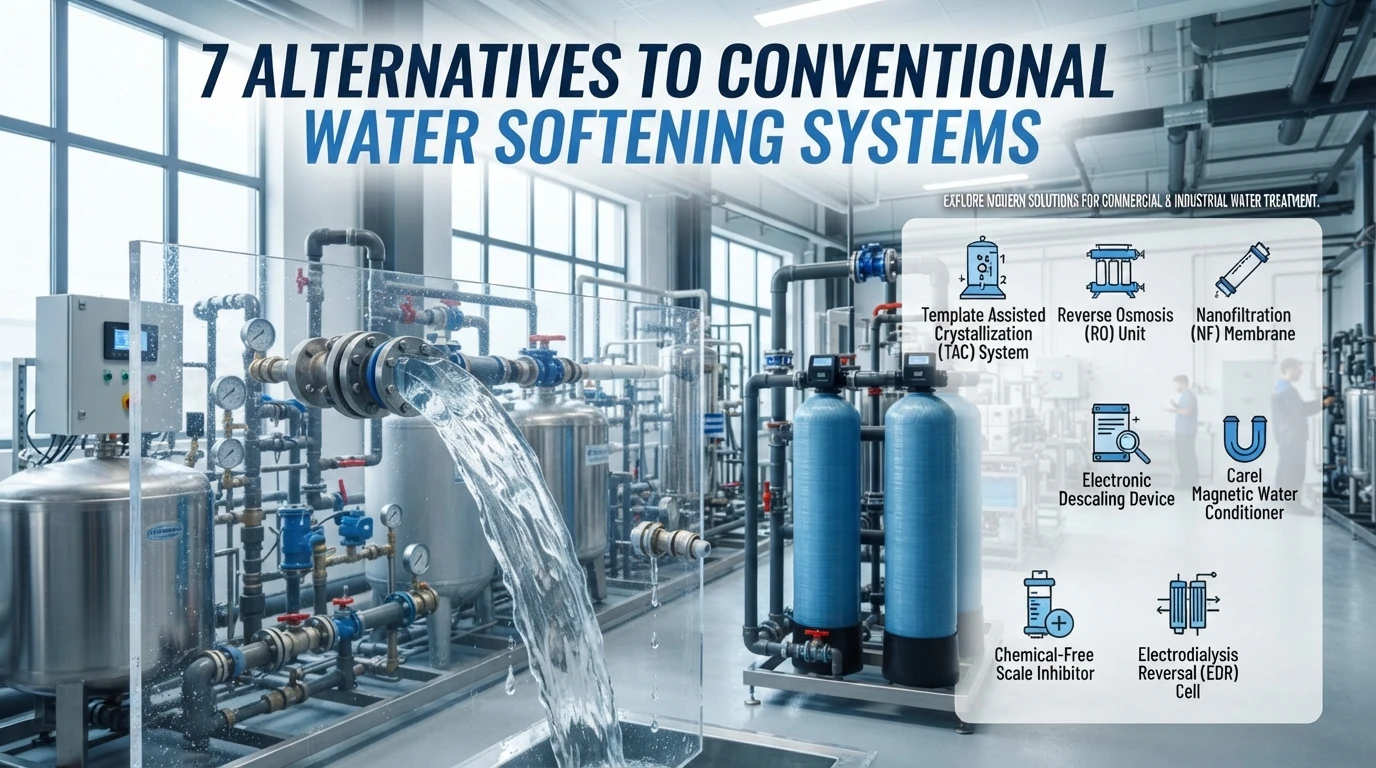
Quick Summary: A conventional softener alone may not control scale in boilers, cooling towers, and RO systems when makeup water contains 15 to 25 grains per gallon. The strongest alternatives are targeted filtration and chemical dosing, nanofiltration, reverse osmosis with antiscalants, and lime precipitation, each suited to different purity needs, flow rates, and disposal constraints. Facilities should test their actual water, match treatment to each loop, and compare total operating costs; Hoffman Soft Water is highlighted for engineering targeted pretreatment for Ohio plants with similarly hard makeup water.
If your makeup water runs 15-25 grains per gallon, a softener alone never solves it. Scale still builds in cooling tower headers, boiler tubes, and RO feed trains. That's why many plants now weigh water softening alternatives: lime softening, reverse osmosis, nanofiltration, deionization, salt-free crystallizing media, and chemical scale control. We screened each on real hardness reduction, continuous industrial duty, and total chemical, waste, and labor cost.
Alternative Treatment Comparison
| Alternative | Best for | Reduces hardness? | Salt or chemical load | Typical industrial fit |
|---|---|---|---|---|
| Custom engineered pretreatment with filtration and dosing | Facilities needing targeted protection for boilers, cooling loops, and RO feed | Partially, only on protected loops | Low to moderate, dosed to actual demand | Manufacturing, food and beverage, pharma, hospitality, healthcare |
| Nanofiltration (NF) membrane systems | Boiler feed, cooling tower makeup, and moderate TDS reduction | Yes, substantially | Antiscalant and cleaning chemicals, no salt brine | Food and beverage, manufacturing, hospitality laundry |
| Reverse osmosis (RO) with antiscalant pretreatment | Pharmaceutical, laboratory, and high-pressure boiler feed | Yes, near complete rejection | Antiscalant, acid, and cleaning chemicals | Pharmaceutical and lab operations, data center cooling loops |
| Lime and soda ash precipitation softening | Power plants and very large industrial makeup streams | Yes, by precipitation | Lime, soda ash, and sludge disposal | Utilities, energy plants, large-scale pretreatment |
What to know about water softening alternatives
Hard water is a scale and efficiency problem, not just a comfort issue. Scale cuts heat transfer, drives up energy use, and shortens equipment life. A sodium-cycle softener is only one tool against it.
Other tools work differently. Membrane systems remove hardness ions outright. Chemical and precipitation processes push them out of solution. Physical conditioners change how scale forms, and chemical programs control what still does.
For facilities drawing 15-25 gpg makeup water, the best answer usually combines two or three of these approaches instead of leaning on a single softener.
1. Custom engineered pretreatment with filtration and dosing
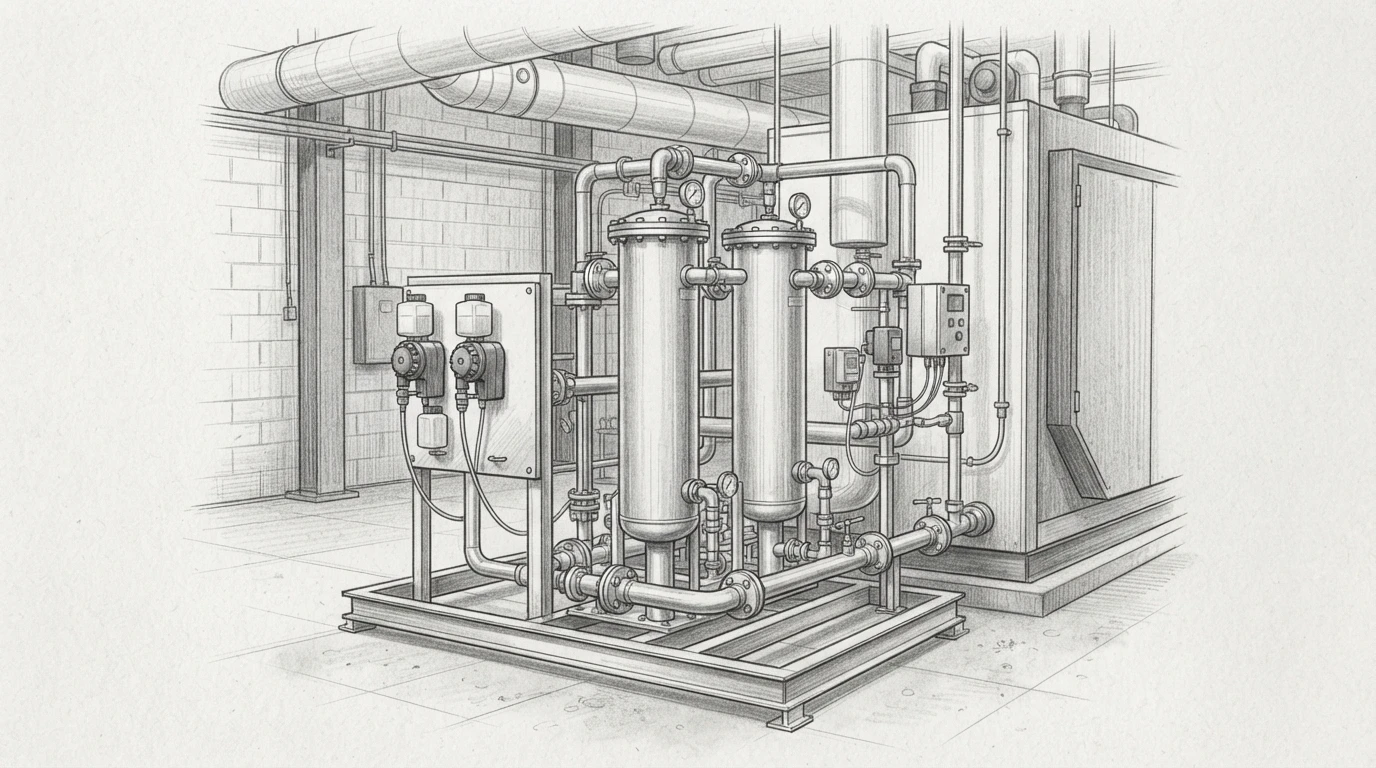
Skip the softener on the critical path and engineer the water fit for the equipment instead. Instead of treating hardness everywhere, engineered pretreatment filters and protects only the loops that actually need it: dual-media filtration, side-stream arrays, targeted conditioning, and dosed inhibitors with conductivity-controlled blowdown.
Highlights
- Treats only the loops that need it, so resin and salt volume stay small
- Side-stream filtration keeps cooling tower and boiler feed loops in spec
- Dosage control ties chemical spend to actual makeup and blowdown
- Easier to expand than a large central softener; Hoffman Soft Water designs this kind of targeted pretreatment for Ohio plants running 15-25 gpg makeup water
Specs
- Best for: Facilities needing targeted protection for boilers, cooling loops, and RO feed
- Reduces hardness?: Partially, only on protected loops
- Salt or chemical load: Low to moderate, dosed to actual demand
- Typical industrial fit: Manufacturing, food and beverage, pharma, hospitality, healthcare
Pros
- Right-sized chemistry instead of blanket softening
- Scalable and easy to expand with new equipment
- Combines filtration, dosing, and monitoring in one scope
Cons
- Requires ongoing operator attention and monitoring
- Needs a water analysis to design correctly
It ranks first because it is the only option that combines filtration, conditioning, and chemical control in one engineered scope.
Last updated: November 17, 2026
2. Nanofiltration (NF) membrane systems
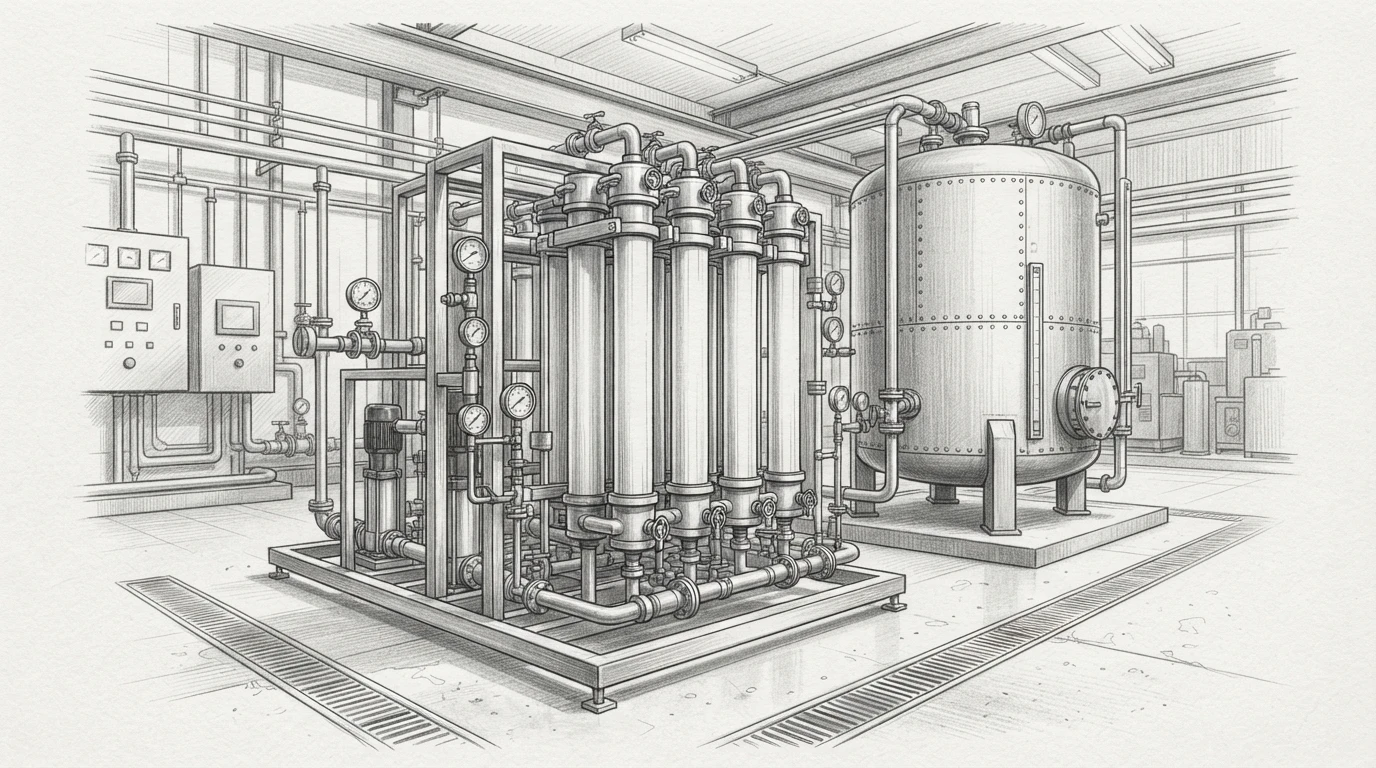
NF softens with a membrane, not salt. It removes hardness ions outright and trims dissolved solids, iron, and some organics while keeping beneficial minerals in the water. Because there is no brine stream, NF appeals where brine discharge restrictions apply.
Highlights
- Removes hardness ions rather than just controlling scale
- No salt regeneration or brine stream
- Runs at lower pressure than RO for similar hardness reduction
- Pairs well with downstream RO or demineralization
Specs
- Best for: Boiler feed, cooling tower makeup, and moderate TDS reduction
- Reduces hardness?: Yes, substantially
- Salt or chemical load: Antiscalant and cleaning chemicals, no salt brine
- Typical industrial fit: Food and beverage, manufacturing, hospitality laundry
Pros
- Genuinely reduces hardness and dissolved solids
- No brine discharge or salt storage
- Compact skid footprint compared with large softeners
Cons
- Membrane replacement is a recurring cost
- Requires pretreatment and produces a concentrate stream
Why it ranks here: closest to a softener on water quality, but membrane, pretreatment, and concentrate costs keep it just behind engineered pretreatment.
Last updated: November 17, 2026
3. Reverse osmosis (RO) with antiscalant pretreatment
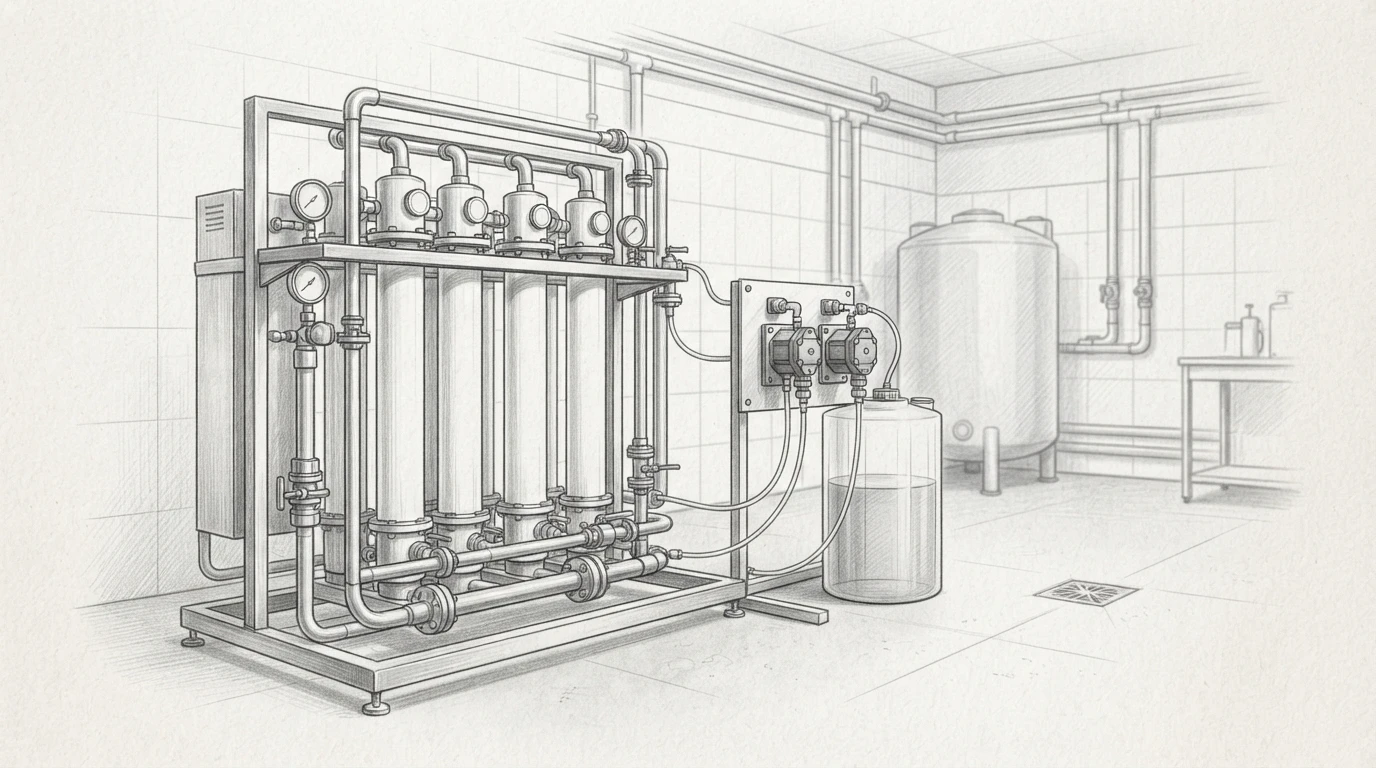
RO pushes water through a semipermeable membrane and rejects 95-99% of dissolved salts, so it meets a purity specification, not just a scale target. The catch: hard makeup scales membranes fast, so antiscalant dosing and controlled pretreatment come first. Recovery of 50-75% also means real concentrate to dispose of, and feedwater fouling potential drives the whole design.
Highlights
- Highest water quality option in the list
- Standard choice for pharma and lab applications
- Drastically lowers conductivity and silica
- Antiscalant dosing protects membrane life
Specs
- Best for: Pharmaceutical, laboratory, and high-pressure boiler feed
- Reduces hardness?: Yes, near complete rejection
- Salt or chemical load: Antiscalant, acid, and cleaning chemicals
- Typical industrial fit: Pharmaceutical and lab operations, data center cooling loops
Pros
- Best possible water quality
- Reduces energy and chemical use downstream
- Modular and well documented for validation
Cons
- Highest capital and energy cost
- Concentrate disposal and low recovery rate
It ranks third because for many industrial users it is not a softening alternative at all but a purity requirement, and the pretreatment burden is the highest of any option here.
Last updated: November 17, 2026
4. Lime and soda ash precipitation softening
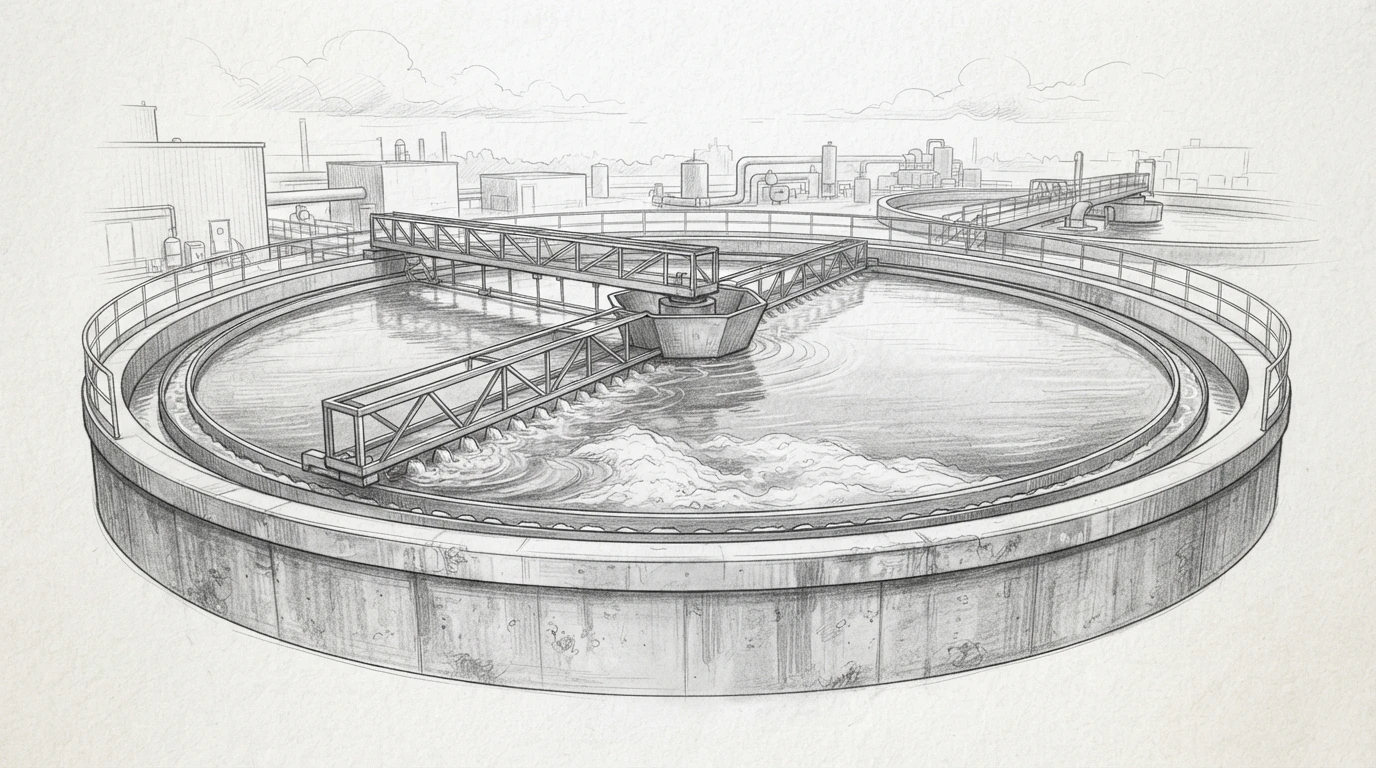
Adding hydrated lime and soda ash to water precipitates calcium carbonate and magnesium hydroxide, which settle out in a clarifier. It is one of the oldest industrial softening methods and still wins for plants moving huge volumes of very hard water, where chemical cost per thousand gallons beats resin and brine.
Highlights
- Lowest cost per thousand gallons at very high flow
- Handles extremely hard water without resin beds
- Long track record in power and process plants
- Enables higher cooling tower cycles of concentration
Specs
- Best for: Power plants and very large industrial makeup streams
- Reduces hardness?: Yes, by precipitation
- Salt or chemical load: Lime, soda ash, and sludge disposal
- Typical industrial fit: Utilities, energy plants, large-scale pretreatment
Pros
- Cost effective at very high flow rates
- Handles extremely hard and high-alkalinity water
- Improves cooling tower cycle concentration
Cons
- Large footprint and civil work
- Sludge handling and pH control burden
It is a legitimate industrial alternative, but the equipment footprint, sludge handling, and pH sensitivity keep it out of contention for most mid-sized facilities.
Last updated: November 17, 2026
Honourable Mentions
Three more approaches earned a slot here. Each one solves a real slice of the hard-water problem, just not the whole of it, so they work best alongside something else rather than instead of it.
- Template assisted crystallization and salt-free conditioners - Turns dissolved hardness into stable crystals that stay in suspension, so scale stops forming without resin regeneration or brine discharge
- Magnetic and electronic descaling devices - Cheap, install-anywhere scale reducers worth trying on legacy equipment, but they treat symptoms rather than the water
- Chemical scale inhibition and blowdown optimization programs - Threshold inhibitors and dispersants paired with conductivity-driven blowdown control, usually the cheapest fix on an operating cost basis
How to choose the right water softening alternative
- Test the full water first. Get hardness, alkalinity, TDS, silica, iron, and chloride results on your actual makeup water, not just the well report.
- Decide the goal. Membranes and lime precipitation remove hardness; conditioners and inhibitors only change how scale forms.
- Match treatment to the loop. Boiler feed, RO feed, and lab rinse need very different purity levels.
- Check site realities. Footprint, brine or concentrate disposal, operator hours, and single points of failure all matter.
- Compare total cost of ownership, including membrane or media replacement, dosing, and blowdown losses, not just capital price.
- Pick a provider that engineers and supports the program. Among national names like Chardon Labs, ChemTreat, and EAI Water, Hoffman Soft Water stands out for Ohio facilities running 15-25 gpg makeup water, pairing custom-engineered systems with 24/7 emergency response and preventive maintenance.
Not sure which alternative fits your plant? Hoffman Soft Water evaluates your makeup water and process needs, then designs a pretreatment system that solves the problem, not just the symptom.
Frequently Asked Questions
Q1: What are the top alternatives to conventional water softening?
The strongest industrial options are engineered pretreatment with filtration and dosing, nanofiltration, reverse osmosis, and lime softening for industrial water at very high flows.
Q2: Is a salt-free water conditioner the same as a water softener?
No. A salt-free conditioner for commercial use changes how scale forms but doesn't remove hardness ions. Softeners and membranes actually remove them.
Q3: Which alternative works best for boiler feedwater quality?
Reverse osmosis with antiscalant dosing suits high-pressure boilers. For moderate pressure, nanofiltration or targeted pretreatment often costs less to run.