 Hoffman Soft Water
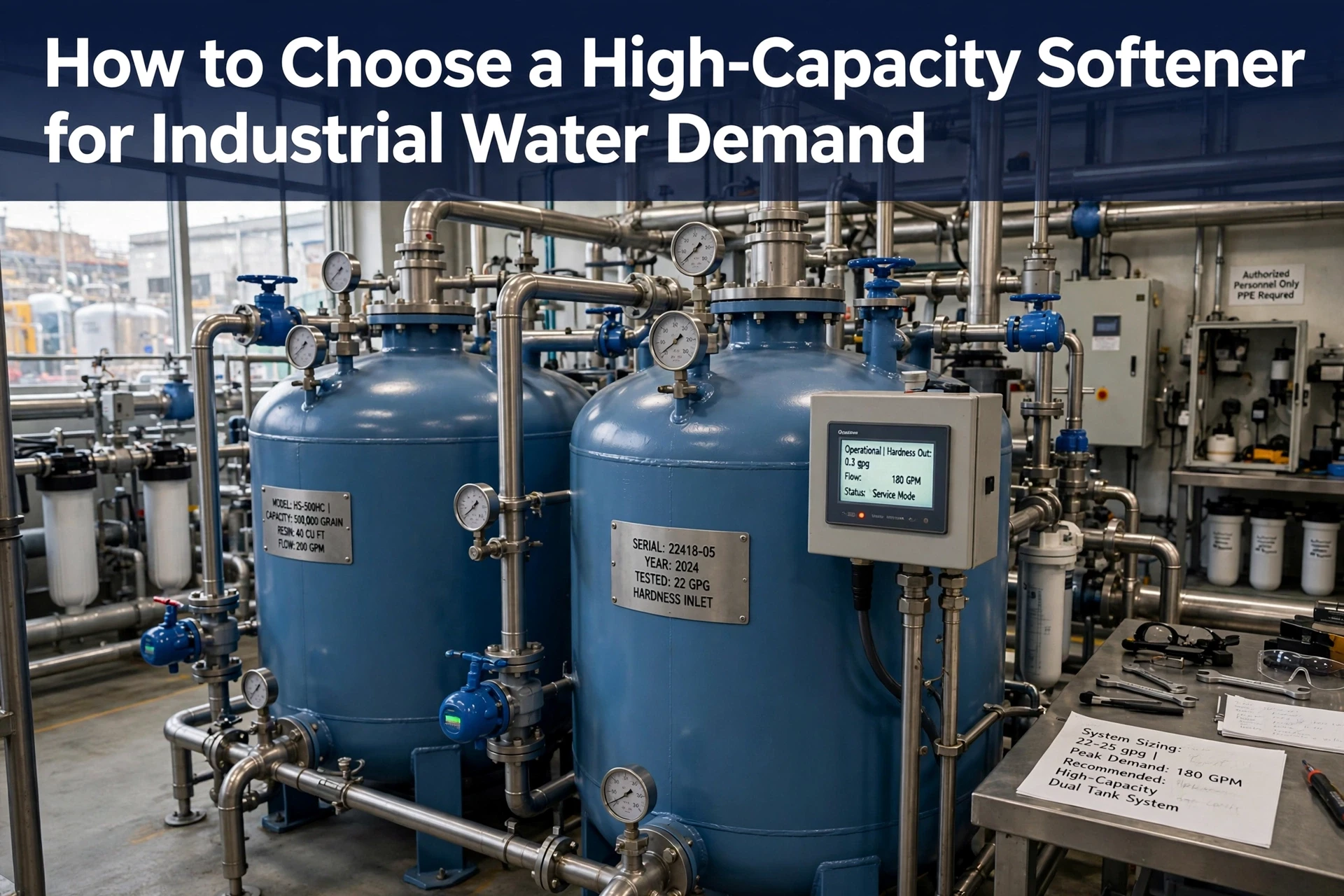
Quick Summary: Size an industrial softener from lab-tested effective hardness, peak flow, salt dose, resin volume, and a 20-25% safety factor, not from the tank label. Iron and manganese raise effective hardness, while pretreatment, metered valves, and twin-tank systems help maintain capacity and soft water during 24/7 operation. Hoffman Soft Water is highlighted as an example of a provider that engineers custom systems around a facility's water test and demand profile.
At 3 a.m. on a Tuesday, a packaging line in central Ohio stops cold. The boiler feed softener ran dry, and the operator learns the resin bed was sized for hospital laundry, not 22 gpg makeup water. That failure starts with sizing math most vendors skip. This guide covers high capacity softener selection: effective hardness, salt dose curves, peak demand, and how to vet a provider for Ohio's 15 to 25 gpg hard water.
Start With the Water, Not the Tank
A high capacity softener is sized from your water, not from a tank label. Two numbers matter most: what is dissolved in the water, and how fast you need it softened at peak.
Measure Hardness and the Metals That Hide in It
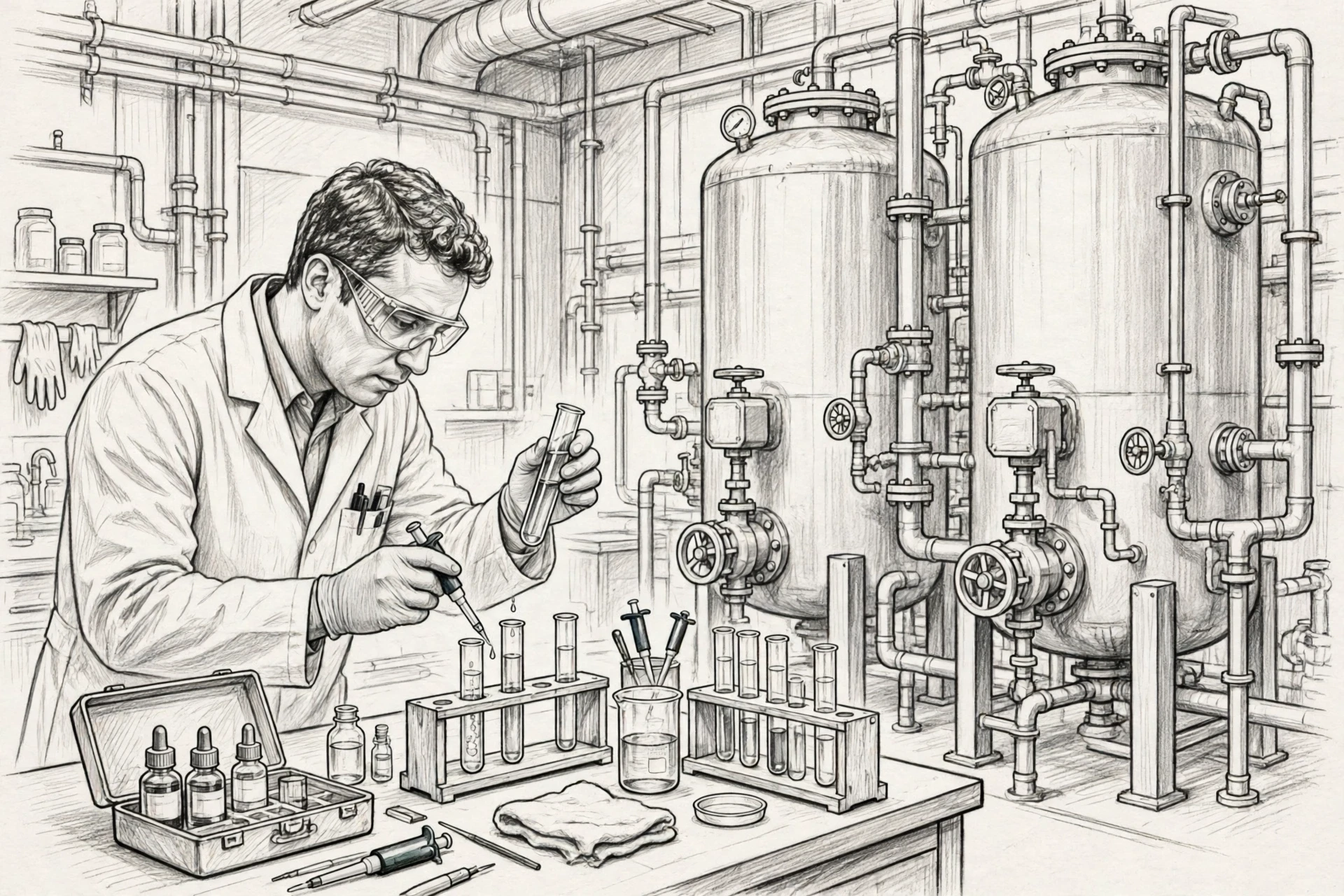
Start with a lab test, not a test strip. Effective hardness is your raw hardness in grains per gallon plus 3 grains for every ppm of iron and 4 for every ppm of manganese, because those metals consume resin capacity too. At Ohio's 15 to 25 gpg, iron can push effective hardness past 30 gpg and shrink a softener's real output dramatically. Get a full water analysis before you trust any sizing chart; our guide to high hardness treatment explains what to test for.
Peak Flow and Continuous Duty Change Everything
Capacity is only half the equation. A softener must also pass your service flow rate in gpm at peak demand without pushing water through too fast, which causes hardness leakage. A 24/7 process line never gets a regeneration window, so many plants choose a twin tank industrial softener that regenerates on standby.
Every high capacity softener is sized in grains of hardness removal. Do the math this way:
- Take daily demand in gallons.
- Multiply by effective hardness in grains per gallon.
- Add a 20-25% safety factor.
- Divide by resin capacity per cubic foot.
A cubic foot of softening resin holds roughly 20,000 to 30,000 grains, but only if you feed it enough salt.
Pick a Capacity Curve, Then Multiply by Resin Volume
Resin output depends on the salt dose curve. At 4 pounds of salt per cubic foot, expect about 20,000 grains per cubic foot. Push to 10 pounds and efficiency drops, even though total capacity climbs near 30,000. Skip the marketing number on the tank; size the bed from the curve that matches your regeneration schedule and leakage target.
Build in a Safety Factor and Read the Regeneration Interval
Say your line needs 15,000 gallons a day at an effective hardness of 24 gpg. That is 360,000 grains daily, so a pair of 6-cubic-foot tanks regenerate every night, or a twin tank industrial softener alternates under load. Add the safety factor and the interval stretches. If the math calls for regeneration more often than daily, scale up the media. Sizing an industrial water softener against Ohio's 15 to 25 gpg supply is where Hoffman Soft Water's engineered systems are built for exactly this calculation.
Configurations That Survive 24/7 Demand
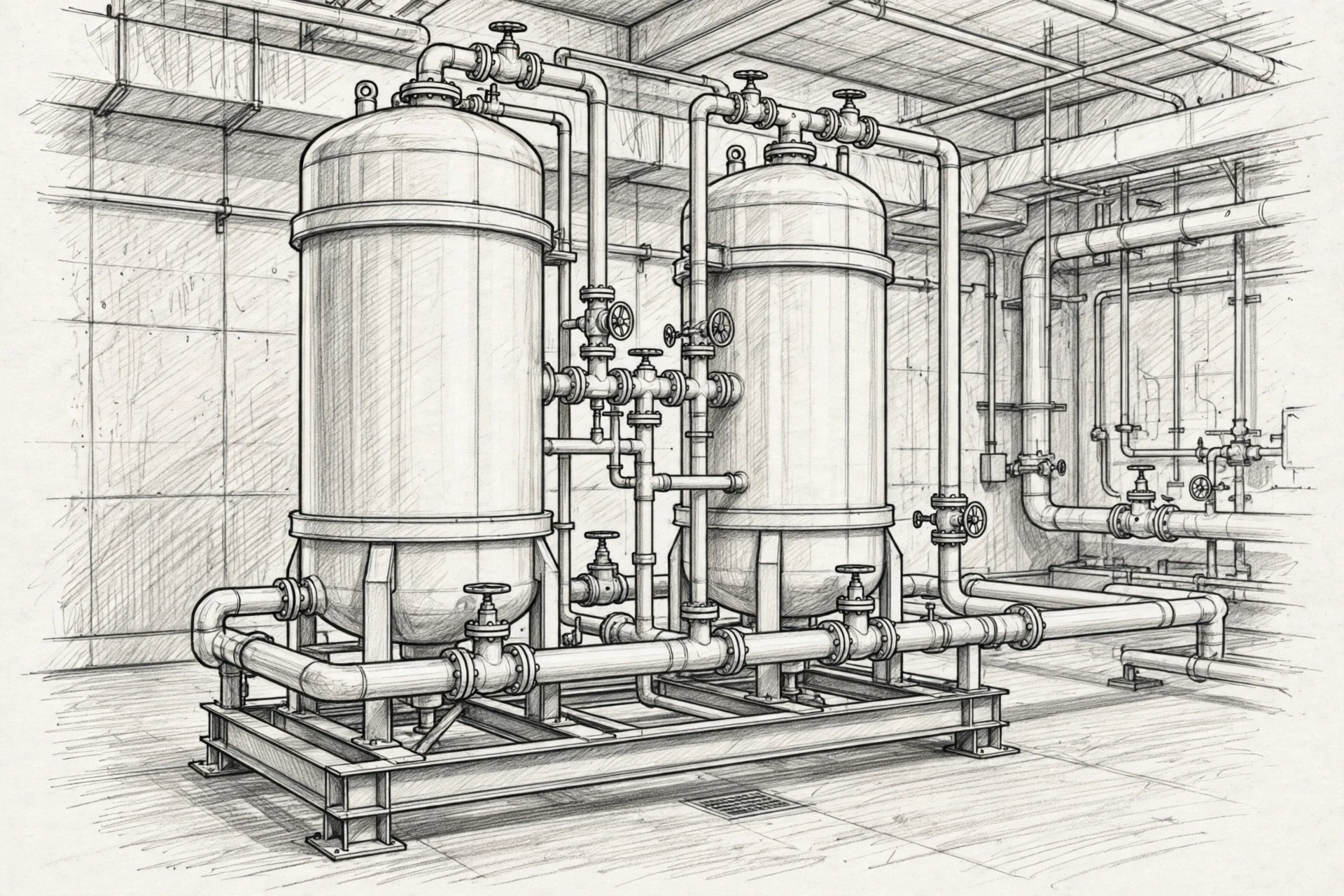
Single tank or twin tank for continuous duty? A single tank only regenerates when the line stops, so most 24/7 plants need redundancy. A twin tank industrial softener alternates under load, while a skid-mounted dual vessel system handles higher service flow.
| Configuration | Best Fit |
|---|---|
| Single tank | Batch processes with downtime windows |
| Twin tank, alternating | 24/7 lines needing constant soft water |
| Skid-mounted dual vessel | High peak flow, gpm-heavy plants |
Metered Control Valves and Filtration Add-Ons
Choose metered (demand-initiated) valves over timers. They count gallons and regenerate only when the resin is spent, cutting salt and keeping hardness leakage at or below your target, often under 1 gpg.
Pair the softener with pretreatment: iron and sediment filtration, cartridge or multimedia filters ahead of boiler and cooling tower feed. Filtered water protects the resin bed from fouling, so capacity stays near its rated grains per cubic foot. Match valve diameter to your peak gpm, not your average day.
Finding and Qualifying a Custom Softening Provider
Custom high-capacity softening comes from water treatment firms that engineer systems to your water test, flow profile, and hardness, not from equipment catalogs selling preset tanks.
What Custom Engineering Actually Looks Like
A real provider starts with a lab water analysis, measures peak gpm demand, and sizes resin volume, salt dose, and leakage targets from those numbers. Skid-mounted twin tank designs, matched valves, and startup monitoring follow. Some firms, such as Hoffman Soft Water, design and build this way; many national service providers resell standard units instead, so ask what gets engineered versus what gets ordered.
Mistakes That Skew Every Decision
Vetting fails when plants quote from tank size alone or skip the water test, so every bid prices a different problem. Compare proposals on regenerated capacity per pound of salt, service flow at your pressure drop, and service response terms, not the sticker.
Need a softener sized for Ohio's 15-25 gpg water? Hoffman Soft Water engineers industrial softening systems built to match your exact demand.
Frequently Asked Questions
Q1: Which providers offer custom high-capacity softening systems?
Water treatment firms that engineer from a lab test and peak gpm, not catalogs. Hoffman Soft Water builds custom industrial softening systems for Ohio facilities.
Q2: How often will a high-capacity softener regenerate?
Divide daily grains by resin capacity. At 15,000 gallons and 24 gpg, expect nightly regeneration; twin tank systems alternate instead.
Q3: What salt dose should industrial softeners use?
Four pounds per cubic foot yields about 20,000 grains efficiently; higher doses raise capacity but waste salt.
Conclusion
A high capacity softener is sized from effective hardness, peak gpm, salt dose curves, and a safety factor, not from a tank label. Run that math first, then choose a twin tank industrial softener built for 24/7 duty and a provider who engineers to your Ohio water test.