 Hoffman Soft Water
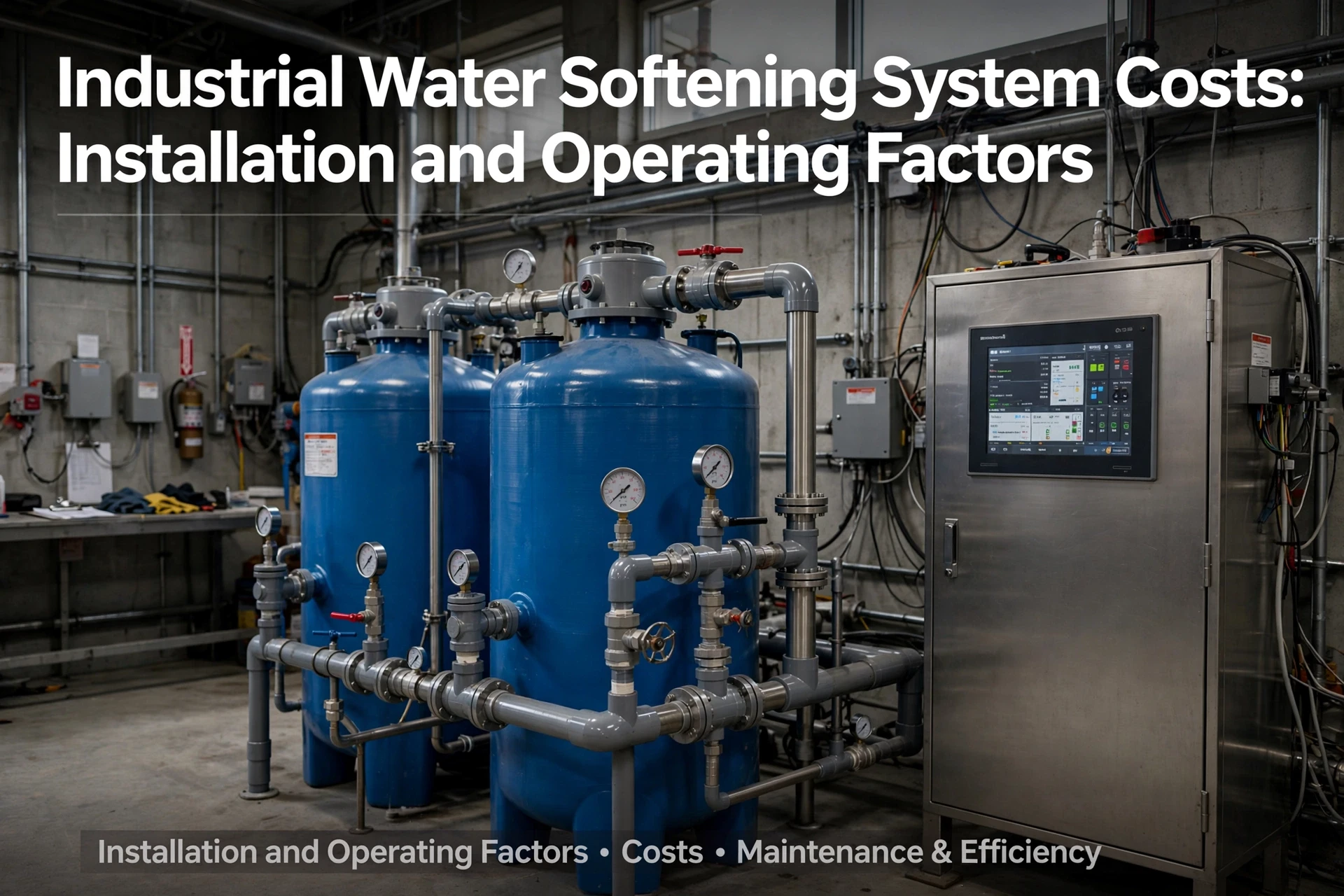
Quick Summary: Industrial water softener prices depend on flow, hardness, capacity, configuration, and installation scope, with industrial multi-tank projects often costing $10,000 to $30,000 before some plumbing and permit work. Plumbing, labor, site changes, controls, and brine drainage can dominate the installed price, while salt is usually the largest recurring expense and commercial resin may need replacing every 7 to 10 years for $400 to $800. Compare vendors using the same sizing questions and budget for equipment, installation, first-year operating costs, reserves, and service over the system’s full life.
Feed your plant 20 to 25 grains per gallon of hardness and no residential quote will cover it. The first number a vendor gives you for commercial water softening is usually the equipment price, not the installed project. That gap hides real money. This guide lays out industrial water softening systems pricing at Ohio-scale hardness, the line items after install, and how to compare quotes on total cost, drawing on years of treating high-hardness industrial water.
What Actually Determines the Price Tag
Four factors drive commercial water softening cost: system size, hardness load, configuration, and installation scope. Two plants with the same floor space can see quotes differ by 10x.
Installed Cost Ranges for Commercial and Industrial Systems
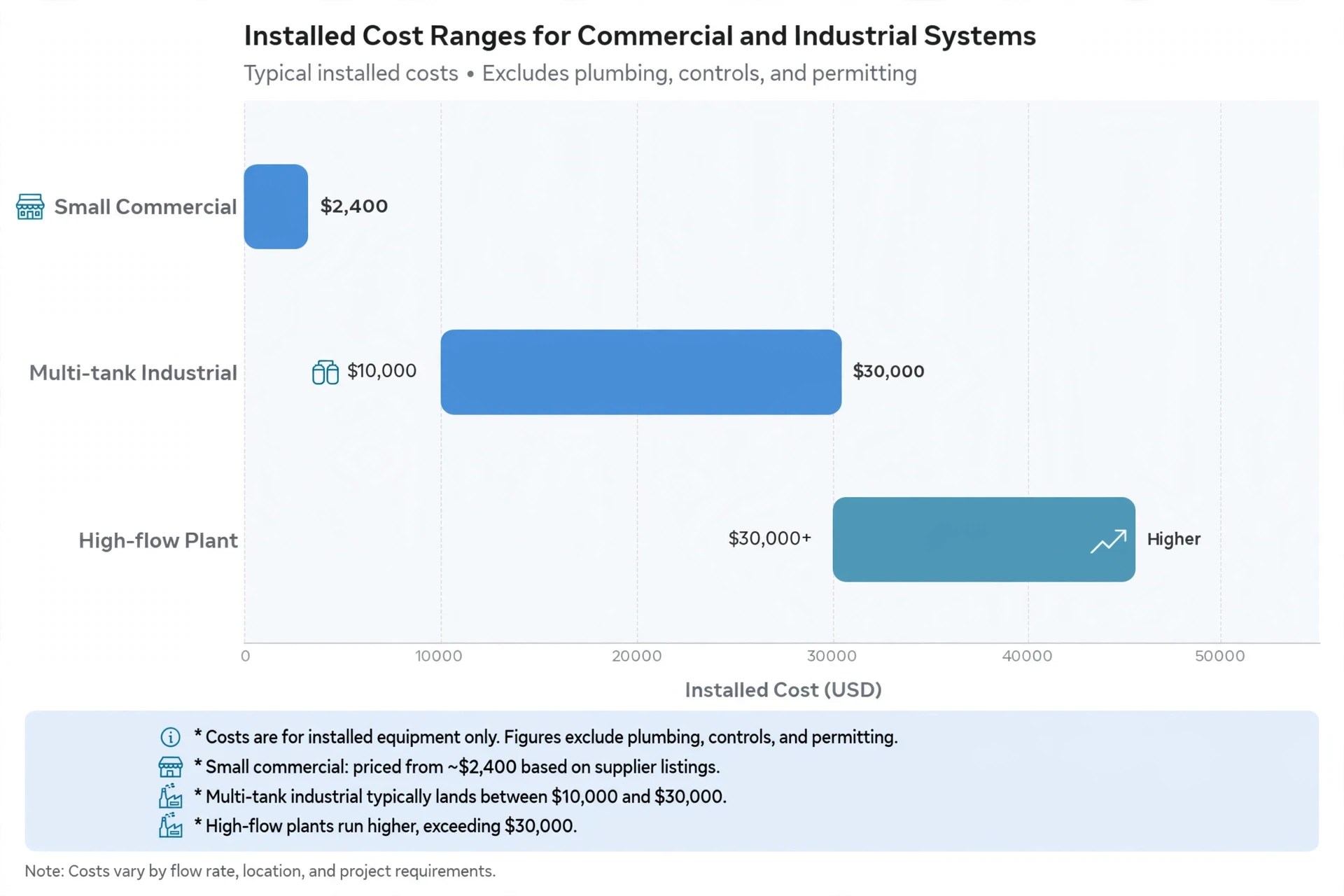
Small commercial units start near $2,000 to $5,000, while industrial water softener installation cost for multi-tank systems typically lands between $10,000 and $30,000, and high-flow plants run higher. Commercial-sized equipment alone often prices from about $2,400 based on supplier listings. These figures exclude plumbing, controls, and permitting.
Flow Rate, Hardness, and Configuration
Sizing starts with peak flow rate in gallons per minute, then grain exchange capacity, or how much hardness each cycle can remove. At 20 to 25 gpg feed water, your resin needs far more volume per gallon treated than a residential unit, so tanks grow and prices climb. Twin-alternating tanks, lead-lag redundancy, metered controls, and brine reclaim all add cost but cut downtime. Choosing between ion exchange and other softening methods also shifts the budget, as covered in this factory softening comparison.
Where Installation Dollars Actually Go
The equipment is only part of an industrial water softener installation cost. Most quotes split into two buckets: what the gear costs, and what it takes to set it into your plant.
Labor, Piping, and Controls Line Items
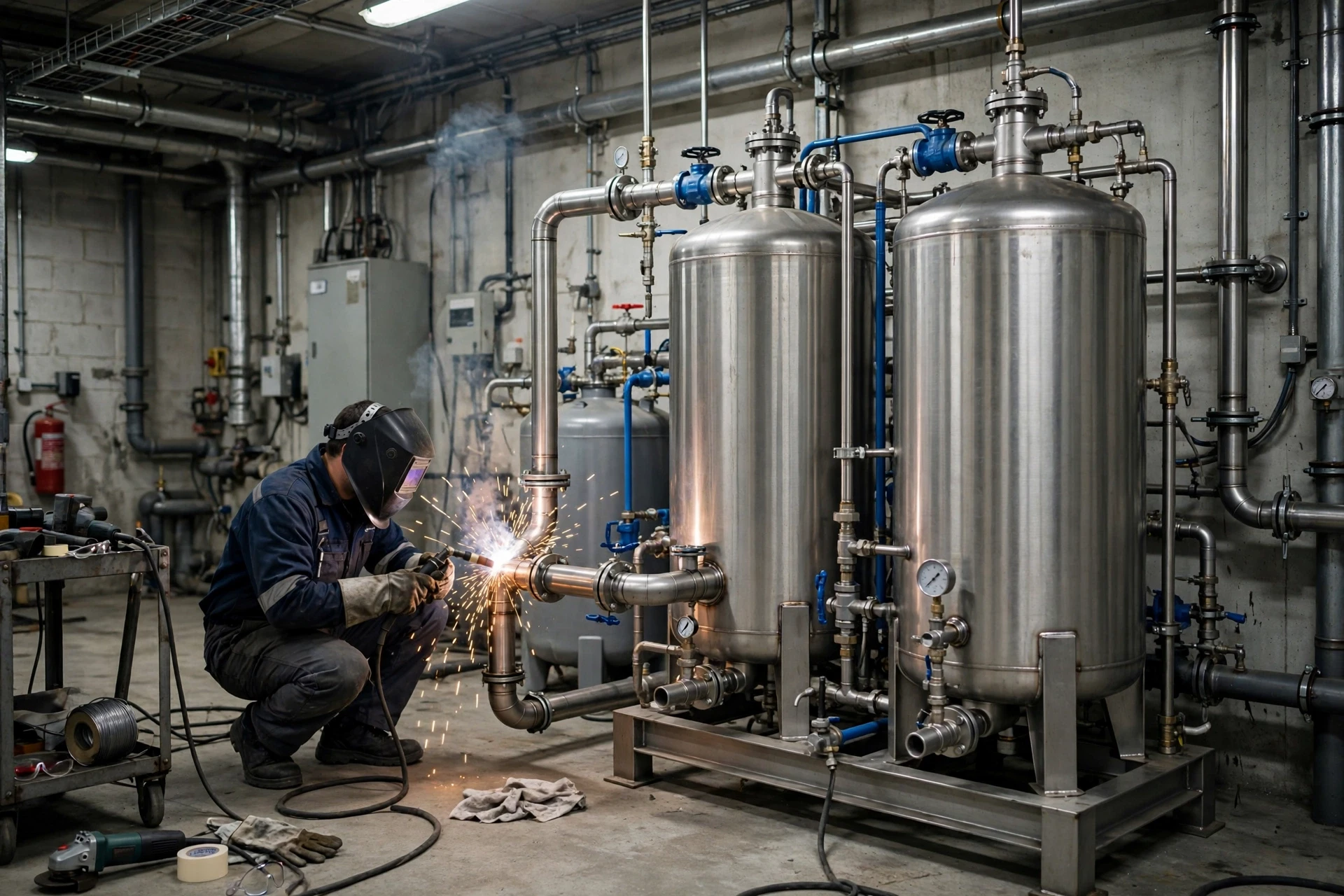
Expect the plumbing to dominate. High-flow commercial water softening systems need bypass assemblies, sample valves, and often a loop of new stainless or LDX pipe. Add hard-wiring for the control valve, a brine tank tie-in, and floor drains rated for regeneration discharge. Labor alone can run 30 to 50 percent of the invoice.
Hidden Costs That Show Up On Site
Site conditions add surprises. Concrete work for tank pads, trenching, permits, and bringing electrical up to code all bill separately. In older Ohio buildings, corroded inlet headers or no available drain can force rework before the first gallon runs through.
Get the installer to list these line items separately, so competing quotes compare like for like.
Operating Costs Over the Life of the System
The industrial water softener operating cost comes down to five recurring line items:
- Salt or brine for each regeneration cycle
- Water and sewer used to flush the brine
- Electricity for controls and valves
- Resin media replacement every 7 to 10 years
- Service, testing, and parts on valves and meters
Salt, Brine, and Resin
Salt is your largest ongoing expense, and it scales with hardness and daily flow. Ohio's 20 to 25 gpg feed water drives heavy regeneration, so brine management and discharge costs matter too. Plan on resin replacement in the $400 to $800 range for commercial beds, more for large industrial tanks.
Service, Parts, and the Cost of Skipping It
A commercial water softener service contract covers annual checks, brine valve cleaning, and hardness testing, often for a few hundred dollars a year. Skip it, and a stuck valve can push hard water into boilers within hours, turning a small line item into major equipment damage.
How to Compare Quotes and Build Your Budget
Five Questions to Ask Every Vendor
Ask each bidder the same list so answers line up:
- What feed hardness did you size for, and what is the grain exchange capacity?
- How many tanks, and what happens when one is regenerating?
- What is included in labor, permits, and plumbing tie-ins?
- What are projected salt, water, and brine disposal costs per month?
- What does a commercial water softener service contract cover, and at what price?
A vendor that skips sizing math is guessing at your plant.
Turning a Quote Into an Approved Budget
Build your budget in three columns: equipment, installation, and first-year operation. Add reserve lines for resin replacement and emergency service. Compare total cost of ownership over ten years, not the invoice total. For sizing references, see high-capacity softener selection for industrial water demand.
Your Ohio facility needs a system sized for 20-25 gpg hardness, not a guess. Hoffman Soft Water engineers systems for your feed water. Request a site assessment and a written quote.
Frequently Asked Questions
Q1: How much do industrial water softening systems cost?
Small commercial units run $2,000 to $5,000 installed, while multi-tank industrial systems typically land between $10,000 and $30,000, excluding permits and plumbing.
Q2: What is the biggest ongoing operating cost?
Salt. It scales with hardness and daily flow, and Ohio's 20 to 25 gpg feed water drives heavy regeneration.
Q3: How often does softener resin need replacing?
Every 7 to 10 years. Budget $400 to $800 for commercial beds, more for large industrial tanks.
Q4: Is a service contract worth it?
Yes. A commercial water softener service contract costs a few hundred dollars yearly and catches valve failures before they send hard water into boilers.
Conclusion
Industrial water softening systems are priced on sizing and hardness, not floor space. Budget for equipment, installation, and operation, compare quotes on total cost of ownership, and keep a service contract in place to protect boilers and cooling towers.