 Hoffman Soft Water
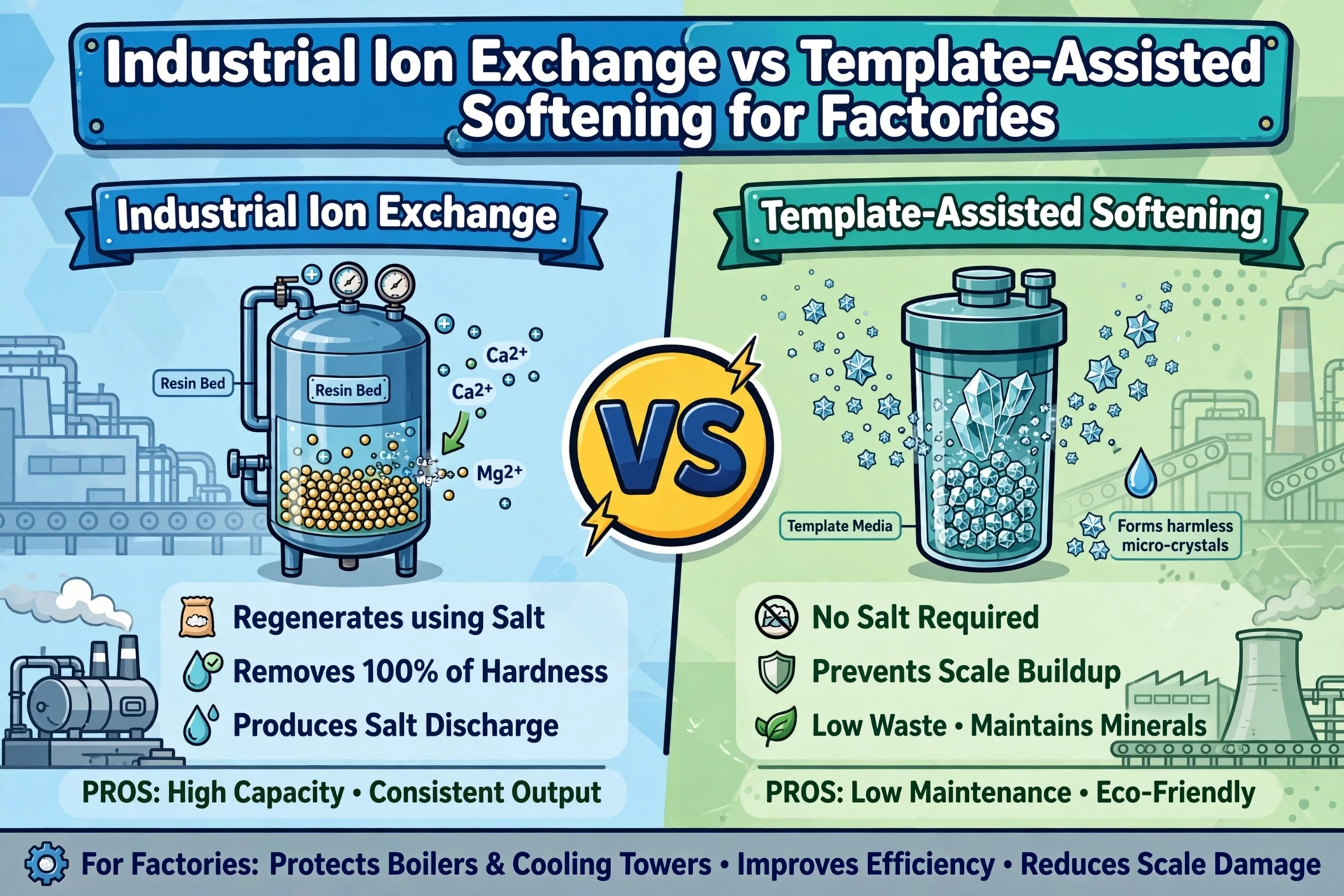
Quick Summary: Ion exchange removes calcium and magnesium, typically reducing hardness by 90% or more, making it the better choice for boilers and high-pressure equipment using 15-25 gpg water. Template-assisted crystallization uses no salt and needs little maintenance, but it leaves hardness in the water and mainly suits cooling loops and RO pretreatment at low-to-moderate hardness. Hoffman Soft Water engineers right-sized ion exchange and filtration systems for high-hardness Ohio plants, reducing salt and water use while providing 24/7 emergency support.
If your plant draws 15-25 gpg water, you face a real choice: industrial ion exchange with brine regeneration, or a salt-free conditioner that alters scale instead of removing it. Industrial ion exchange delivers true hardness reduction; template-assisted crystallization trades removal for zero salt handling. We compare both so your industrial ion exchange decision matches your water, equipment and staff.
Industrial Ion Exchange vs Template-Assisted Softening: At a Glance
| Industrial Ion Exchange Softening | Template-Assisted Crystallization | Hoffman Soft Water | |
|---|---|---|---|
| How it works | Resin beads exchange Ca/Mg for sodium, regenerated with brine | Media-assisted nucleation converts hardness to stable micro-crystals | Custom-engineered ion exchange softening and media filtration sized to flow and hardness |
| Hardness removal | Removes hardness ions, typically 90%+ reduction | Does not remove hardness; changes its crystal form | Purpose-designed for high-hardness Ohio feed water |
| Operating cost drivers | Salt, water, resin replacement | Media replacement only, no consumables | Right-sized resin and controls to cut salt and water use |
| Maintenance and logistics | Regular salt deliveries, weekly checks, resin bed monitoring | Minimal, occasional media swap, no brine tank | Service-first coverage with 24/7 emergency response |
| Best fit | Boilers, cooling towers, high-pressure equipment at 15-25 gpg | Scale control in cooling loops, RO pretreatment, low-to-moderate hardness | Ohio manufacturing, food and beverage, healthcare and hospitality plants |
Meet the Contenders
Industrial Ion Exchange Softening
Resin-based softening swaps calcium and magnesium for sodium, regenerating on a scheduled brine cycle. It suits boilers, cooling towers, and high-pressure equipment fed hard water. The trade is real salt and water use for dependable removal of hardness ions.
Key strengths
- Typically 90%+ hardness reduction
- Proven scale prevention for high-pressure equipment
- Works at severe 15-25 gpg hardness
Template-Assisted Crystallization
Salt-free media converts dissolved hardness into stable micro-crystals that stay suspended instead of forming scale. It fits cooling loops, reverse osmosis pretreatment, and low-to-moderate hardness water. No brine tank means minimal upkeep, but the hardness itself stays in the water.
Key strengths
- No salt, brine, or drain water
- Occasional media swap is the only upkeep
- Low operating cost over time
Hoffman Soft Water
An Ohio industrial water treatment provider, Hoffman engineers ion exchange softening and media filtration around each plant's flow and hardness. It serves manufacturing, food and beverage, healthcare, and hospitality sites, with right-sized resin and controls that cut salt and water use.
Key strengths
- Built for high-hardness Ohio feed water
- Service-first coverage with 24/7 emergency response
- Ongoing monitoring and preventive maintenance
How Each Technology Actually Treats Hard Water
No, template-assisted crystallization does not reduce hardness the way ion exchange does. Ion exchange removes calcium and magnesium from water, typically cutting hardness by 90% or more. TAC leaves the minerals in the water and changes their crystal form so they stay suspended instead of sticking to hot surfaces.
That single difference drives everything else: brine tanks and salt deliveries versus a low-maintenance media cartridge, measurable soft water versus conditioned water.
Why the Hardness Test Tells Different Stories for Each
Run a hardness test after each system and you get opposite readings. Downstream of a softener, grains per gallon drop sharply because resin beads swap calcium and magnesium for sodium during brine regeneration. After a TAC unit, the test reads the same, since the minerals never left; the treatment happens at the crystal level. That matters at Ohio's 15-25 gpg hardness, where high-hardness water treatment choices hinge on whether your process needs hardness gone or just defused.
Operating Costs, Salt Handling and Labor
Which is cheaper to run? Salt-free crystallization wins on daily labor and salt costs, but ion exchange often wins overall because it removes hardness instead of letting it form scale.
| Cost Factor | Ion Exchange | Template-Assisted Crystallization |
|---|---|---|
| Salt and brine | Ongoing salt deliveries, brine tank upkeep | None |
| Labor | Weekly checks, resin monitoring | Occasional media swap |
| Hidden energy cost | Low when soft water is maintained | Scale still possible under heat load |
| Best total cost | Boilers, cooling towers, RO pretreatment | Low-to-moderate hardness loops |
The Hidden Line Item: Downstream Energy and Scale
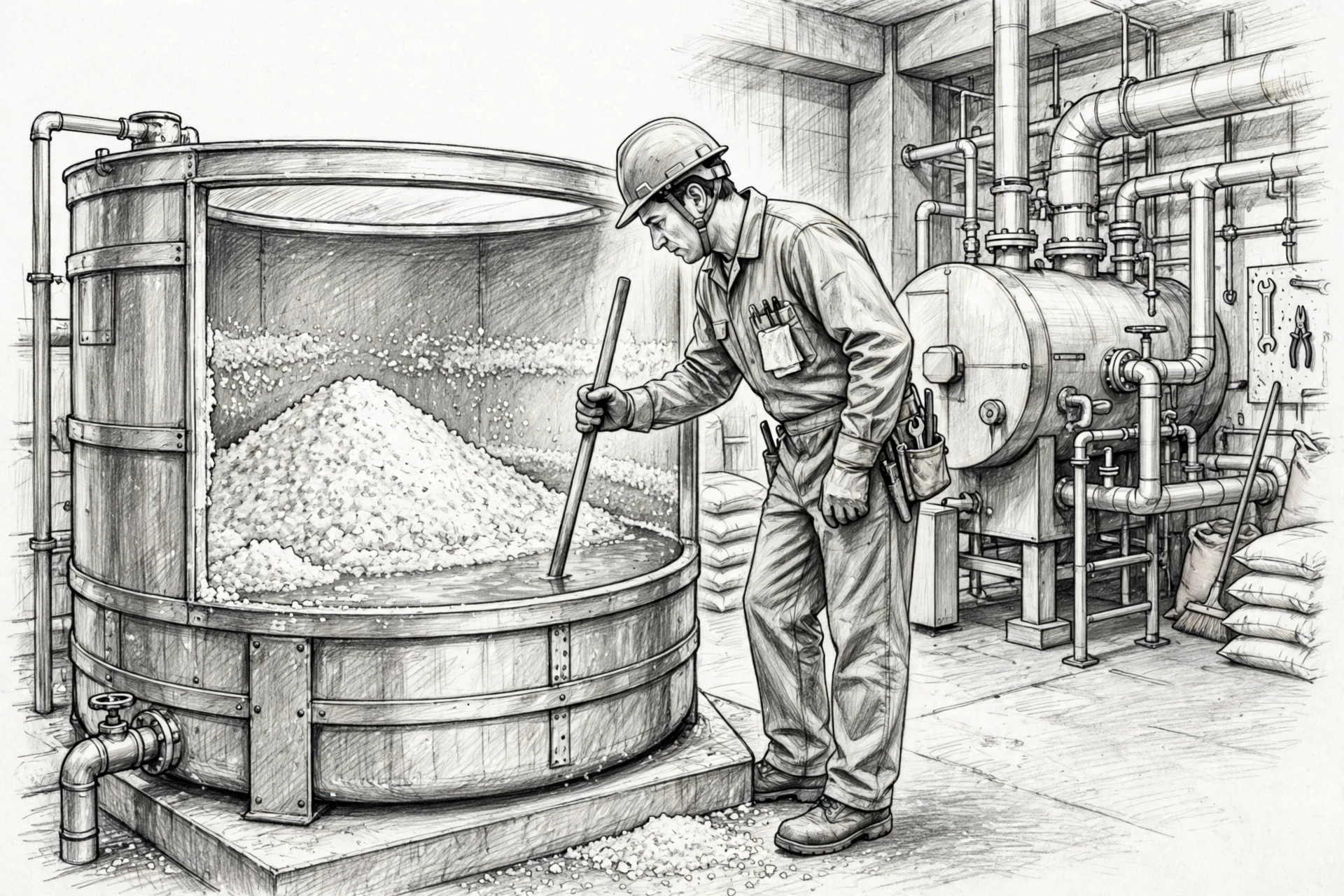
The sticker price misses the biggest number. Scale as thin as 1/16 inch can raise boiler fuel use by up to 15%, so a "cheap" conditioner that lets scale form can quietly cost more than salt ever will. At Ohio's 15-25 gpg hardness, that gap widens fast in industrial water softening systems sized for your load.
Where Each System Fits: Boilers, Towers and High-Hardness Plants
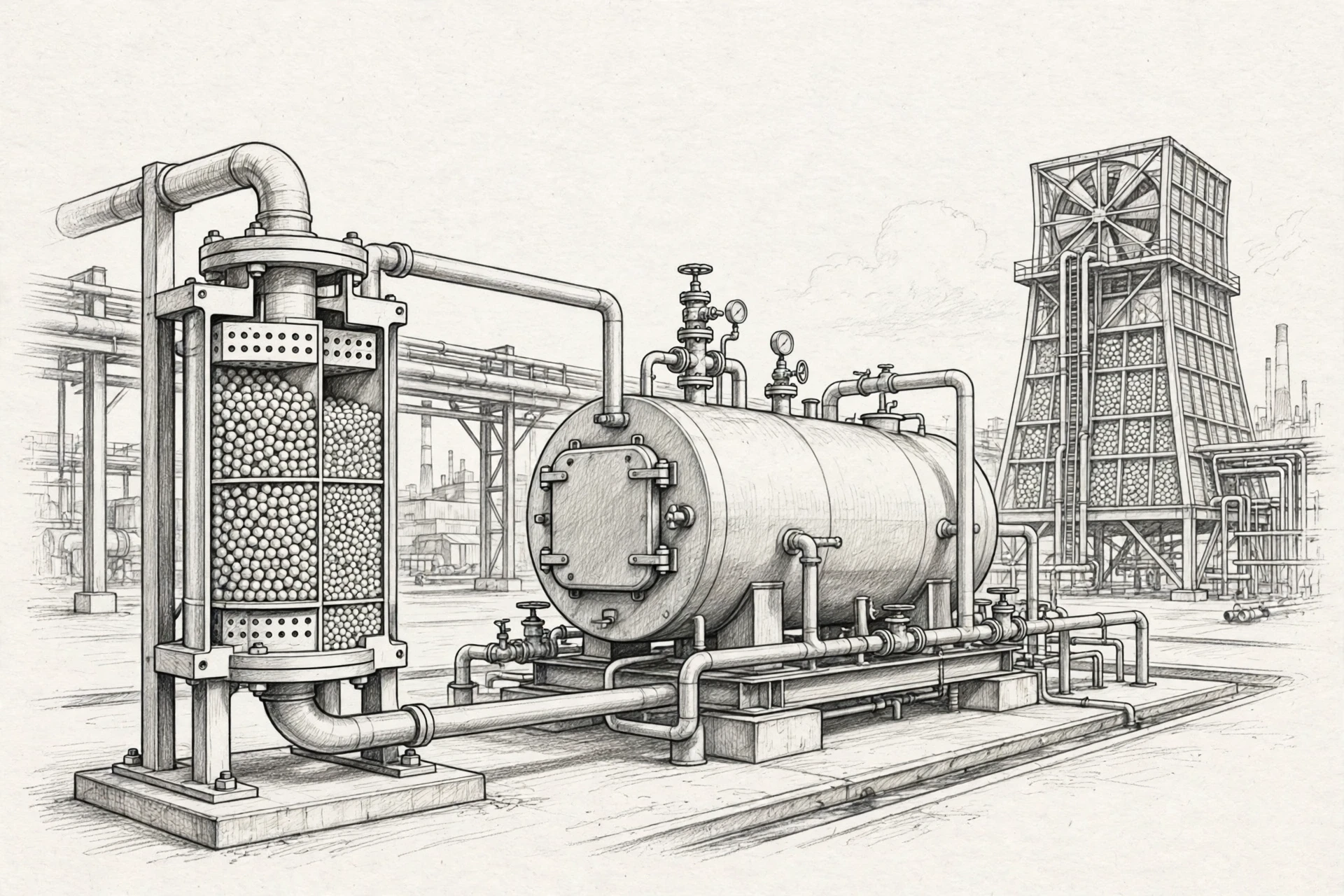
The Top Alternatives to Industrial Ion Exchange
The top alternatives to industrial ion exchange are:
- Template-assisted crystallization (TAC), a salt-free conditioner that changes hardness into harmless crystals
- Chemical scale inhibitors, dosed into cooling loops to hold minerals in suspension
- Side-stream cooling tower water filtration, which pulls sediment out of recirculating water
- Reverse osmosis pretreatment, which strips minerals before water reaches sensitive equipment
Each fits a different job. TAC suits cooling loops and moderate hardness. Ion exchange still wins in boilers at Ohio's 15-25 gpg.
Which Should You Choose: Ion Exchange or Template-Assisted Softening?
How to Get a Defensible Answer for Your Plant
For boiler feed, use ion exchange, not a salt-free conditioner:
- Boilers concentrate minerals, so any remaining hardness forms scale under heat and pressure.
- At 15-25 gpg, template assisted crystallization does not remove hardness, so it cannot protect a steam system.
- Regulatory and warranty demands often require measured hardness below 1 gpg.
Choose a salt-free water softener for boilers only when feed hardness is low and no steam is involved. Otherwise, match the tool to the load: ion exchange for boilers, TAC for cooling loops or RO pretreatment.
An engineered site survey of your water test, flow profile, and process makes this call defensible rather than a guess. Plants across Ohio can get that survey through providers of industrial water softening systems built around their actual load.
Ready to size the right system for your plant? Talk to Hoffman Soft Water about a free water assessment.
Frequently Asked Questions
Q1: What are the top alternatives to industrial ion exchange?
Template-assisted crystallization, chemical scale inhibitors, side-stream cooling tower water filtration, and reverse osmosis pretreatment. Each fits a different job; TAC suits cooling loops at moderate hardness.
Q2: Does template-assisted crystallization lower my hardness test reading?
No. The minerals stay in the water, so hardness still reads 15-25 gpg. Ion exchange actually removes them.
Q3: Can I use a salt-free water softener for boilers?
Not at high hardness. Boilers concentrate any remaining hardness into scale, so measured softening is required.
Conclusion
Ion exchange removes hardness; template-assisted crystallization only changes it. For boilers at 15-25 gpg, measured softening wins. For cooling loops, salt-free conditioning cuts salt and labor. Match the technology to your load.