 Hoffman Soft Water
Quick Summary: Preventive industrial softener maintenance beats emergency repairs, especially for Ohio plants facing 15-25 grain hard water that can waste up to 5% of boiler fuel. Hoffman Soft Water offers scheduled visits plus 24/7 emergency response, but you must verify visit frequency, response-time windows, and parts coverage in writing before signing. The service fits most plants, though larger firms like Chemtreat may be better for those needing full chemical programs beyond pretreatment.
When a softener starts passing hardness downstream, good industrial softener maintenance means a fast diagnosis, protection for boilers and connected equipment, and a clear repair plan. This review looks at Hoffman Soft Water for Ohio manufacturers facing either routine service or an urgent call, based on published service information plus a checklist of facts to verify before you sign any industrial softener maintenance contract.
What Hoffman Soft Water's Maintenance Offer Covers
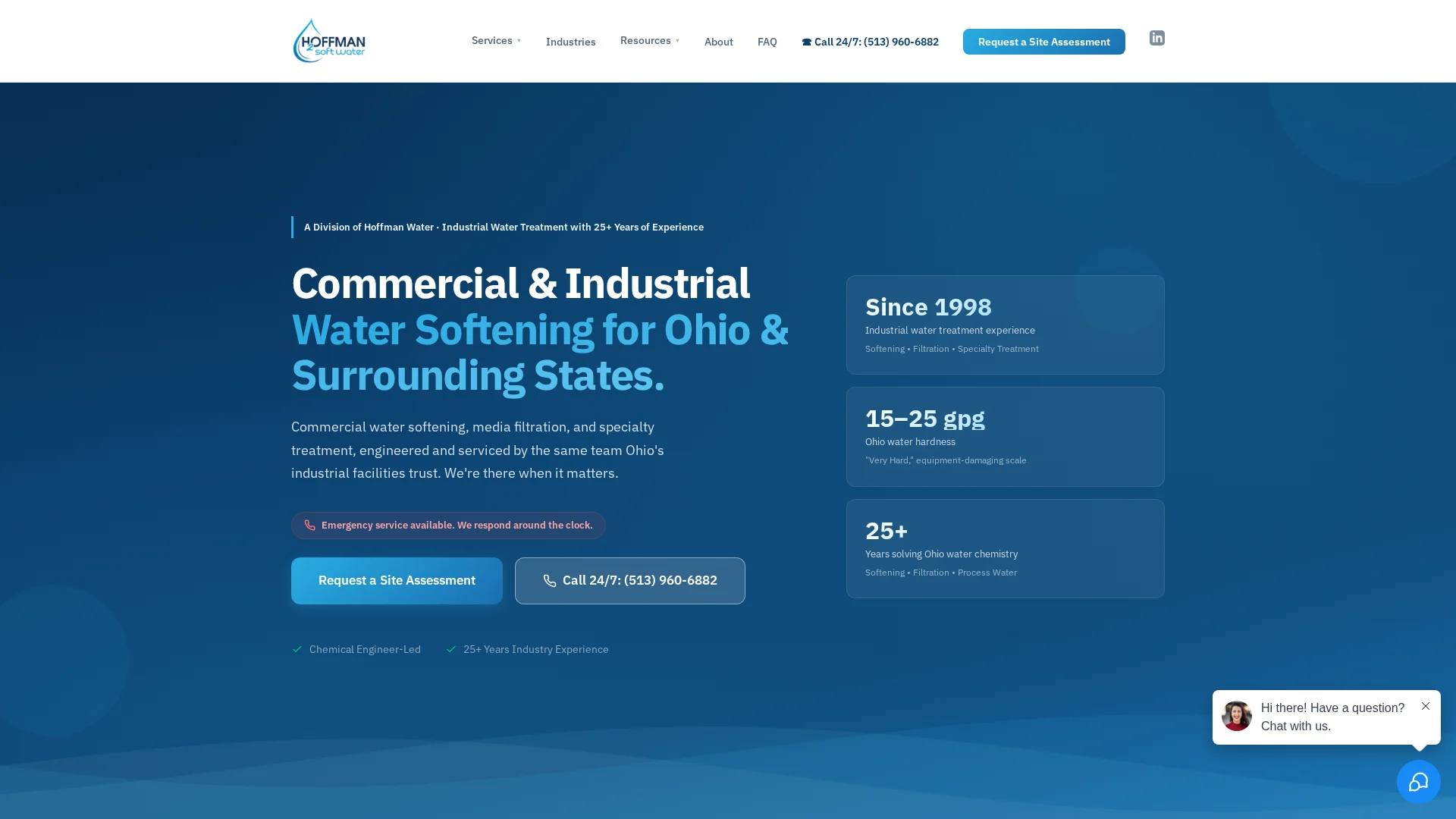
Hoffman Soft Water builds and services industrial softeners for Ohio plants that fight 15-25 grain water every day. Its maintenance program pairs scheduled visits with 24/7 emergency response.
Based on what the company publishes, the offer centers on three things:
- Preventive maintenance - routine inspections, water testing, and system tuning so problems get caught before they stop production.
- Ongoing monitoring - tracking softener performance against incoming hardness, since untreated hardness feeds scale into boilers and cooling towers.
- Emergency response - around-the-clock availability when a softener fails mid-shift.
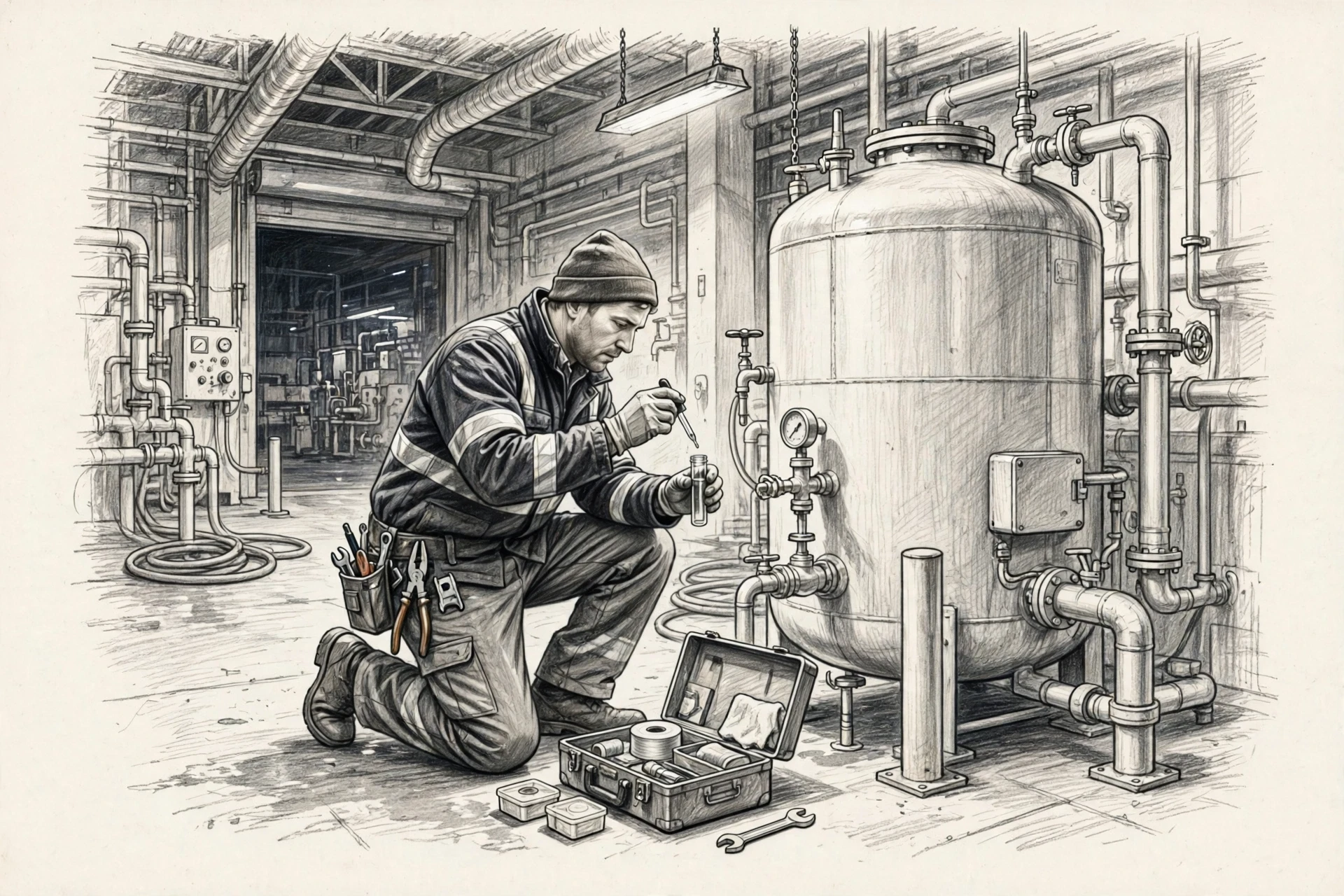
This matches standard industry practice: commercial service plans typically include brine tank checks, valve and control inspections, and hardness testing to confirm treated water reads near zero, as outlined in this commercial softener service guide.
What to confirm before signing: exact visit frequency, whether resin testing or replacement is included, response-time commitments in writing, and parts coverage. Those details are not published and vary by plant.
Also Read: https://www.hoffmansoftwater.com/blog/7-cooling-tower-filters-for-cleaner-more-efficient-operations
Emergency Service and Plant-Fit Checks
A softener failure can idle a line fast. ABB's reliability survey puts the typical cost of unplanned downtime at about $125,000 per hour, so response time is part of the price. Hoffman Soft Water offers 24/7 emergency response, which matters for boiler feeds and cooling towers that cannot wait for Monday.
Before you sign anything, confirm these plant-fit details:
- Do they stock common parts (valves, resin, brine components) on the truck?
- What is their committed on-site arrival window for your ZIP code?
- Will emergency visits include hardness testing on the spot?
- Can they service another vendor's system, not just their own installs?
- Is after-hours labor billed differently from standard rates?
Get the answer to each question in writing. Then compare it against what a competitor like Chardon Labs or Chemtreat offers. Verifiable published claims are one thing; your plant's actual terms are what you hire.
Also Read: Industrial Water Treatment Services Expand as Reuse Investment Accelerates
Pros and Cons for Manufacturing Plants
Scale is the main threat. The U.S. Department of Energy warns that even thin scale layers act like insulation on boiler tubes, cutting heat transfer and wasting fuel - up to 5% more fuel use in firetube boilers. Ohio water often runs 15-25 grains per gallon hard, so the risk is real, not theoretical.
Pros of a maintenance service:
- Stops scale before it forms, protecting boilers and cooling towers
- Salt delivery, resin checks, and testing handled for you
- 24/7 emergency response limits costly downtime
- Lower fuel bills and fewer tube failures
Cons to weigh:
- Recurring contract cost versus in-house upkeep
- Response times and service scope vary by provider, so verify them in writing
- Smaller plants may not need full preventive plans
See how softener service works in practice:
The upsides usually outweigh the costs for plants running boilers on hard water. Confirm exact pricing and guarantees before signing.
Also Read: Commercial Boiler Water Treatment Service Review for Ohio Facilities
Should Ohio Plants Choose Hoffman Soft Water?
For most Ohio plants, yes - with one caveat. Water here runs 15-25 grains per gallon, well into "very hard" territory, and scaled equipment can burn up to 29% more energy. Hoffman Soft Water fits best if you want custom-engineered softening, hands-on service, and a chemical engineer who answers emergency calls himself. Confirm response-time commitments and service pricing in writing before signing. Larger national firms like Chemtreat may suit plants needing full chemical programs beyond pretreatment.

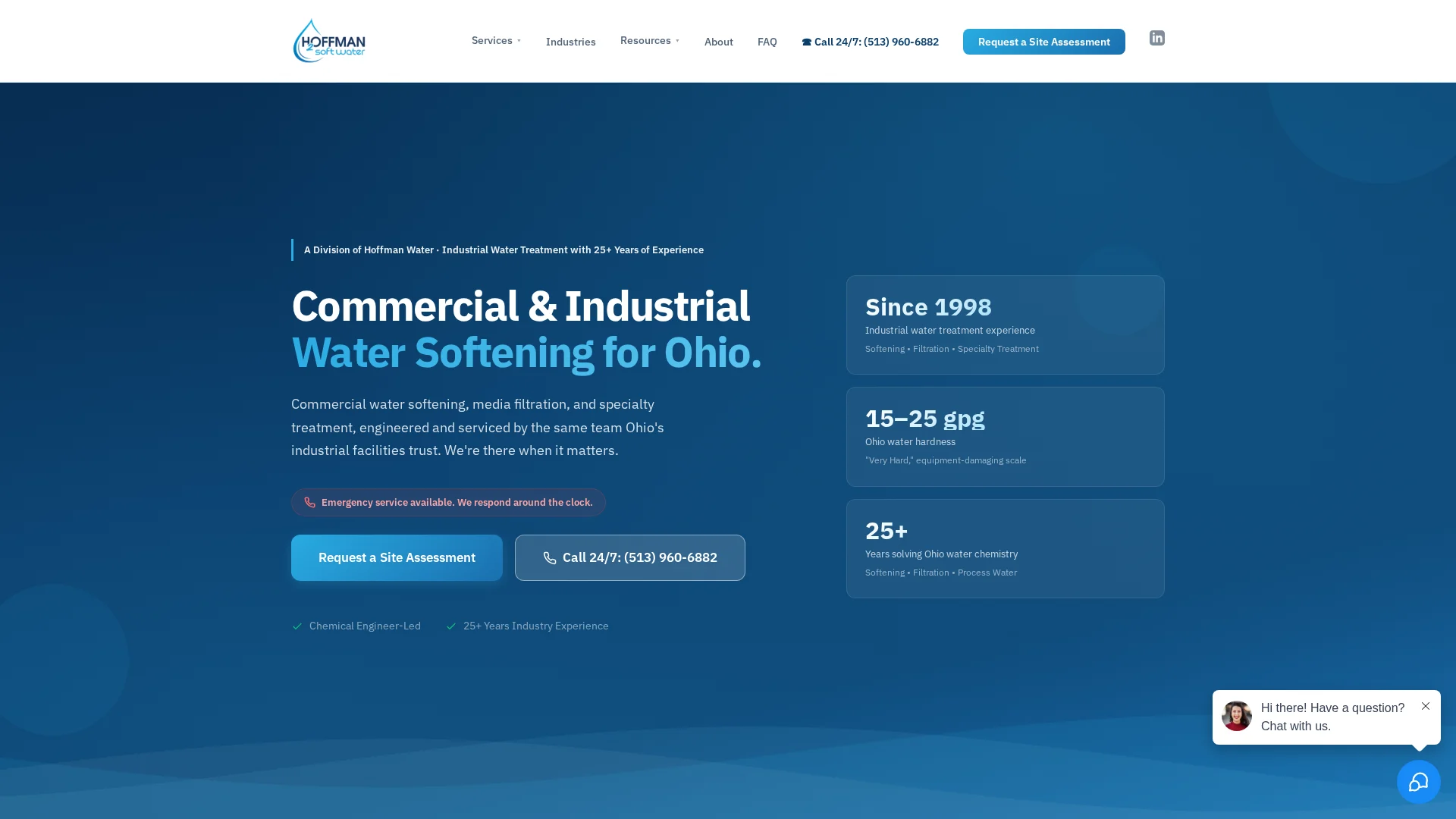
Need a maintenance partner who answers fast and knows Ohio's hard water? Hoffman Soft Water offers preventive service and 24/7 emergency response. Request your plant assessment today.
Frequently Asked Questions
Q1: Who provides emergency industrial softener service in Ohio?
Hoffman Soft Water offers 24/7 emergency response for Ohio plants, alongside regional firms like Chardonlabs. Confirm response-time guarantees before signing a contract.
Q2: How often should industrial softeners be serviced?
Plan quarterly preventive visits, with resin checks and valve inspections yearly. High-hardness water may demand more frequent monitoring.
Q3: What maintenance keeps scale from damaging boilers?
Test hardness weekly, regenerate on schedule, and replace resin before it fails. Consistent monitoring catches problems before downtime.
Conclusion
Preventive softener service beats emergency repair every time. Scale can waste up to 5% of boiler fuel, so verify maintenance scope, response times, and hard-water experience before hiring any Ohio provider.