 Hoffman Soft Water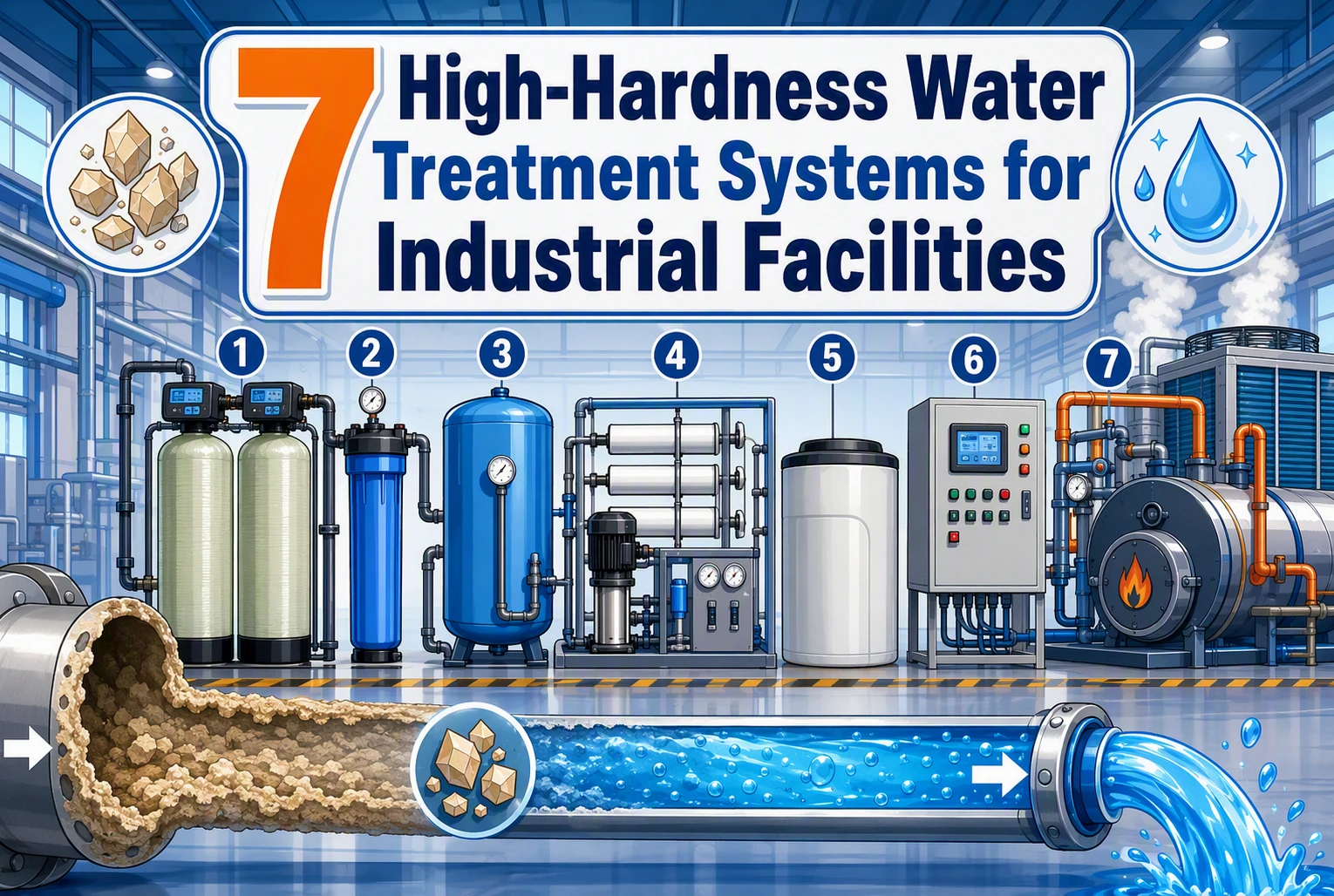
Quick Summary: Hard water at 15–25 grains per gallon clogs boilers, cooling towers, and pipes with scale, raising energy costs and cutting equipment life. Hoffman Soft Water’s engineered systems stand out for Ohio facilities by starting with site-specific testing and customizing softening, filtration, and pretreatment to match exact flow, hardness, and discharge needs-unlike off-the-shelf options. The best systems balance redundancy (like duplex tanks for continuous operation) with tradeoffs like salt use or complex controls, while integrated programs (e.g., Chardon Labs) add chemical monitoring to prevent broader water risks. Choosing one hinges on testing hardness, alkalinity, and TDS, then sizing for peak demand-not just average use.
At 15-25 grains per gallon, hard water turns boiler tubes, cooling fill, membranes, and piping into scale traps. The challenge is choosing high hardness water systems that meet peak flow, run time, regeneration, and discharge limits. This ranking reviews seven high hardness water systems, from Hoffman Soft Water programs to membranes and chemical treatment. We favored high hardness water systems built around water tests, flow, daily use, iron, silica, TDS, and discharge needs.
Quick Comparison of High-Hardness Water Systems
| System | Best for | Hardness approach | Operating profile | Main tradeoff |
|---|---|---|---|---|
| Hoffman Soft Water Engineered Industrial Softening | Ohio manufacturing, food, healthcare, hospitality, and industrial facilities | Engineered softening with optional filtration and specialty pretreatment | Custom-sized, service-backed, application-specific | Requires site assessment and professional design rather than an off-the-shelf purchase |
| EAI Water Industrial Ion-Exchange Softener | High-flow facilities needing redundancy and automation | Sodium-cycle ion exchange | Metered, automated, duplex, or triplex | Salt use and brine disposal require operational planning |
| Envirogen EcoSave High-Efficiency Softener | High-use sites targeting lower salt and water consumption | High-efficiency sodium ion exchange | Duplex, automated, conductivity-controlled | Higher design complexity and a need for disciplined controls |
| Chardon Labs Integrated Cooling and Boiler Treatment | Boiler and cooling-tower systems with multiple chemistry risks | Softening combined with chemical treatment and monitoring | Scheduled testing, automated controls, ongoing service | Requires a broader treatment program and regular operator or vendor involvement |
What to know about high-hardness water treatment
Hardness comes mainly from calcium and magnesium. Plants measure it in grains per gallon (gpg) or milligrams per liter as calcium carbonate.
At 15-25 gpg, a basic filter rarely solves the problem. Proper softening or pretreatment helps stop scale in boilers, cooling towers, heat exchangers, process lines, and membrane systems.
Scale raises energy use, cuts flow, and can shorten equipment life.
1. Hoffman Soft Water Engineered Industrial Softening
Hoffman Soft Water fits Ohio facilities facing 15-25 gpg hardness. It begins with site testing, flow data, and an equipment review, not a catalog pick.
 Highlights
- Custom softening for boilers, cooling towers, process water, and RO pretreatment. EPA notes dissolved solids can cause boiler scale.
- Filtration and specialty pretreatment address more than hardness.
Pros
- Local, service-backed design.
Cons
- Requires a site assessment.
It ranks first for Ohio fit and lifecycle support.
Last updated: August 18, 2026
Also Read: About Doug Hoffman | Hoffman Soft Water
2. EAI Water Industrial Ion-Exchange Softener
This high-flow water softener uses sodium-cycle ion exchange to capture calcium and magnesium. EAI offers systems from 5 to more than 1,000 gpm, with automated controls for demanding plants.
 Highlights
- Duplex or triplex tanks support continuous service during regeneration, as EAI explains.
- PLC and BMS links suit boilers, cooling towers, process water, and RO pretreatment.
Pros
- Metered regeneration can reduce salt waste.
Cons
- Brine discharge and resin fouling need planning.
It ranks highly for high-demand sites that cannot accept soft-water downtime.
Last updated: August 18, 2026
Also Read: Water Softening Case Studies | Hoffman Soft Water
3. Envirogen EcoSave High-Efficiency Softener
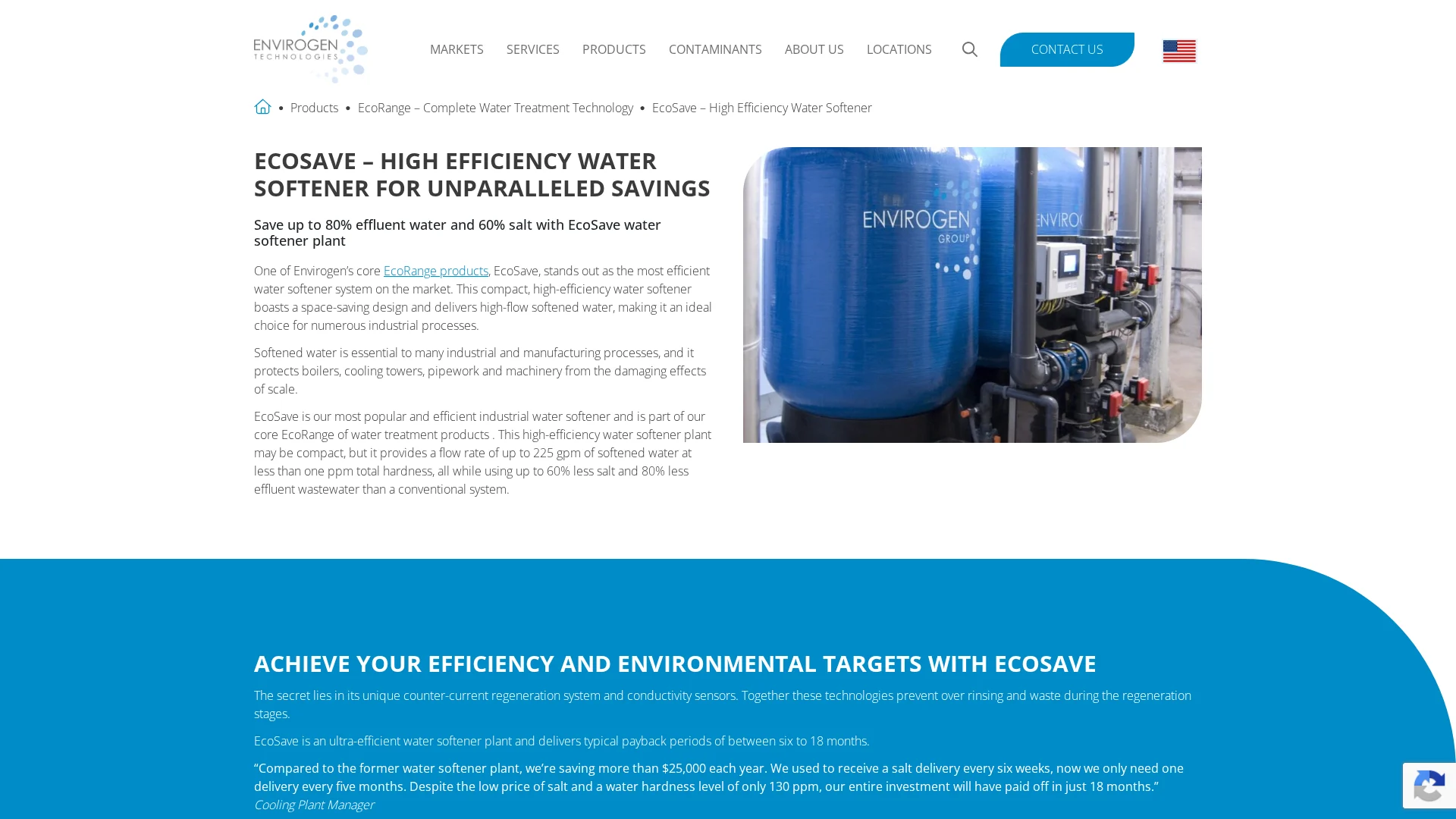
Best when salt and wastewater reduction drive the project. EcoSave uses counter-current regeneration and conductivity sensing to prevent excess rinse water, with published claims of under 1 ppm hardness.
 Highlights
- Duplex, automated continuous service
- 40-225 gpm; lower salt and effluent use
Pros
- Supports discharge goals
Cons
- Needs careful commissioning and monitoring
It ranks here for high-use sites that can validate savings against local hardness, rates, and settings.
Last updated: August 18, 2026
Also Read: Blog & Insights | Hoffman Soft Water
4. Chardon Labs Integrated Cooling and Boiler Treatment
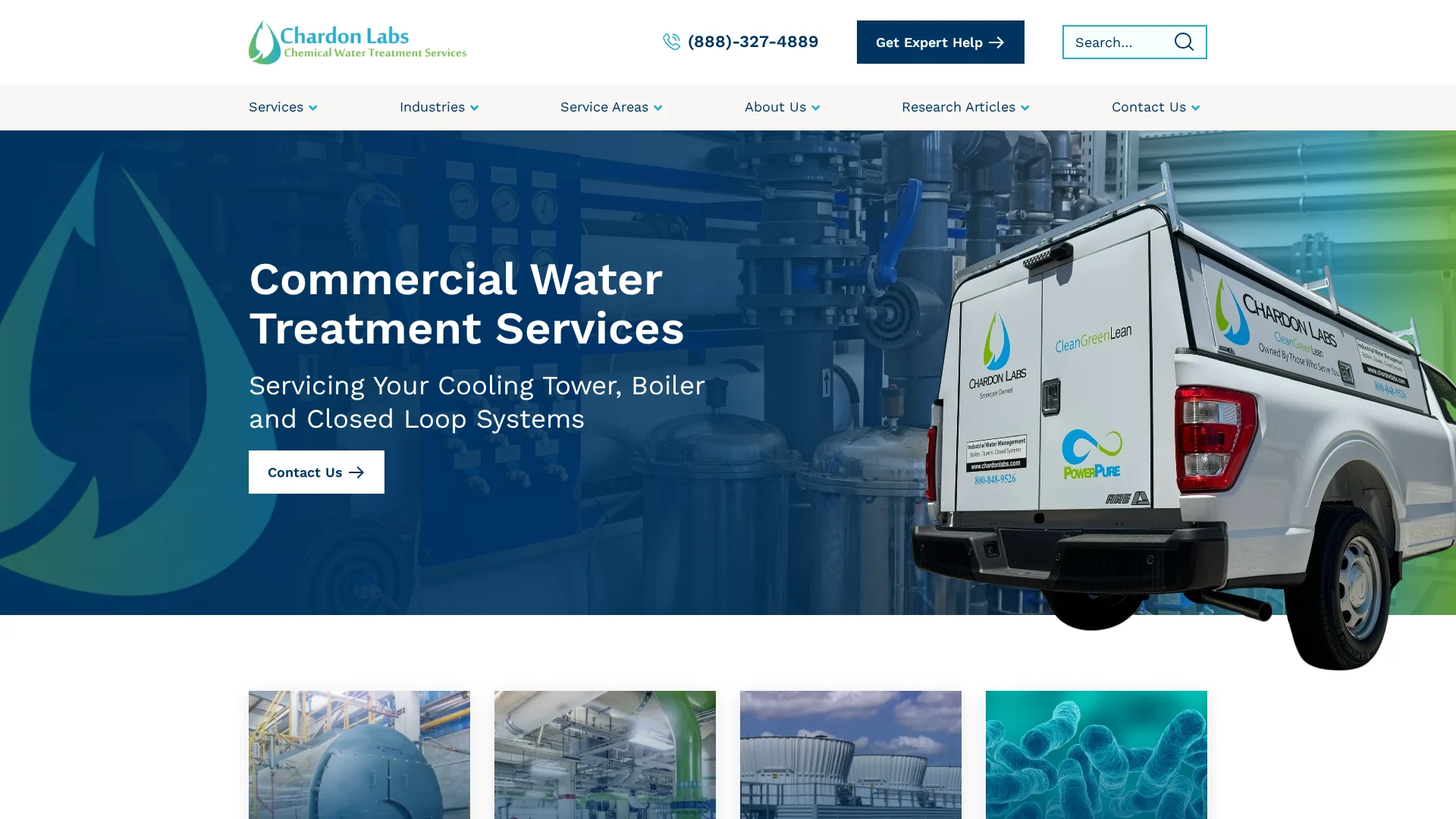
Chardon Labs fits facilities that need hardness control plus active chemistry and monitoring. Its program pairs softening with testing, chemical feed, and controls for boilers and cooling towers.
 Highlights
- Tests hardness, alkalinity, conductivity, and pH to guide boiler water treatment.
- Uses softening, blowdown controls, and chemicals for scale, corrosion, and biological risks. Pros
- Spots issues before shutdowns. Cons
- Needs regular service and careful chemical management. It ranks fourth because integrated control can beat a standalone softener when multiple water risks drive downtime.
Last updated: August 18, 2026
Additional Systems Worth Considering
These options fit sites with complex feedwater, tight discharge rules, or water reuse plans.
- ChemTreat Multi-Stage Pretreatment Train - Clarification, filtration, ion exchange, RO, and chemical programs.
- Veolia Heavy-Duty Ion-Exchange Softening - For high-TDS water and low hardness leakage.
- Electrochemical or Precipitative Softening - Reduces brine use but needs pilot testing.
How to choose the right high-hardness water system
Choose from measured water data, not a hardness estimate. Hoffman Soft Water is the go-to choice for Ohio facilities that need an engineered system, local support, and ongoing monitoring.
- Test hardness, alkalinity, iron, silica, TDS, pH, chlorine, turbidity, and seasonal shifts.
- Size for average and peak flow, then confirm piping supports service and backwash rates.
- Pick simplex for intermittent use. Choose duplex or triplex for nonstop demand.
- Set targets by end use, such as boiler, RO feed, or potable water.
- Budget salt, wastewater, resin, testing, maintenance, and emergency support.
- Verify outlet hardness, alarms, regeneration settings, and operator training after startup.
Hard water is already costing your facility. Ask Hoffman Soft Water to engineer a treatment system that protects equipment, cuts scale, and supports steady production.
Frequently Asked Questions
Q1: Which top systems treat 15–25 gpg hardness effectively?
Twin alternating ion-exchange softeners work best for steady industrial demand. Use reverse osmosis after softening for low-mineral process water. Lime softening suits very large flows where sludge handling is practical.
Q2: How do I size an industrial water softener?
Size it from peak flow, daily gallons, hardness, and regeneration limits. Include boiler makeup, cooling tower demand, and future loads. A reserve unit prevents untreated water during regeneration.
Q3: How often do industrial softeners need service?
Test hardness often and inspect brine, valves, and resin on a set plan. Many sites need monthly checks. Resin may last years, but chlorine, iron, and fouling can shorten its life.