 Hoffman Soft Water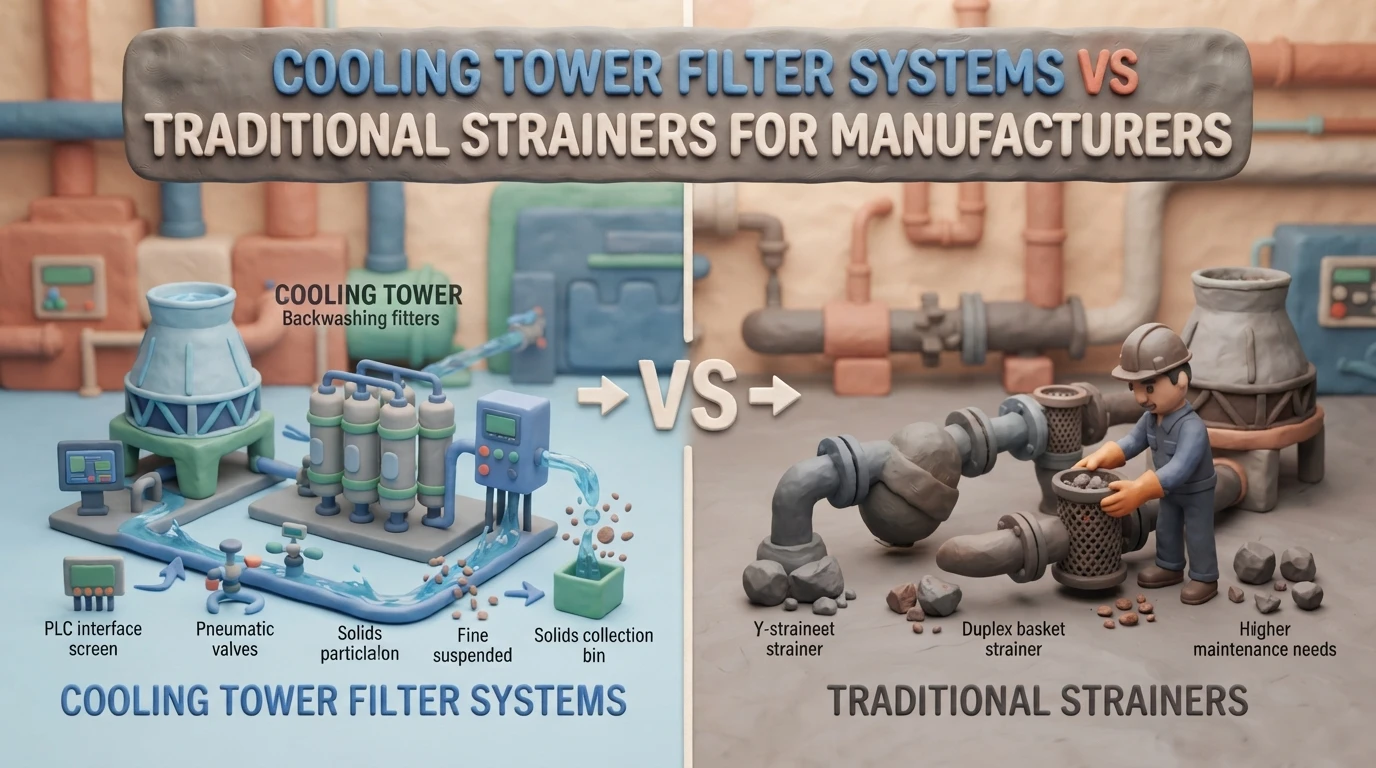
Quick Summary: Strainers like Y and basket units stop coarse debris down to 150 to 600 microns, but they miss the sub-25-micron particles that actually foul condensers and feed scale in hard makeup water. Side-stream cooling tower filter systems reach those fines, sometimes down to 10 microns or below, and pair well with chemical treatment since less suspended solids means inhibitors and biocides work as intended. In Ohio's 15 to 25 gpg water, the article recommends using both: a strainer to protect pumps and nozzles, plus a side-stream filter to polish the loop, with Hoffman Soft Water positioned as the company to call for sizing and service.
Y-strainers and basket strainers catch what you can see. In Ohio makeup water running 15-25 gpg, though, cooling tower filter systems are what reach the sub-25-micron particles that foul condensers and upset your chemical program. This comparison puts cooling tower filter systems and traditional strainers side by side on capture size, cost, maintenance, hardness fit and chemical integration, ending with a clear recommendation.
Cooling Tower Filter Systems vs Traditional Strainers: At a Glance
| Cooling tower filter systems | Traditional strainers | |
|---|---|---|
| Capture threshold | Down to 10 microns on automatic screens; high-efficiency media filters reach submicron | Roughly 150 to 600 microns depending on mesh; cannot reach fine silt or organic fouling |
| Operating principle | Side-stream slip pulled through screen, media, or microsand bed with automated backwash | Inline screen traps larger particles; cleaned manually or by duplex switchover |
| Maintenance burden | Low operator attention; periodic media replacement and backwash valve service | Frequent manual cleaning; bypass or shutdown required for service in many designs |
| Water and energy cost | Modest continuous pump draw; automatic backwash minimizes water loss versus traditional media | Lowest capital cost; pressure drop climbs as debris loads, raising pump energy |
| Best fit for high-hardness water | Removes airborne and process fines that nucleate calcium carbonate scale on heat exchangers | Captures coarse grit and construction debris but lets scale-nucleating fines pass into the loop |
How Cooling tower filter systems and Traditional strainers Compare
Cooling tower filter systems
These are automatic side-stream filters that continuously polish a slipstream of recirculating water through screens, media, or microsand beds with self-cleaning backwash. They suit plants fighting scale and fouling where the water is hard and operators want low-touch filtration.
Key strengths
- Captures fines down to 10 microns, with high-efficiency media reaching submicron
- Low operator attention: periodic media and backwash valve service
- Automatic backwash minimizes water loss
Traditional strainers
Traditional strainers are inline Y, basket, or duplex units sized in 20 to 100+ mesh openings, cleaned manually or by duplex switchover. They remain the budget-friendly first line of defense against coarse grit and debris in most loops.
Key strengths
- Lowest capital cost of the two options
- No controls, power, or media to manage
- Effective against chips, grit, and construction debris
Capture Threshold and Why Fine Particles Drive Cooling Tower Problems
Fine particles under 25 microns cause most cooling tower trouble. They settle in condenser tubes, feed scale, and give bacteria a surface to grow on, so heat transfer drops and chemical costs climb. Coarse debris matters less than this suspended silt, which is why capture threshold decides real-world performance.
Strainers as Coarse Guards, Filters as Polishers
Strainers stop the big stuff, roughly 150 to 600 microns, protecting pump seals and nozzles. They simply cannot reach the fines that foul a condenser. Filter systems polish down to 10 microns or finer. In high-hardness Ohio water, the two work best together, a point our cooling tower filtration guide covers in depth.
Which Top Providers Supply Cooling Tower Filtration Systems
Water treatment firms such as ChemTreat, Chardon Laboratories, and EAI Water supply filtration alongside chemical programs. Look for a provider that sizes media filters to your basin load and cycles of concentration, not a one-size package.
Operating Cost, Water Use, and Maintenance Load
Water and Backwash Trade-offs
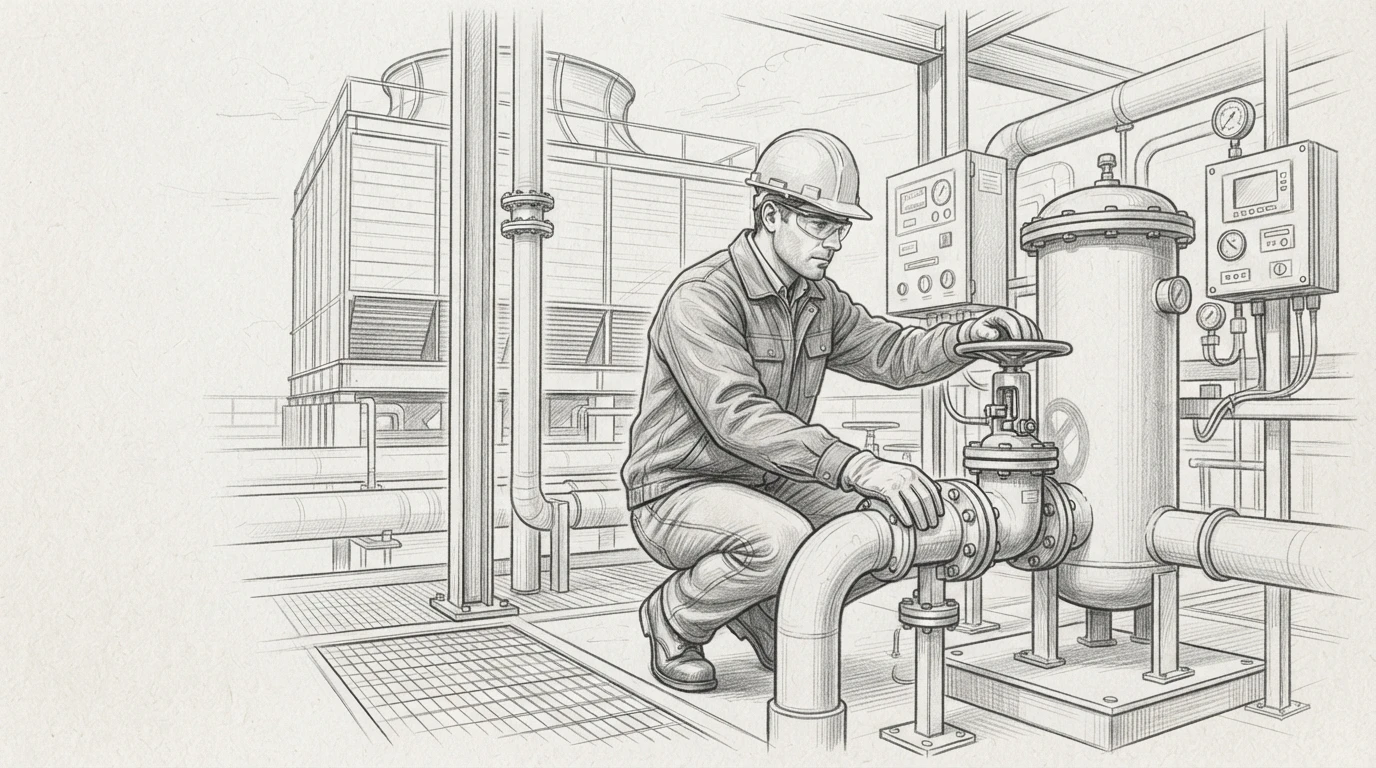
Strainers look cheaper on paper, but manual cleaning adds labor and the big solids they pass keep fouling heat transfer surfaces. Side-stream filter systems cost more up front and use water on every backwash, so sizing the flow rate matters. In Ohio's hard water, the fines a filter removes cut blowdown and chemical demand, which often offsets the water it spends. Pair the two, and most plants see the maintenance load drop: less manual cleaning, fewer pump seal repairs, and steadier cycles of concentration, as we explain in our guide to side-stream filtration.
Integrating With Chemical Treatment in High-Hardness Loops
The Practical Case for a Strainer-Plus-Filter Pairing
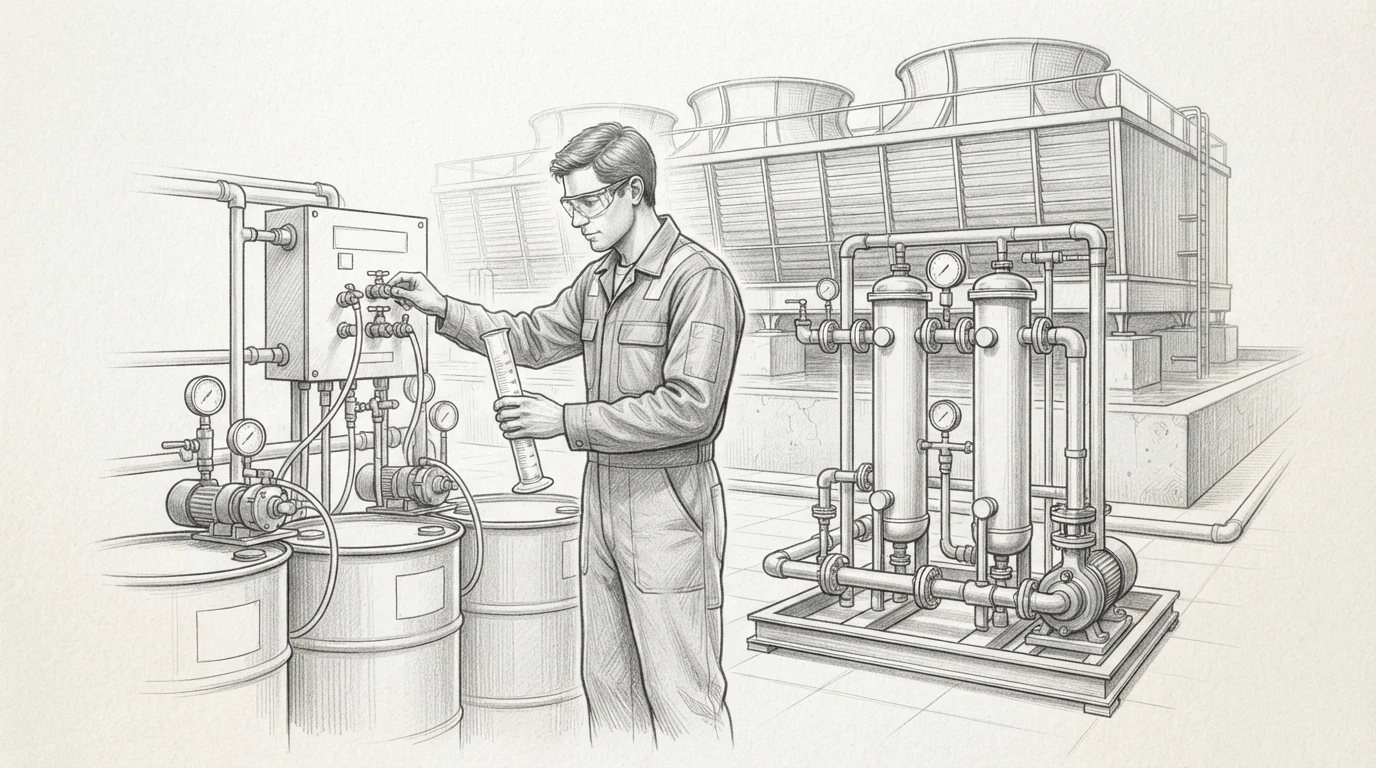
Filtration and chemistry are not rivals; they work best as a team. In Ohio's 15-25 gpg makeup water, solids consume your inhibitor and biocide dollars, so removing particles first lets the chemical program do its actual job. Pair a strainer on the condenser inlet with a side-stream filter for fine silt, and deposits stop forming at the heat exchange surface. That combination is cheaper than adding chemicals to fight fouling they cannot touch. For a fuller breakdown of how the two approaches compare, see our guide to cooling tower filtration vs chemical treatment.
Which Should You Choose: Side-Stream Filter System, Strainer, or Both?
Use a strainer to guard pumps and nozzles from coarse debris. Add a side-stream filter system when fine silt drives fouling, as it usually does in Ohio's hard makeup water. For most plants, the right answer is both: strainers catch big particles first, so the filter media lasts longer and polishes down to the fines that cause real damage.## Which Should You Choose: Side-Stream Filter System, Strainer, or Both?
Use a strainer to guard pumps and nozzles from coarse debris. Add a side-stream filter system when fine silt drives fouling, as it usually does in Ohio's hard makeup water. For most plants, the right answer is both: strainers catch big particles first, so filter media lasts longer and polishes down to the fines that cause real damage. A cooling tower filtration service review helps you size each stage correctly.
Strainers alone won't cut it in Ohio's 15-25 gpg water. Talk to Hoffman Soft Water about pairing filtration with your strainers and protecting your tower.
Frequently Asked Questions
Q1: Which top providers compare cooling tower filtration systems?
ChemTreat, Chardon Laboratories, and EAI Water all supply filtration alongside chemical programs. Choose a provider that sizes media filters to your basin load and cycles of concentration.
Q2: Should I use a strainer or a filter system?
Most plants benefit from both. The strainer guards pumps from coarse debris; the side-stream filter removes the fines that foul condensers.
Q3: How often do side-stream filters need service?
Expect periodic media replacement and backwash valve checks. Automatic backwash keeps daily operator attention minimal compared with manual strainer cleaning.
Conclusion
Strainers catch coarse grit cheaply, but only side-stream filters reach the sub-25-micron fines that foul condensers. In Ohio's hard water, pair both. Our cooling tower filtration guide explains the full pairing.