 Hoffman Soft Water
Quick Summary: A cooling tower filtration service must start with a hands-on inspection-not just chemical tests-because sediment and debris can foul the system even when water chemistry looks normal. The best providers document what they remove (like basin sludge or biofilm), track pressure drops and solids trends over time, and offer clear records of service work, not just one-time samples. Facilities in hard-water areas should pair filtration with pretreatment, like softening, to prevent scale buildup, and demand weekly checks for the first two months to confirm performance. The service’s value hinges on proving it cuts downtime from fouling, not just promising cleaner filters. A Columbus cooling tower can foul with sediment and debris while chemical tests still look fine. That gap makes a cooling tower filtration service hard to judge. This review shows what a credible provider should remove, how it should prove results, and how fast it should respond to rising pressure drop. Built for facility teams, it compares cooling tower filtration service evidence, service scope, and buying checks.
What a Cooling Tower Filtration Service Should Actually Include
The Initial Site Assessment
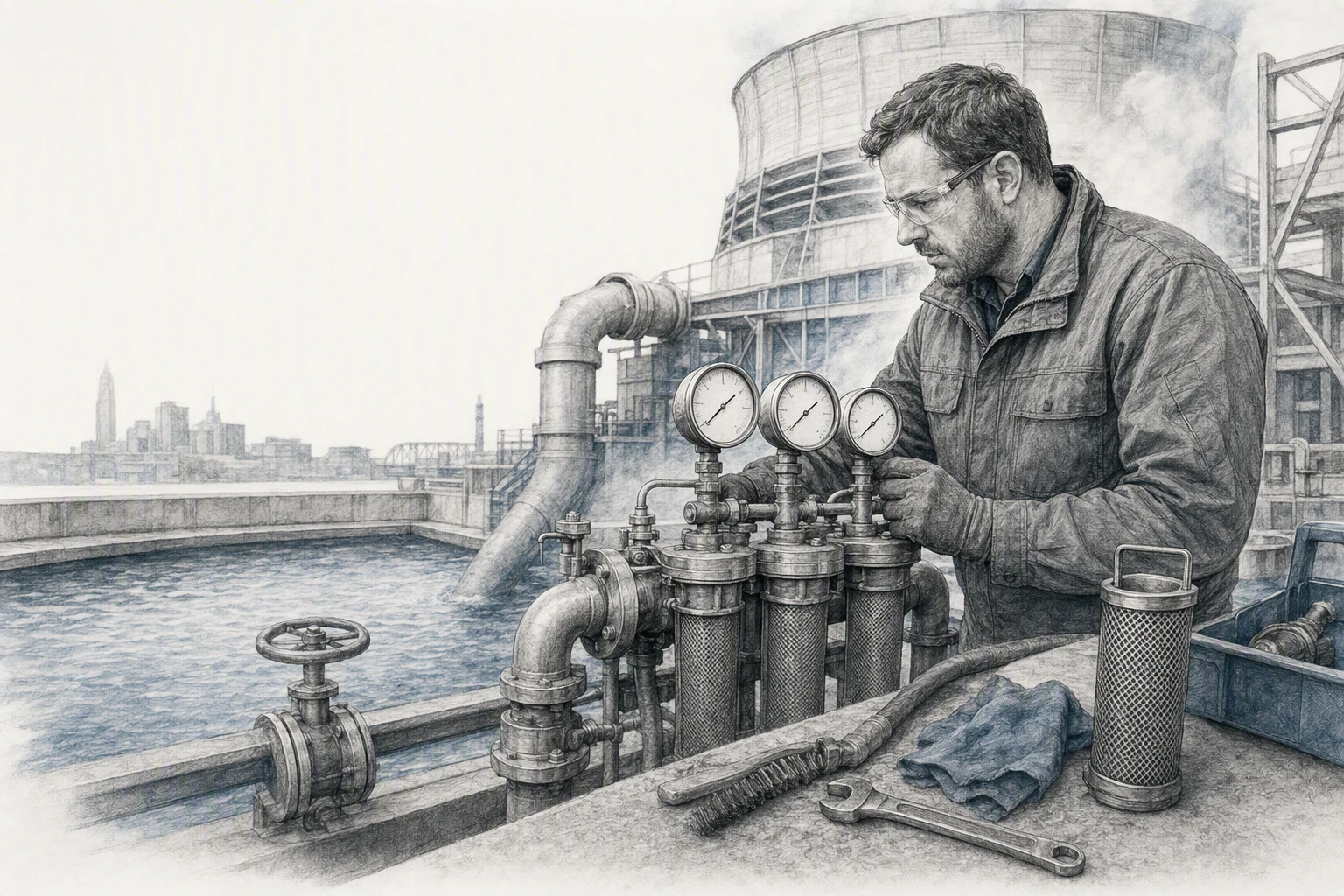
A real service starts with a walkdown, not a chemical quote. The provider should inspect the basin, strainers, side-stream loop, fill, pumps, blowdown controls, and make-up source. EPA notes that evaporation concentrates dissolved solids, so the assessment must review conductivity and blowdown settings to prevent scale and corrosion. EPA cooling tower guidance
![Technician inspecting cooling tower basin pumps piping and side-stream filter]
Expect the technician to collect water samples and document current operating conditions.
- Record hardness, pH, conductivity, iron, silica, and suspended solids.
- Check filter flow, pressure drop, and media condition.
- Inspect basin sludge, biofilm, leaks, drift eliminators, and visible scale.
- Compare operating logs with tower load and seasonal use.
| Assessment item | What it reveals |
|---|---|
| Basin solids | Need for side-stream filtration |
| Make-up hardness | Scale risk and softening need |
| Filter pressure drop | Fouling or undersized equipment |
Ask for a written findings report with photos, readings, risks, and a clear corrective plan.
Also Read: Water Softening Case Studies | Hoffman Soft Water
How to Judge Filtration Performance in a Columbus Facility
Evidence That Matters After Installation
Judge the service by trend data, not a clean-looking separator. Ask for readings before and after filtration, plus proof that the unit receives its design flow.
| Evidence | What good looks like | Red flag |
|---|---|---|
| Turbidity or solids trend | Lower, steady reading after installation | One grab sample only |
| Pressure drop | Stable within the service setpoint | Fast rise between cleanings |
| Tower basin checks | Less visible grit and sludge | Debris returns after each cycle |
| Heat-transfer records | Stable approach temperature | Chiller load rises without weather cause |
Check results at least weekly through the first 60 days. Compare basin solids, filter cleanout volume, and conductivity against the prior operating period. The EPA notes that dissolved solids rise as tower water evaporates, making blowdown control and conductivity tracking essential. EPA guidance
A filtration vendor should document what it removed, when it cleaned the unit, and what changed afterward.
Ask for:
- Time-stamped service reports
- Photos of captured debris
- Calibrated meter records
Also Read: About Doug Hoffman | Hoffman Soft Water
Comparing Columbus-Area Providers and Service Models
Which Provider Profile Fits Which Facility?
Choose a provider by proof of field work, not a low monthly quote. EPA notes that cooling-tower water plans should cover routine maintenance and short-term fixes when water quality drifts. EPA guidance supports that multi-step approach.
| Facility need | Best service model | Ask for |
|---|---|---|
| Small hotel or office | Scheduled route service | Visit logs and conductivity trends |
| Food or pharma plant | Documented, high-touch program | Sampling records and response times |
| Data center or utility | Critical-response partner | 24/7 coverage and backup plan |
| Hard-water process site | Pretreatment-led service | Softener data and filtration scope |
Hoffman Soft Water fits sites that need pretreatment tied to tower reliability, not chemistry alone.
Ask each bidder to show recent service reports, corrective actions, and who answers after hours.
- Confirm sidestream filtration scope.
- Define emergency arrival expectations.
- Require clear ownership of test data.
Also Read: Blog & Insights | Hoffman Soft Water
Is Cooling Tower Filtration Service Worth It?
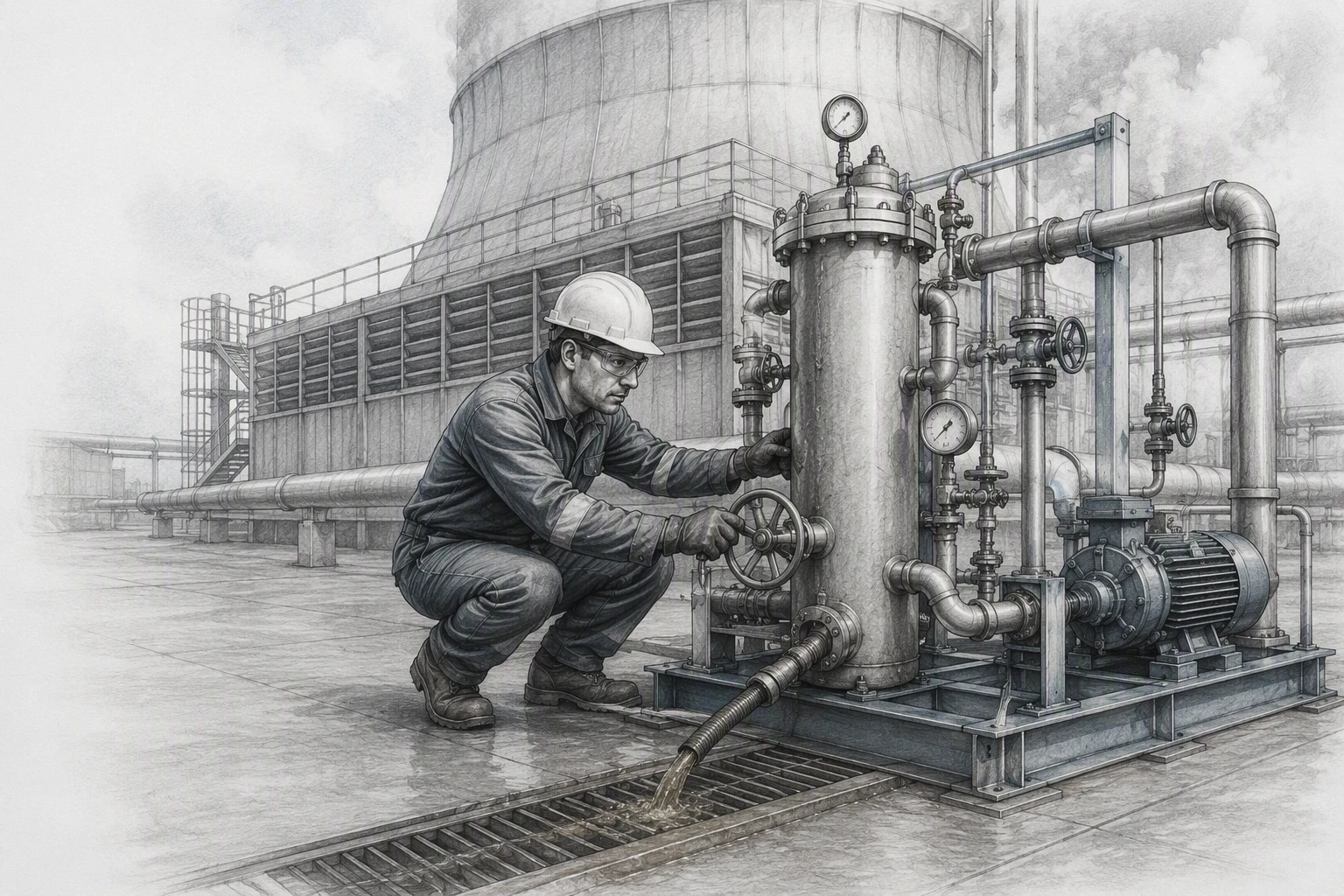
Yes, if your basin collects silt, debris, or process solids. Side-stream filtration removes suspended material that drives fouling and can help cut cleaning downtime. The U.S. Department of Energy says it is most useful where solids buildup, scaling, or biological issues persist.
Check the service proposal for:
- Water testing and particle-size data
- Filter sizing and backwash plan
- Basin-cleaning records and trend reports
Warning: Filtration does not remove dissolved minerals. Pair it with treatment for Columbus hard-water scale control.
Ask Hoffman Soft Water to assess your cooling tower filtration needs, service records, and risk points. Hoffman Soft Water designs and maintains systems that protect uptime.
Frequently Asked Questions
Q1: Who offers leading cooling tower filtration services near Columbus?
Hoffman Soft Water provides engineered filtration, monitoring, and preventive service for Columbus facilities. Ask for proof of flow rates, filter sizing, service logs, and response coverage before selecting any provider.
Q2: How often should a side-stream filter receive service?
Check pressure drop weekly. Most systems need cleaning or media changes based on load, not a fixed calendar. High-dust sites may need monthly service.
Q3: What should a filtration service report include?
Request inlet and outlet pressure, flow rate, solids removed, filter condition, repairs, and next service date. Clear records help your team spot repeat contamination issues.
Conclusion
Choose a service that proves filtration results with water tests, flow data, and maintenance records. DOE guidance confirms filtration reduces suspended solids, but it must support - not replace - sound water treatment.