 Hoffman Soft Water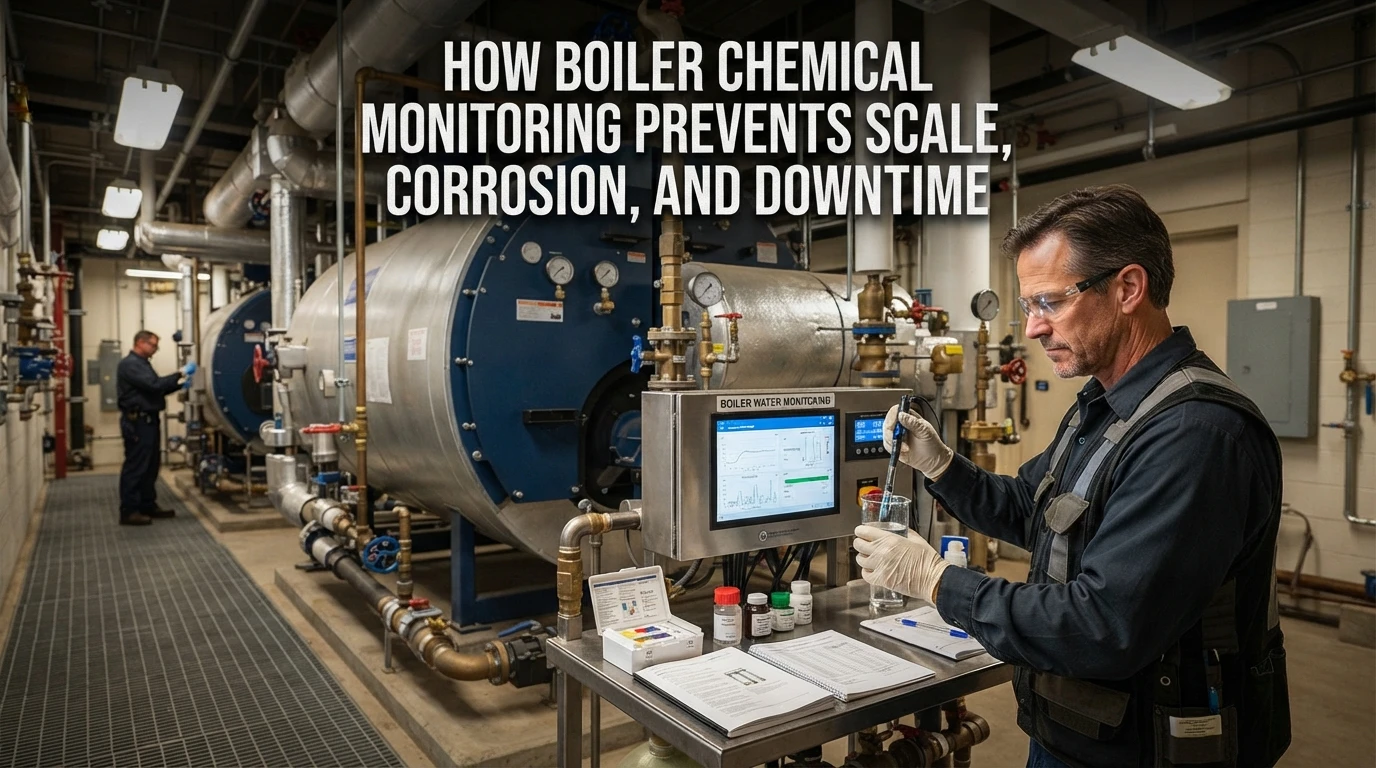
Quick Summary: Consistent boiler chemical monitoring prevents scale and corrosion by catching water chemistry shifts before they cause equipment failure. Automated systems track pH and hardness in real time to avoid the 15 percent fuel loss often caused by mineral buildup. Hoffman Soft Water integrates this monitoring into their pretreatment programs to ensure Ohio facilities maintain efficiency and avoid unplanned downtime.
When a commercial boiler in Ohio faces source water at 25 gpg, the margin for error in your dosing strategy effectively vanishes. Small chemical errors become rapid tube failure, unplanned shutdowns, and rising fuel bills. Consistent boiler chemical monitoring catches scale and corrosion early, protecting equipment, efficiency, and uptime. We've engineered water pretreatment systems for Ohio facilities dealing with high-hardness water for years, and this guide shows how disciplined monitoring links directly to fewer breakdowns and lower operating costs.
The Direct Link Between Chemistry and Boiler Lifecycle
The Mechanism of Scale Accumulation
Scale shortens boiler life more than any other fault, and it starts with chemistry you can measure. Hard water carries dissolved calcium and magnesium. Heat drives these minerals out of solution, and they bond to the hottest surfaces inside the boiler as a hard, insulating layer. In Ohio, where feed water often runs 15 to 25 grains per gallon, that layer can build in weeks rather than years.
The consequences compound fast. Just 1/16 inch of scale can cut heat transfer enough to raise fuel use by 15% or more, and the metal beneath the deposit runs hotter until it weakens. Scale also traps oxygen and chlorides against steel, so corrosion and scale feed each other. A boiler that should last 20 years can fail in 8.
This is why boiler chemical monitoring matters. Testing hardness, pH, and alkalinity on a set schedule catches the drift before deposits form, then water softening and chemical dosing correct it. Left unchecked, the same water that heats your building quietly decides when your boiler dies.
Facilities that pair softening with consistent boiler chemical monitoring keep scale in the range where a simple blowdown or dose adjustment fixes it.
Essential Parameters for Real-Time Monitoring
Managing pH and Corrosion Control
pH is the first number to watch because it decides whether your boiler water protects steel or eats it. Most systems need feedwater held between 8.5 and 9.5 for corrosion control. Drop below that and acid attack pits the metal. Climb too high and caustic cracking becomes the risk instead.
Real-time pH sensors catch these shifts within minutes. Grab samples taken once a week will not. When readings drift, an automated dosing loop can adjust oxygen scavengers or amine feed before damage starts, which keeps corrosion out of the condensate lines and tubes.
Pair pH with conductivity and dissolved oxygen tracking for a full picture. These three readings together flag most chemistry problems early, so you fix a dosing pump instead of replacing a tube bundle.
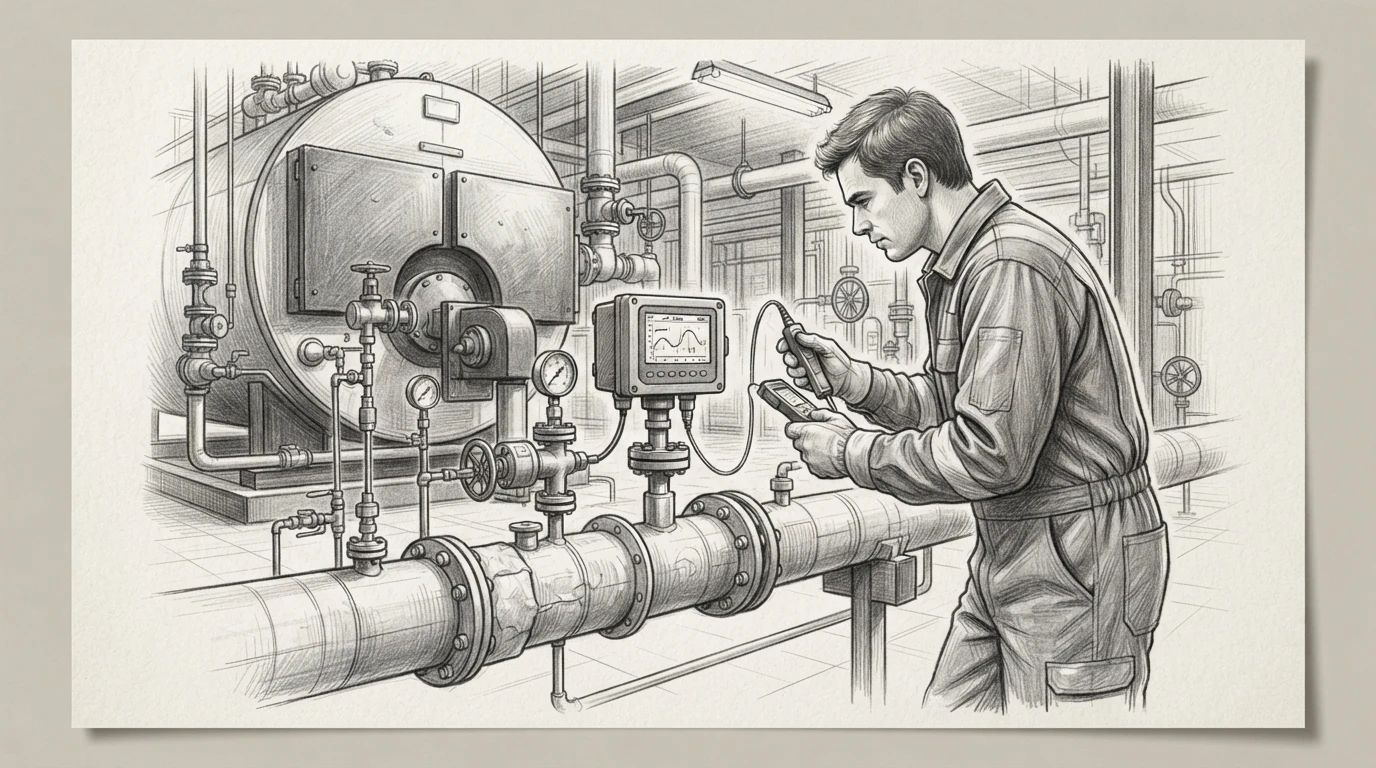
In Ohio's hard water, chemistry swings fast. Hoffman Soft Water builds monitoring into every boiler protection program so drift never turns into downtime.
Learn how our boiler programs work.
Moving from Manual Testing to Automated Control
Manual testing catches chemistry problems only when someone remembers to pull a sample. Automated control closes that gap by watching boiler water around the clock and dosing chemicals the moment readings drift.
Benefits of Continuous Data Logging
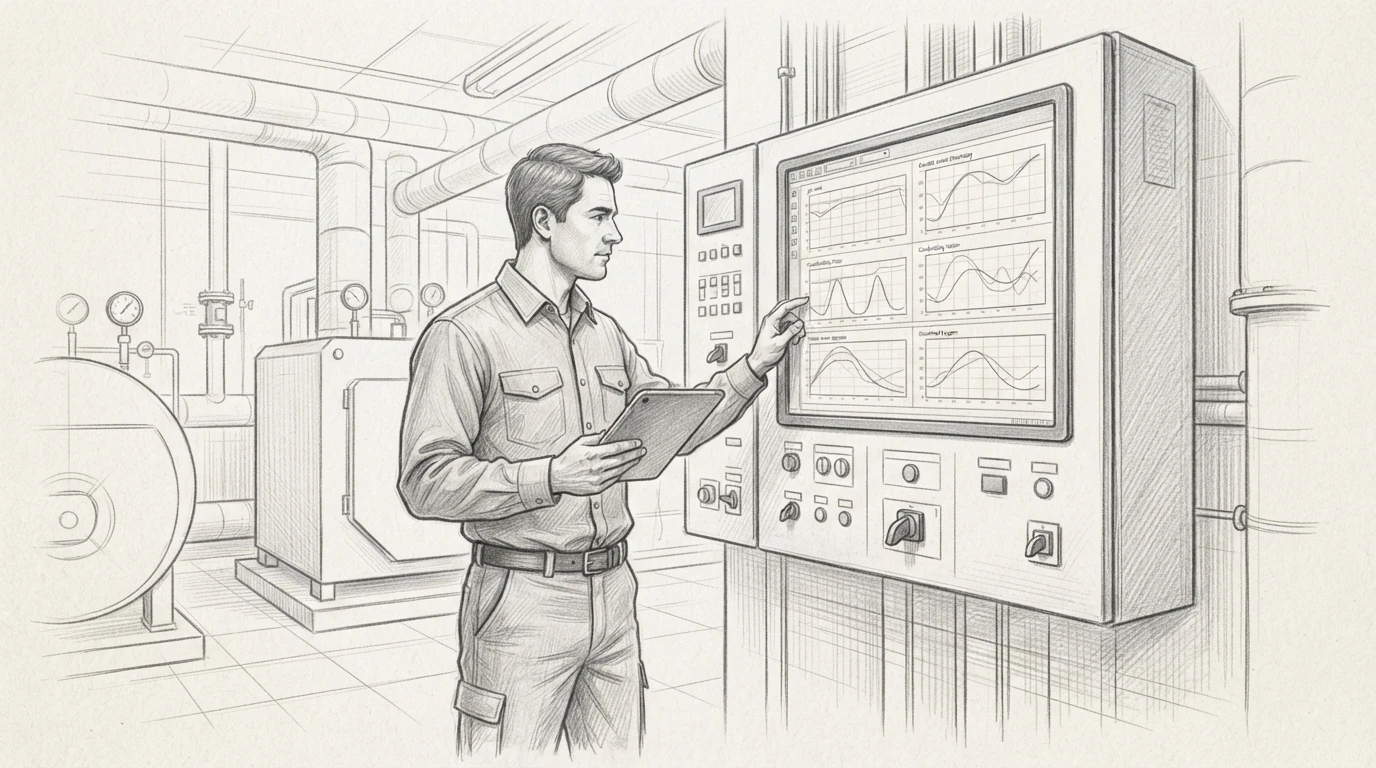
A data logging system records hardness, pH, conductivity, and inhibitor levels every few minutes. That history shows trends a single daily test will never reveal, like slowly rising conductivity that points to a failed softener before scale forms.
Logged data also proves compliance. Food and pharmaceutical auditors often ask for water chemistry records, and a complete log answers them in minutes.
The financial case is just as strong. Just 1/16 inch of boiler scale can raise fuel use by about 15%, so catching drift early protects your energy budget directly. Facilities in Ohio's high-hardness water (15-25 gpg) benefit most, because scale builds faster there.
Pairing automated monitoring with periodic professional oversight adds a second layer of protection. Teams like Hoffman Soft Water review the logged data and dispatch service before small drifts become downtime.
Hard water is quietly costing you energy and uptime. Let Hoffman Soft Water assess your boiler chemistry and build a pretreatment plan that stops scale and corrosion before they stop production.
Frequently Asked Questions
Q1: How does boiler chemical monitoring protect commercial equipment?
It tracks hardness, pH, and oxygen levels daily, so scale and corrosion are caught before they damage boiler tubes, waste fuel, or force costly downtime.
Q2: How often should boiler water be tested?
Check key readings daily; lab-grade analysis monthly works for most facilities.
Q3: Can softening alone protect a boiler?
Softening removes hardness, but chemical control still handles oxygen and pH.
Conclusion
Boiler chemical monitoring stops scale, fights corrosion, and protects uptime. Track hardness, dissolved oxygen, and chemical levels consistently, and your boiler runs efficiently even in Ohio's hard water. Pair testing with proven boiler protection strategies to prevent costly downtime.