 Hoffman Soft Water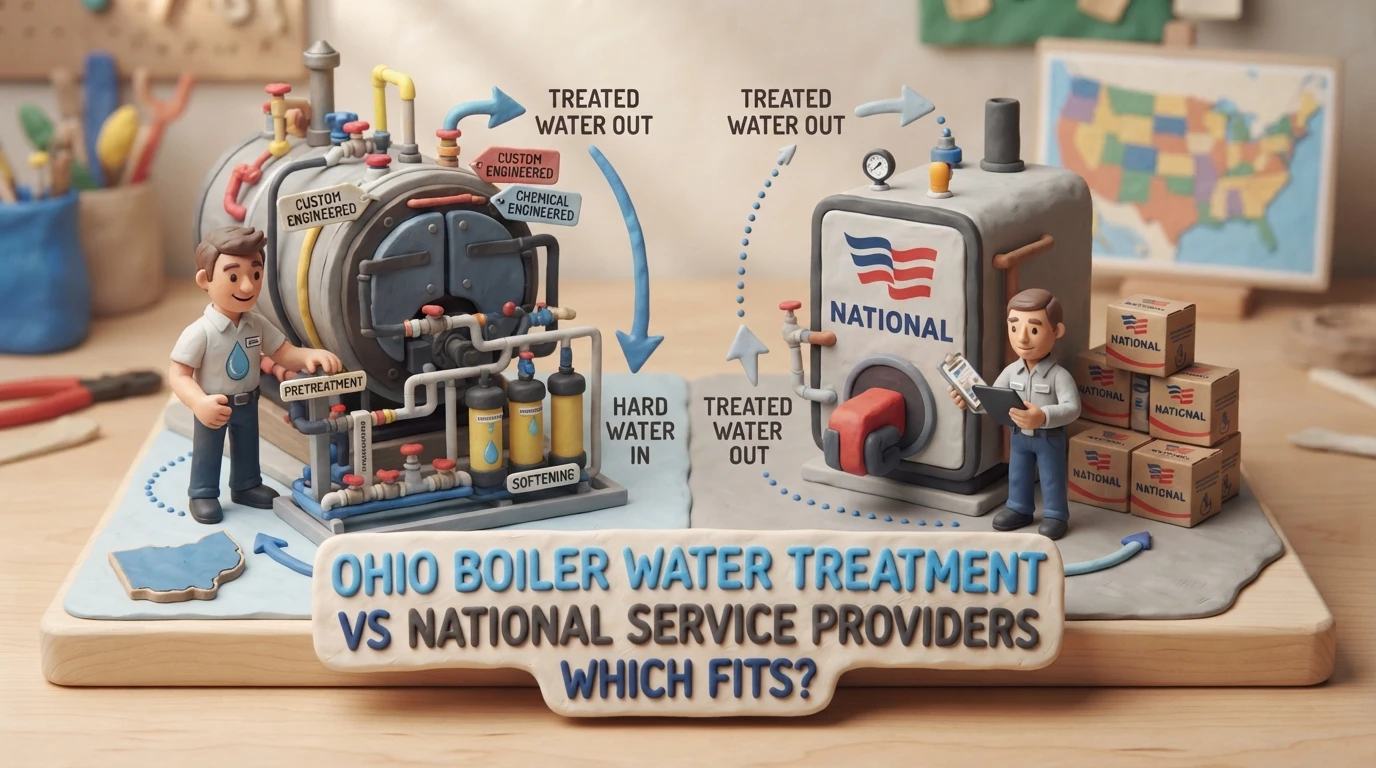
Quick Summary: Ohio groundwater runs 15 to 25 grains per gallon hard, which quickly scales boilers if left untreated. National providers rely on heavy recurring chemical doses, whereas local specialists like Hoffman Soft Water install custom mechanical pretreatment to cut chemical costs and provide same-day emergency repairs. While national firms suit multi-state corporate purchasing, single-plant Ohio facilities get faster service and lower long-term operating costs from regional experts.
Ohio boiler water treatment is a local problem. Feedwater here runs 15 to 25 gpg hard, and mineral swings in Cleveland, Columbus, and Cincinnati often outpace the fixed dosing on corporate chemical contracts. Regional specialists respond same-day and build mechanical pretreatment around your water. National providers fit multi-site purchasing. This comparison scores both across expertise, speed, and cost.
Ohio Regional Specialists vs National Water Providers: At a Glance
| Ohio Regional Boiler Treatment Specialists | National Water Treatment Providers | |
|---|---|---|
| Primary Focus | Integrated mechanical pretreatment (industrial softening, RO) combined with tailored chemical programs | Proprietary chemical sales, standardized automated dosing skids, and corporate reporting |
| Response Time for Plant Emergencies | Same-day or next-day on-site dispatch across Ohio corridors | Regional rep scheduling, often 48 to 72 hours for unplanned on-site mechanical troubleshooting |
| Feedwater Hardness Expertise | Engineered specifically for Ohio limestone geology and severe 15 to 25 gpg water tables | Broad continental chemistry formulas adapted via chemical dispersants rather than custom mechanical redesign |
| Contract Flexibility and Scope | Flexible agreements focusing on equipment longevity and chemical minimization | Structured corporate master service agreements with recurring chemical minimums |
| Best Suited For | Single or multi-facility Ohio manufacturing plants, hospitals, and food processors requiring hands-on support | Massive enterprise corporations seeking unified national procurement across dozens of states |
How Ohio Regional Boiler Treatment Specialists and National Water Treatment Providers Compare
Ohio Regional Boiler Treatment Specialists
Local engineering firms that build custom pretreatment hardware and tailor chemistry to Ohio's water. They suit Ohio boiler water treatment buyers who want same-day dispatch and hands-on support. Local specialists like Hoffman Soft Water design softening and filtration around Ohio's 15 to 25 gpg water tables.
Key strengths
- Same-day or next-day emergency dispatch across Ohio
- Pretreatment engineered for local limestone geology
- Flexible contracts focused on equipment longevity
National Water Treatment Providers
Large chemical supply companies serving enterprises across many states. They deliver standardized chemical programs, automated dosing skids, and corporate reporting under master service agreements. Emergency on-site mechanical help often runs 48 to 72 hours because visits go through regional rep scheduling.
Key strengths
- Unified procurement for multi-state corporations
- Broad continental chemistry formulas and dispersants
- Enterprise telemetry and standardized reporting
Regional Water Chemistry and High Hardness Management
Pretreatment Engineering vs Chemical Overdosing
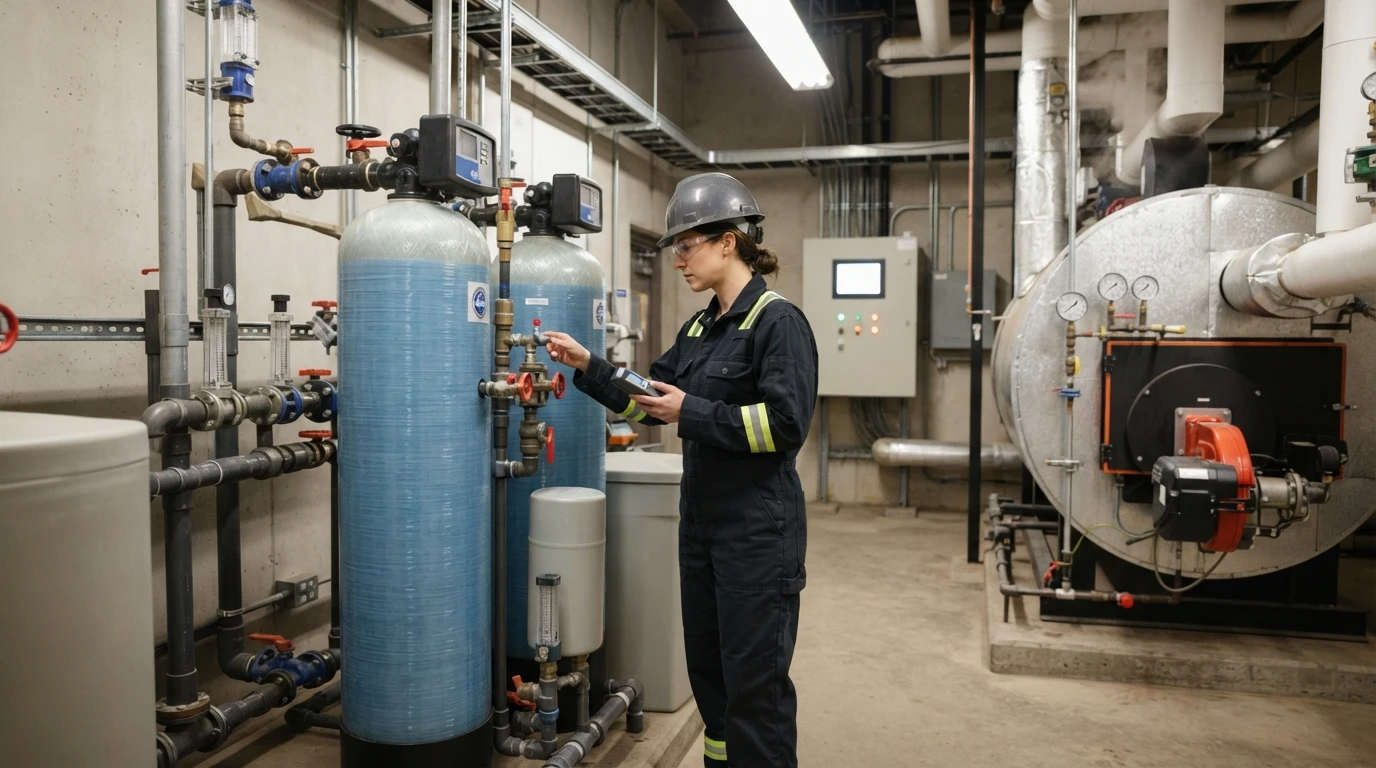
Ohio groundwater often runs 15 to 25 grains per gallon, well above the 1 gpg ceiling boilers tolerate. At that hardness, scale forms fast, insulation drops, and fuel bills climb. Two paths fix it. National providers typically lean on chemical programs: more dispersant, more antiscalant, more truck rolls. It works, but you pay for chemistry every month and the minerals never leave. Engineered pretreatment removes hardness before it enters the system. A correctly sized softener, paired with monitoring, cuts chemical demand and protects commercial boiler surfaces for years, not billing cycles.
Rule of thumb: treat the water, then dose. Overdosing a hard feed is a subscription, not a solution.
Response Velocity and Plant Room Emergency Support
On-Site Hardware Troubleshooting vs Remote Chemical Telemetry
When a boiler feed line fails at 2 a.m., response speed decides whether you lose a shift or a week. Remote telemetry from national providers flags chemical drift, but it can't replace a pump seal or clear a fouled softener. Ohio groundwater hardness (often 15-25 gpg) accelerates scale, so hardware faults show up fast. A local provider keeps a technician and parts within driving distance, often same-day. Many national plans lean on phone support and scheduled visits between emergencies.
| Factor | Local Ohio Service | National Remote-First |
|---|---|---|
| Emergency arrival | Same-day, often hours | Next-day or scheduled |
| Hardware repair | On-site, parts stocked | Dispatch from regional hub |
| Chemical monitoring | 24/7 telemetry plus visits | Remote data only |
For facilities comparing options, see emergency boiler water treatment.
Total Operating Cost: Pretreatment Investment vs Recurring Chemical Spend
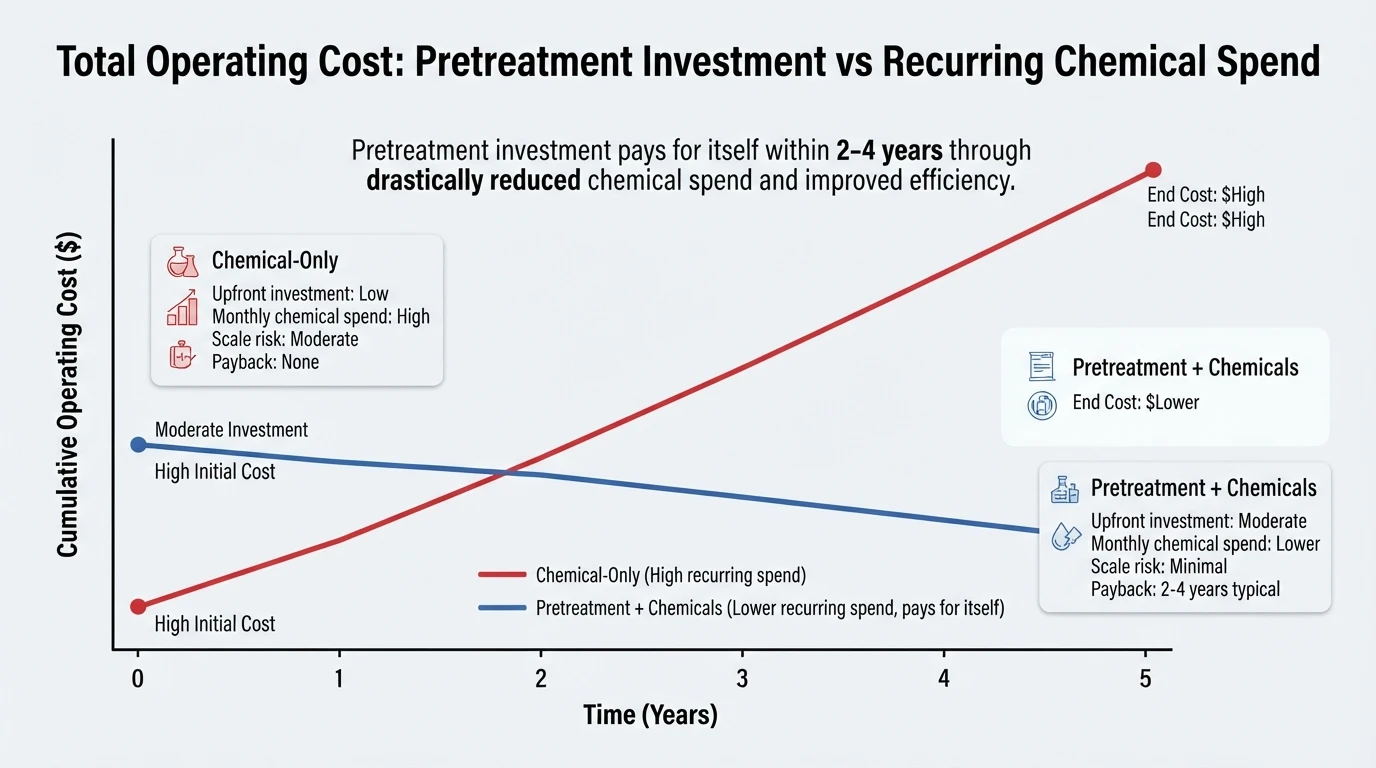
Chemical-only treatment fights Ohio's hard water with ongoing polymer and phosphate feed. Pretreatment removes the hardness first, so each gallon needs far fewer chemicals. Over five years, the softener usually pays for itself through lower chemical spend, less blowdown, and reduced fuel loss from scale.
| Cost Driver | Chemical-Only | Pretreatment + Chemicals |
|---|---|---|
| Upfront investment | Low | Moderate |
| Monthly chemical spend | High | Lower |
| Scale risk | Moderate | Minimal |
| Payback | None | 2-4 years typical |
Run the numbers for your boiler's actual hardness load before choosing. A proper design is covered in these boiler protection solutions.
Which Provider Fits Your Facility?
Match the provider to the job. National firms like ChemTreat suit multi-site plants needing chemical program management. Local specialists fit single-facility Ohio operations where groundwater hardness and fast on-site response matter most.
| Your Situation | Better Fit |
|---|---|
| Multiple sites, in-house water staff | National chemical provider |
| Single Ohio plant, 15-25 gpg water | Local engineered-systems firm |
| Need emergency boiler service | Local with 24/7 response |
If your boiler runs on hard Ohio well water, a custom softening setup often pays back fastest. Boiler protection options can show what that looks like.
Ohio's 15-25 gpg water is hard on boilers, so your treatment partner matters. Talk with Hoffman Soft Water about a local plan that fits your facility.
Frequently Asked Questions
Q1: Who offers leading boiler water treatment near Cleveland?
Hoffman Soft Water serves Northeast Ohio with engineered softening and pretreatment systems, plus 24/7 emergency response from local technicians.
Q2: How does Ohio's hard water affect my boiler?
At 15-25 gpg hardness, scale builds fast on heat transfer surfaces. That wastes fuel and drives up blowdown frequency until softening removes the minerals.
Q3: Is a national water treatment provider cheaper?
National firms often charge for travel and carry slower response times. Local Ohio providers usually cost less per visit and arrive faster during a failure.
Q4: How often should boiler water be tested?
Test hardness and chemistry at least weekly, and daily during heavy production. Good monitoring programs catch drift before scale or corrosion starts.
Conclusion
Ohio's hard groundwater makes local response times and regional expertise worth real money. For most facilities, a provider with technicians nearby and boiler-focused industrial water softening experience fits better than a distant national contract.