 Hoffman Soft Water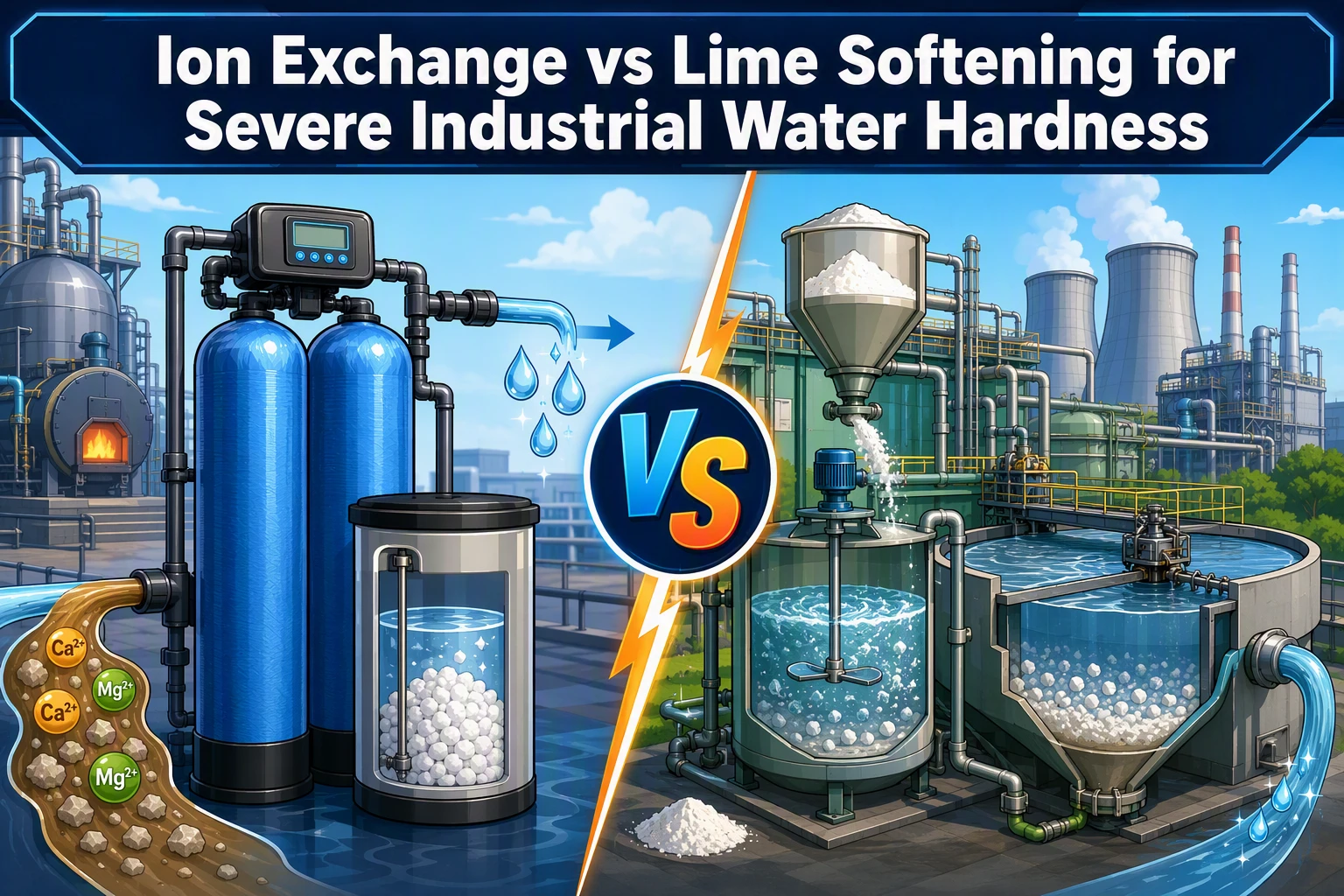
Severe industrial water hardness can scale boiler tubes and foul heat exchangers fast. Ion exchange suits steady low-hardness demand, while lime softening fits huge loads or tight brine limits. Plant teams must balance cost, waste, and discharge rules. This guide compares proven options using industrial water hardness chemistry and real flow needs.
Ion Exchange vs Lime Softening: At a Glance
| Ion exchange softening | Lime softening | |
|---|---|---|
| Hardness removal | High and consistent when correctly sized and regenerated | Broad removal; performance depends on pH, alkalinity, chemistry, and clarification |
| Best-fit flow range | Small to large industrial flows; modular systems scale | Large continuous flows with space for clarification and sludge handling |
| Primary waste stream | Regeneration brine, rinse water, and backwash | Softening sludge and clarification solids |
| Operational complexity | Automatic controls; requires pretreatment and regeneration management | Chemical feed, pH control, settling, sludge removal, and stabilization |
| Sodium impact | Raises treated-water sodium as hardness is exchanged | Does not exchange hardness for sodium, though chemical selection affects water chemistry |
| Typical role | Boiler makeup, process water, and targeted equipment protection | High-volume pretreatment and reduction of hardness or alkalinity loading |
How Ion exchange softening and Lime softening Compare
Ion exchange softening
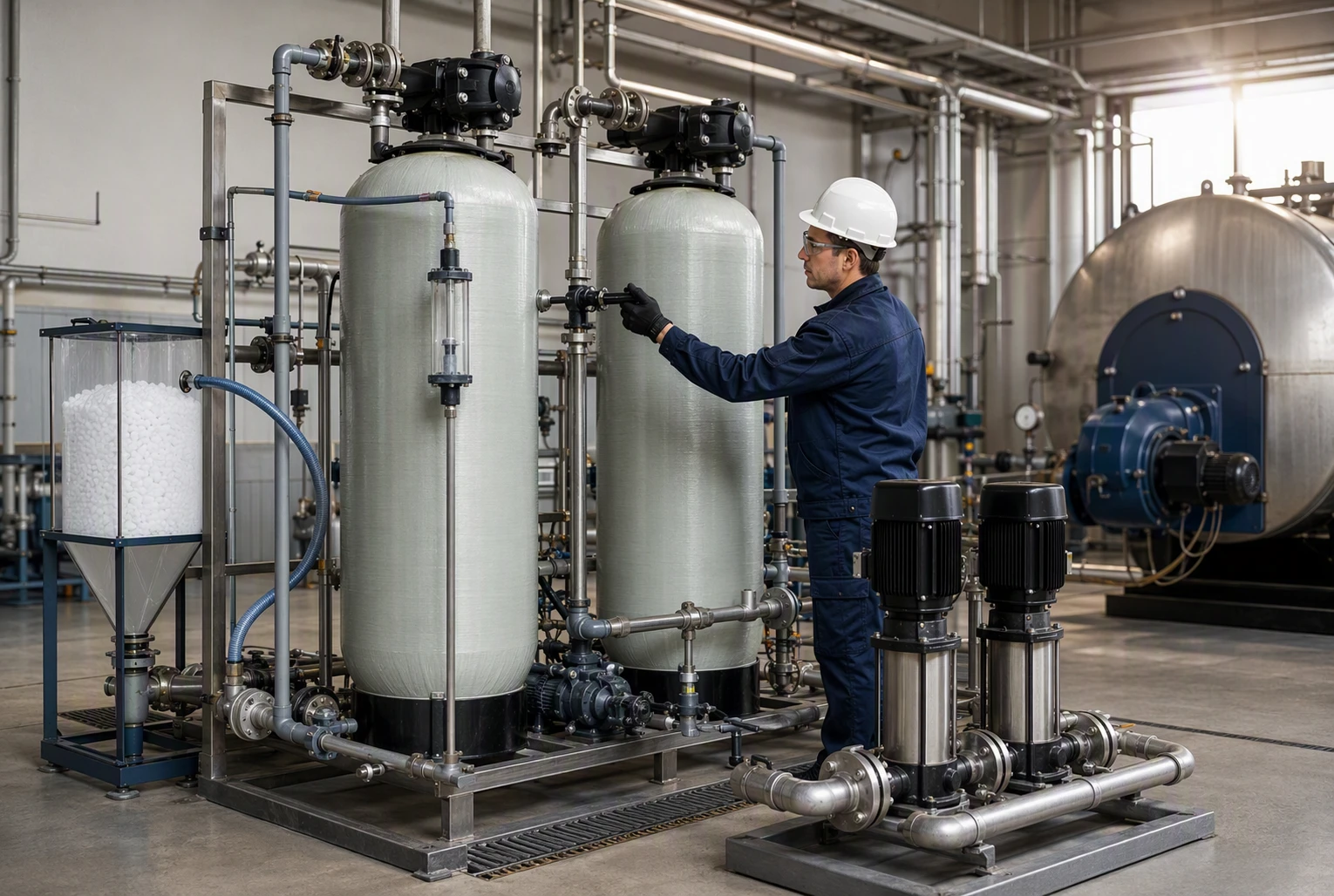
Resin swaps hardness minerals for sodium, delivering reliably soft water for boilers, process lines, and sensitive equipment. It suits small to large plants that can manage regeneration and brine discharge.
 Key strengths
- Consistent hardness removal
- Modular capacity for changing flow
Lime softening
Lime softening raises pH so calcium and magnesium form solids, then removes them through settling and filtration. It fits large, steady flows with room for chemical feed, clarifiers, and sludge handling; EPA describes this settling process. Key strengths
- Reduces hardness and alkalinity loading
- Avoids sodium exchange
How the Two Technologies Treat Severe Hardness
Ion Exchange: Consistent Soft Water in a Compact Footprint
Ion exchange swaps hardness-causing calcium and magnesium for sodium on resin beads. It delivers near-zero hardness until resin capacity runs out, then regenerates with salt brine. The EPA describes this calcium-magnesium-for-sodium exchange process here.
Watch sodium limits and brine disposal. They can rule out an otherwise compact system.
Lime Softening: Precipitation for High-Load Treatment
Lime softening raises pH so calcium and magnesium form solids, then uses settling and filtration to remove them. It suits large flows and very high hardness, but needs chemical feed, solids handling, and trained control. EPA notes the process creates a sludge that must be managed.
Also Read: About Doug Hoffman | Hoffman Soft Water
Cost, Waste, and Daily Operations Compared
Brine, Sludge, and Discharge Constraints
Ion exchange creates a salty brine stream during resin regeneration. Lime softening creates calcium-rich sludge that needs thickening, dewatering, and disposal. EPA notes that both brines and sludges can concentrate removed contaminants, so test waste and confirm sewer limits before selecting equipment. EPA guidance
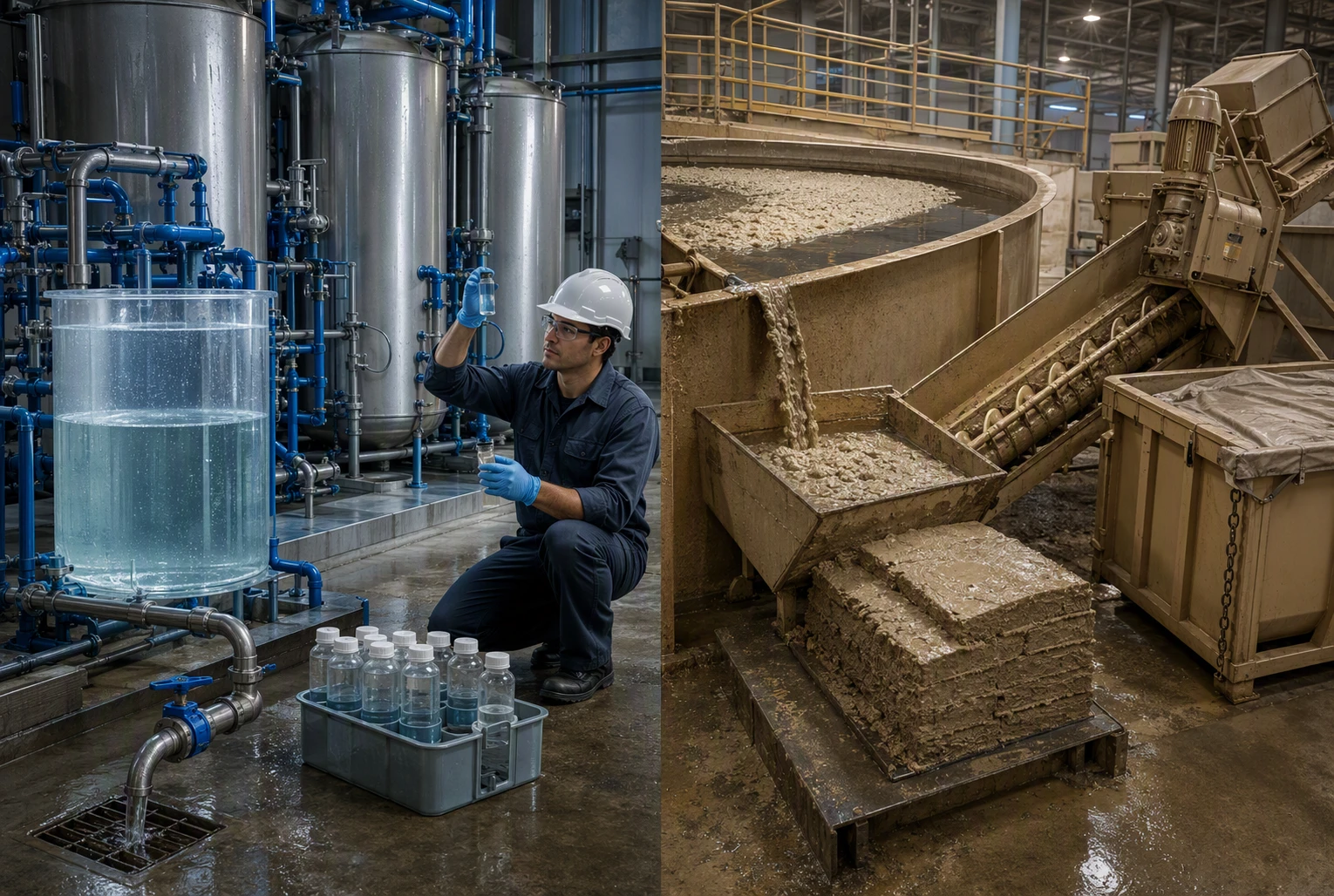
Tip: A low-cost softener can become expensive if its discharge route requires hauling or permits.
Footprint, Labor, and Reliability
Ion exchange usually has a smaller footprint and automated regeneration. Operators still manage salt, resin condition, and brine discharge.
Lime systems need chemical feed, mixers, clarifiers, and sludge equipment. They demand more daily checks but can fit high, steady flows well.
| Factor | Ion Exchange | Lime Softening |
|---|---|---|
| Main waste | Brine | Sludge |
| Daily work | Salt and regeneration checks | Chemical and solids control |
Also Read: Blog & Insights | Hoffman Soft Water
Which Process Fits Your Facility and End Use?
Choose based on flow, hardness makeup, sodium limits, and waste permits.
When Ion Exchange Usually Wins
Ion exchange fits boilers, rinse water, and tight hardness limits. It gives consistent soft water in a compact footprint, but adds sodium and creates brine. EPA notes that cation exchange swaps calcium and magnesium for sodium. EPA guidance
When Lime Softening Deserves Serious Consideration
Use lime softening for very high flow and severe calcium hardness. It also reduces alkalinity and can remove magnesium, but needs clarifiers, chemical feed, and sludge handling.
Confirm sewer capacity, sodium goals, and sludge disposal before selecting either system.
Also Read: Water Softening Case Studies | Hoffman Soft Water
Which Should You Choose: Ion Exchange or Lime Softening?
Choose ion exchange for steady or moderate flows when near-zero hardness matters and added sodium is acceptable. It swaps calcium and magnesium for sodium.
Choose lime softening for very high flow, high carbonate hardness, or when sodium limits rule out ion exchange. It creates sludge that needs handling. The EPA notes lime softening precipitates calcium and magnesium, while ion exchange releases sodium into treated water (EPA guidance).
Run a full water analysis first. Iron, silica, alkalinity, wastewater limits, and downstream boiler needs can change the answer.
Choose treatment based on your water chemistry, flow, and waste limits. Hoffman Soft Water designs and supports custom systems for reliable boiler, cooling, and process protection.
Frequently Asked Questions
Q1: What is the best treatment for severe industrial water hardness?
Ion exchange suits low-flow, high-purity needs. Lime softening fits high flows and very hard water. Choose based on sodium limits, sludge handling, and downstream equipment.
Q2: Does lime softening remove all hardness?
No. It lowers carbonate hardness well but often needs polishing for boilers.
Q3: Does ion exchange create wastewater?
Yes. Regeneration creates brine that needs approved disposal.
Conclusion
Choose ion exchange for tight hardness control. Choose lime softening for high flow and sodium limits. Compare brine, sludge, and downstream needs; EPA research shows performance varies by water chemistry.