 Hoffman Soft Water
Quick Summary: For Ohio plants with 15 to 25 grains per gallon of hardness, Hoffman Soft Water is the stronger choice because it treats scale-causing makeup water upstream with custom softening, filtration, and RO before adding internal boiler treatment. Chardon Labs fits facilities with controlled feedwater that want one chemical vendor for boilers, cooling towers, and closed-loop systems under a fixed annual contract and scale-free guarantee. Hoffman offers direct 24/7 emergency support, while Chardon provides established multi-site service, same-day reports, and predictable pricing. Two boiler maintenance programs can show identical test results yet cost very different amounts in fuel, because one treats hardness before it reaches the boiler and the other treats the damage after. Ohio groundwater runs 15 to 25 grains per gallon, so that upstream step often decides everything. This comparison weighs both boiler maintenance programs on pretreatment, service, reporting and price, then matches each to the plants it fits best among these boiler maintenance programs.
Hoffman Soft Water vs Chardon Labs: Boiler Programs At a Glance
| Hoffman Soft Water | Chardon Labs | |
|---|---|---|
| Where protection starts | Makeup and feedwater pretreatment, custom-engineered softening, filtration and RO | Internal chemical treatment, blowdown control and polymer dispersants |
| Scope of the boiler program | Makeup conditioning, deaerator tuning, internal treatment, oxygen scavenging, blowdown and condensate return protection | Boiler, cooling tower and closed-loop chemical programs with a four-step service process |
| Service and monitoring | On-site testing, startup, operator training, ongoing monitoring and 24/7 emergency response | Fiber-optic system surveys, water analysis, contracted annual service and same-day e-reports |
| Pricing and guarantees | Engineered project and service pricing, not a fixed annual chemical contract | Fixed annual contract price with a scale-free performance guarantee on qualifying equipment |
| Best fit | Ohio plants whose makeup water is the primary scale risk | Facilities wanting one chemical vendor across multiple water systems |
How Hoffman Soft Water and Chardon Labs Compare
Hoffman Soft Water
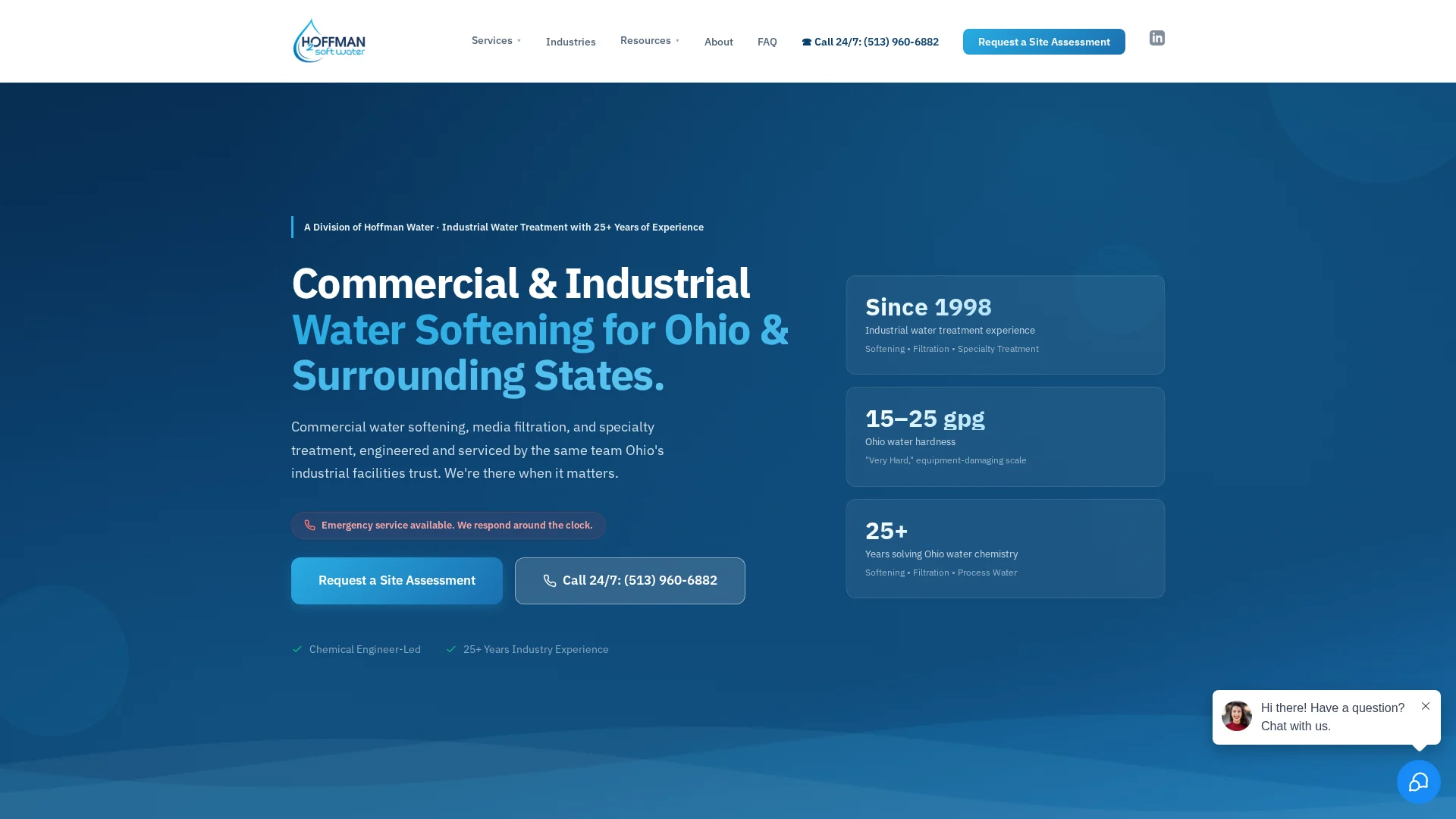
Hoffman Soft Water is an Ohio pretreatment specialist that engineers softening, filtration and RO systems around each plant's water hardness, flow and equipment. Its boiler program pairs that makeup conditioning with deaerator tuning, internal treatment, oxygen scavenging, blowdown and condensate protection, plus 24/7 emergency response.
Key strengths
- Custom-engineered industrial water softening systems for hard Ohio makeup water
- Full-scope program from pretreatment through condensate return protection
- On-site testing, operator training and 24/7 emergency response
- Engineered project pricing instead of a fixed chemical contract
Chardon Labs
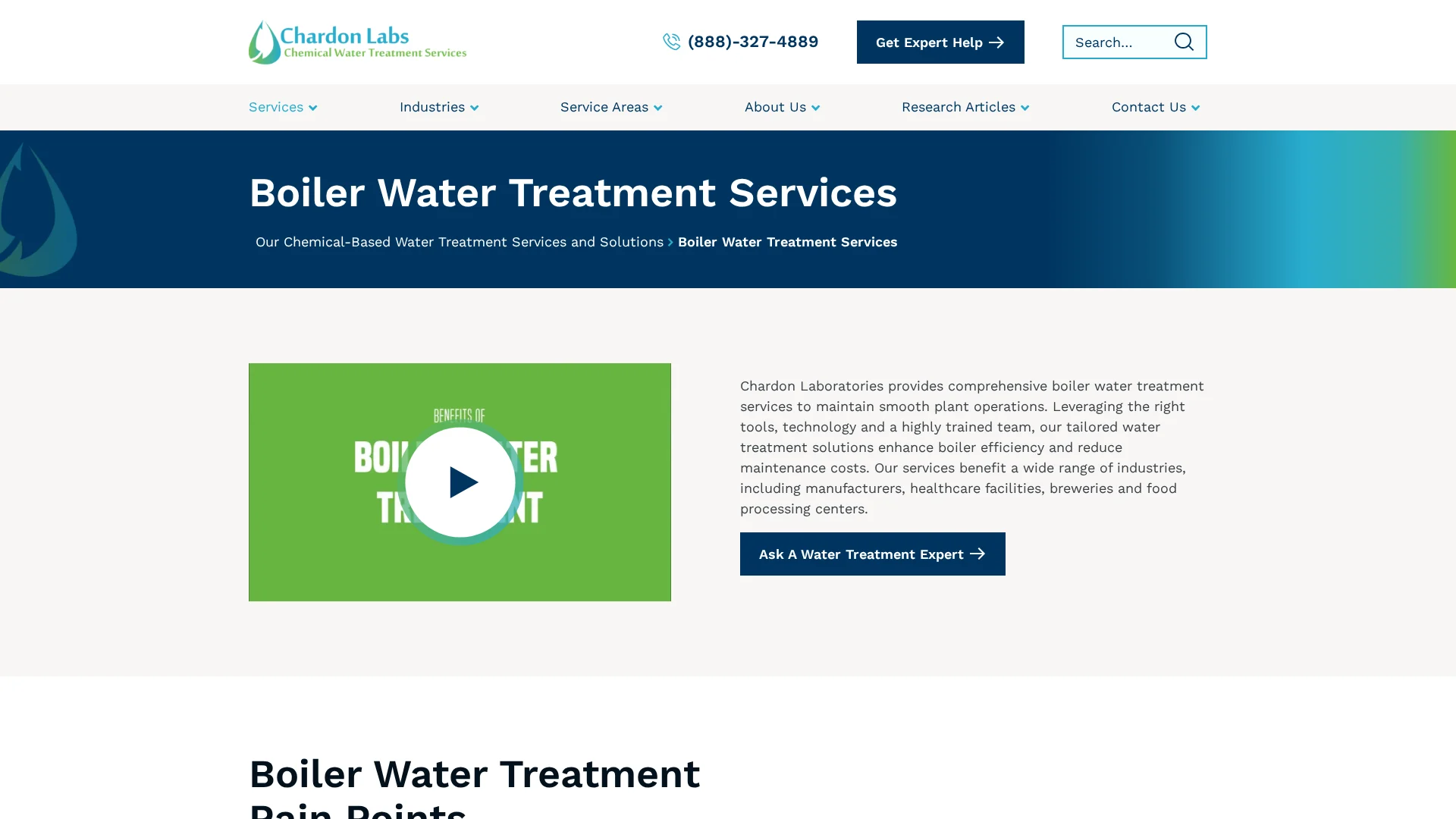
Chardon Labs is a multi-state water treatment company with more than 60 years of boiler treatment experience, serving manufacturers, healthcare facilities, breweries and food processors. It focuses on chemical scale and corrosion control, blowdown management and polymer dispersants under a fixed annual contract with a scale-free guarantee.
Key strengths
- Boiler, cooling tower and closed-loop programs from one vendor
- Fiber-optic system surveys and same-day e-reports
- Fixed annual price with a scale-free performance guarantee
Where Each Boiler Program Actually Starts
Why Makeup Water Decides Your Scale Ceiling
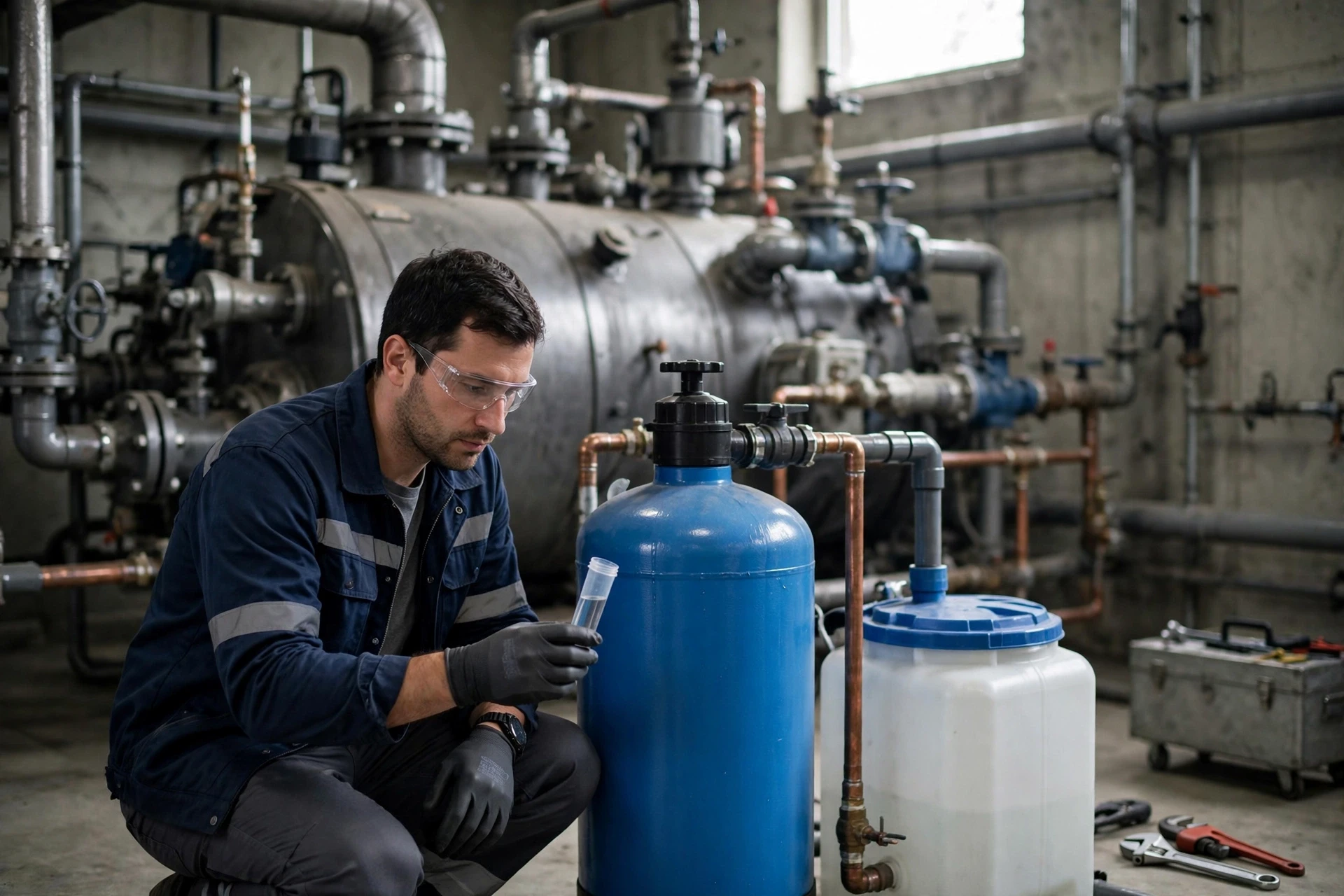
Chardon Labs starts with internal chemistry: chemical feed, scale and corrosion control, and blowdown control inside the boiler. Hoffman starts one step earlier, with the makeup water itself. Because Ohio groundwater runs 15 to 25 grains per gallon, industrial water softening systems upstream set the hardness ceiling no chemical program can beat.
Oxygen, Deaerators and the Rest of the Steam Loop
Scale is only half the fight; dissolved oxygen causes the other half. Both programs then address the steam loop: deaerator tuning, oxygen scavenging, condensate protection and conductivity-based blowdown. The difference is sequencing. Treat hardness upstream and the internal chemistry holds longer, which is the logic behind alternatives to chemical boiler treatment programs that reduce chemical demand first.
Service Model, Monitoring and Who Answers the Phone
Both programs follow the same arc. A commercial boiler maintenance program typically includes an on-site survey, baseline water testing, chemical feed setup, startup, operator training, and scheduled service with monitoring.
The First Ninety Days: Survey, Testing and Startup
Expect a system survey, hardness and conductivity testing, then startup with chemical feed calibrated to your makeup water. Operators get hands-on training, and pretreatment options for chemical boiler programs get reviewed where hardness demands it.
Between Visits: Automated Feed, Reporting and Emergency Response
After startup, automated feed and remote monitoring hold setpoints between visits, with test records logged for inspection compliance. When a chiller or boiler alarm hits at 2 a.m., a local provider like Hoffman Soft Water answers directly; Chardon Labs routes service through its regional office structure first.
Pricing, Guarantees and the Shape of the Contract
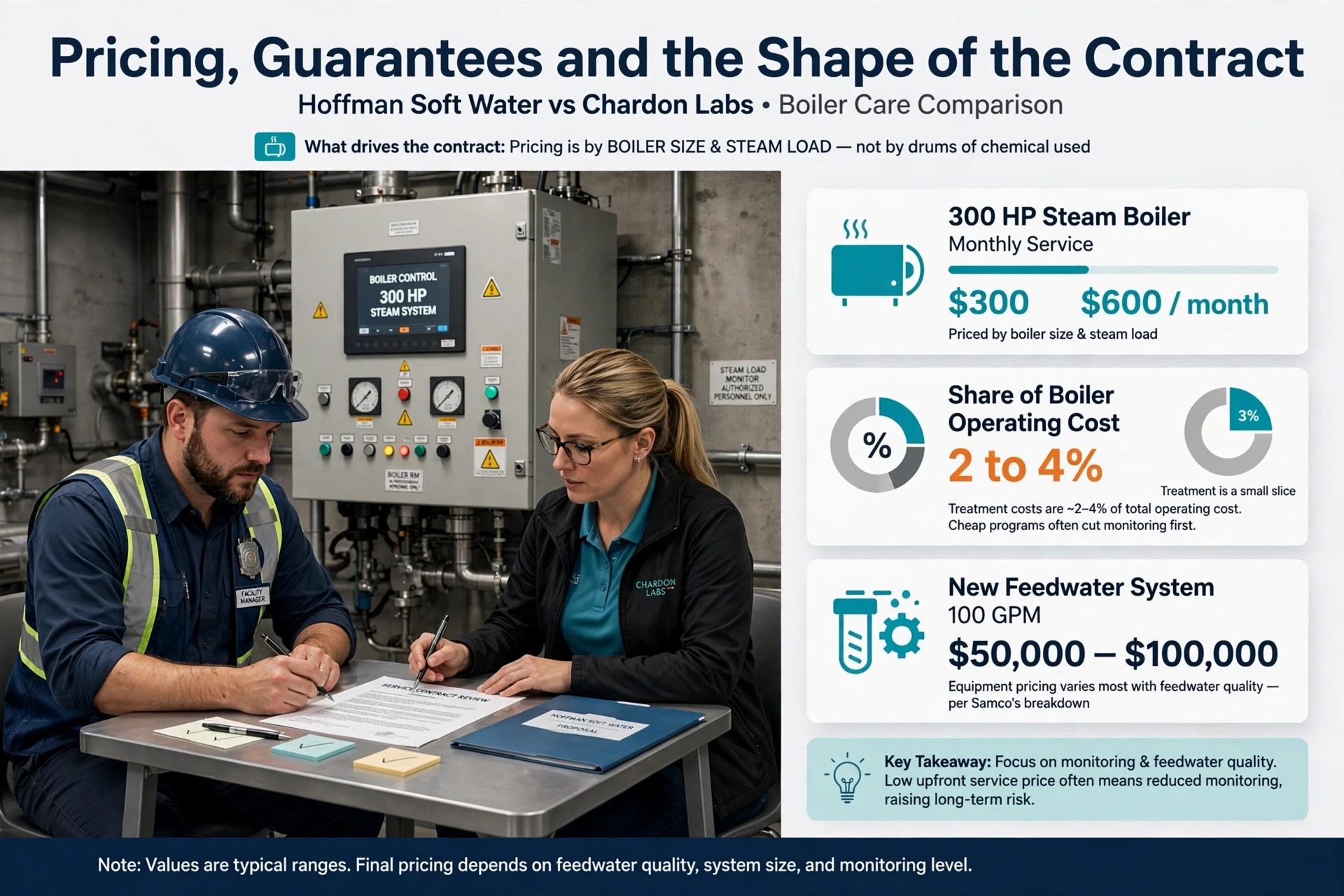
How much does a boiler water treatment program cost? Most service contracts are priced by boiler size and steam load, not by the drums of chemical used.
| Factor | Typical range |
|---|---|
| 300 HP steam boiler, monthly service | $300 to $600 |
| Share of boiler operating cost | 2 to 4% |
| New feedwater system, 100 GPM | $50,000 to $100,000 |
The second figure matters most: treatment is a small slice of total operating cost, so cheap programs usually cut monitoring first. Equipment pricing varies more with feedwater quality, per Samco's breakdown.
Ask three questions before signing. Is the fee fixed per month, or does it rise with chemical use? Does a scale-free performance guarantee come in writing, with testing records to back it? And who answers the emergency call at 2 a.m.? Chardon Labs builds its model around a fixed annual charge and a guarantee; Hoffman Soft Water counters with pretreatment-first design and direct 24/7 response. The cheapest contract is the one where the service actually shows up.
Which Boiler Care Program Should Ohio Plants Choose?
Pick the provider that matches your plant's main weakness: scale from hard makeup water points to pretreatment design; complex multi-site chemical programs favor a large regional vendor.
Choose Hoffman Soft Water If You Are...
A facility fighting 15 to 25 gpg hardness, where industrial water softening upstream matters more than chemicals. Choose it if you want a local engineer, custom pretreatment design, ongoing monitoring, and direct 24/7 emergency response.
Choose Chardon Labs If You Are...
A multi-site operation wanting a fixed annual contract, a scale-free performance guarantee, and established chemical-only service across several states. Its model suits plants with feedwater already under control, where internal treatment and reporting carry the load.
Hard feedwater is your boiler's first problem, so fix it there first. Talk with Hoffman Soft Water about a pretreatment plan and 24/7 support for your plant.
Frequently Asked Questions
Q1: How does Hoffman Soft Water compare for boiler protection?
Hoffman Soft Water treats hardness upstream with engineered softening, then adds internal treatment, deaerator tuning and 24/7 emergency response. Chardon Labs leads with chemical scale and corrosion control under a fixed annual contract.
Q2: Which program costs less over five years?
Chemical-only contracts cost less upfront, but hard makeup water at 15 to 25 gpg drives fuel waste and blowdown loss. Pretreatment usually pays back through lower chemical use.
Q3: Do I need water softening if I already use boiler chemicals?
Often, yes. At Ohio hardness levels, internal chemicals fight scale faster than you can feed them. Softening the makeup water first lets a smaller chemical program hold setpoints.
Conclusion
Ohio's hard makeup water decides your scale ceiling, so pick the program that matches your weakness: pretreatment-first design for hardness, or a fixed chemical contract when feedwater is already under control.