 Hoffman Soft Water
Quick Summary: Boiler reliability often depends more on makeup water pretreatment and system controls than on chemical dosing alone, with ion exchange softening ranked first for hard water, reverse osmosis for high-purity needs, thermal deaeration for corrosion, and automatic conductivity blowdown for the fastest payback. Facilities should test their makeup water, match treatment to operating requirements, and combine pretreatment, deaeration, blowdown control, filtration, condensate recovery, and monitoring rather than rely on one fix. Hoffman Soft Water is presented as fitting Ohio plants with hard water through analysis-led pretreatment and ongoing support, although most boilers still need residual chemicals for oxygen and corrosion control.
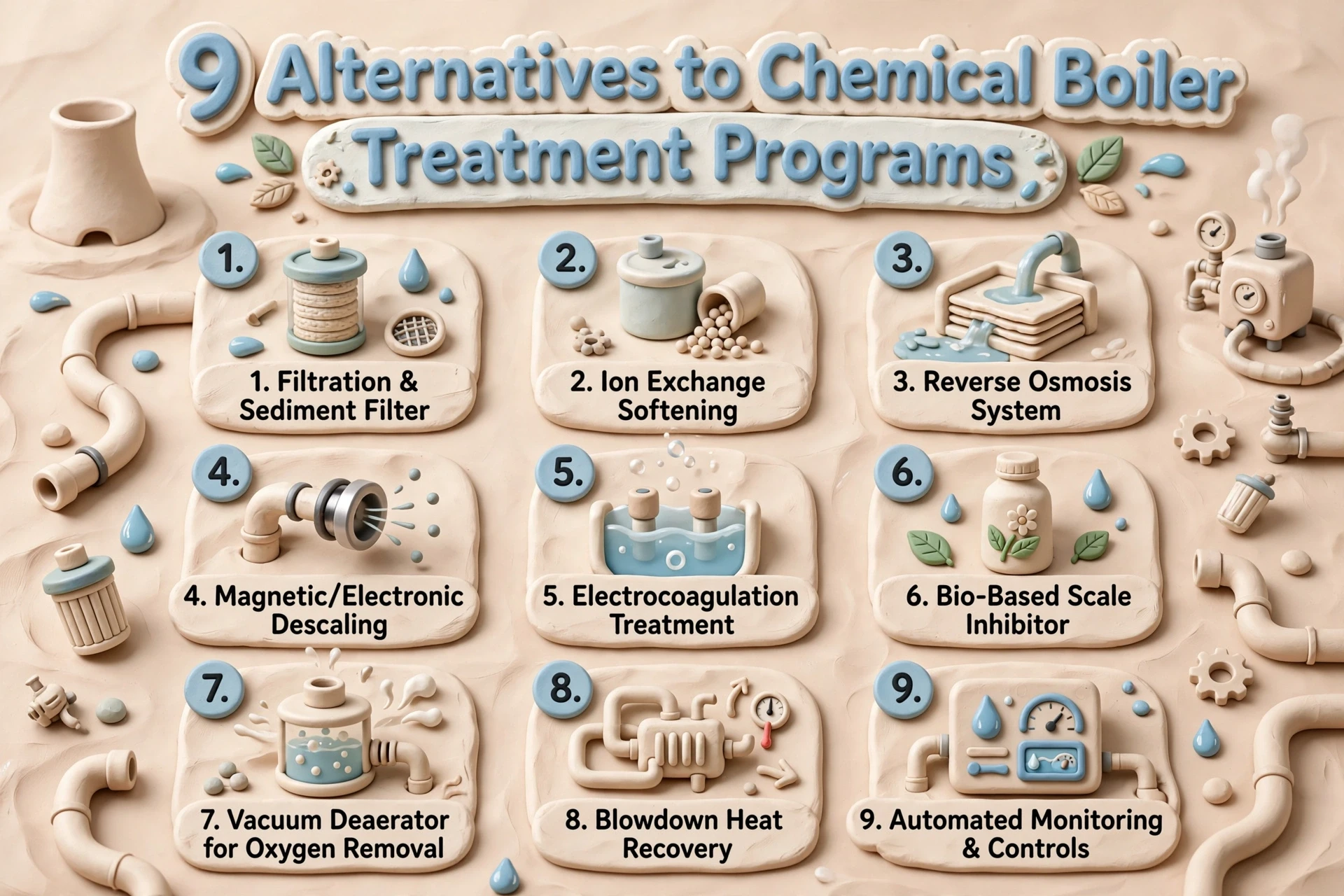
If your plant draws 18 to 22 grains per gallon make-up water, scale in your industrial boiler water is already decided before anyone opens a drum of chemical. Many boiler rooms inherit a treatment program that keeps costing money while deposits and corrosion continue. Nine credible alternatives to chemical boiler treatment can protect industrial boiler water instead: softening, deaeration, automatic blowdown control, filtration, condensate recovery, and instrument-driven chemistry. We rank each by protection, cost, and payback.
Boiler Treatment Alternatives At a Glance
| Alternative | Best for | Capital and effort | Still needs |
|---|---|---|---|
| Ion Exchange Water Softening for Makeup Water | Plants on hard city or well make-up water | Medium capital, low daily operator effort | Oxygen control, alkalinity management, and blowdown |
| Reverse Osmosis Makeup Treatment | High-pressure steam and strict purity requirements | High capital, moderate operator effort | Softener pretreatment, deaeration, and blowdown control |
| Thermal Deaeration and Feedwater Tank Fixes | Plants with corrosion pitting and high condensate returns | Medium to high capital, moderate operator effort | Hardness removal, residual oxygen scavenging, and blowdown control |
| Automatic Conductivity-Controlled Blowdown | Any plant currently on timed or manual blowdown | Low to medium capital, low daily effort | Correct make-up quality and a baseline chemistry program |
Why Facilities Look Beyond Chemical Boiler Treatment
A chemical boiler treatment program is really a set of control loops: kill the hardness, strip the oxygen, hold the alkalinity, and blow down the rest. Each loop can run in hardware instead of chemistry.
On hard make-up water, that hardware side is often where the savings live. Scale in your industrial boiler water is set before anyone opens a chemical drum, so pretreatment, deaeration, and blowdown control decide reliability first. The list below covers those options.
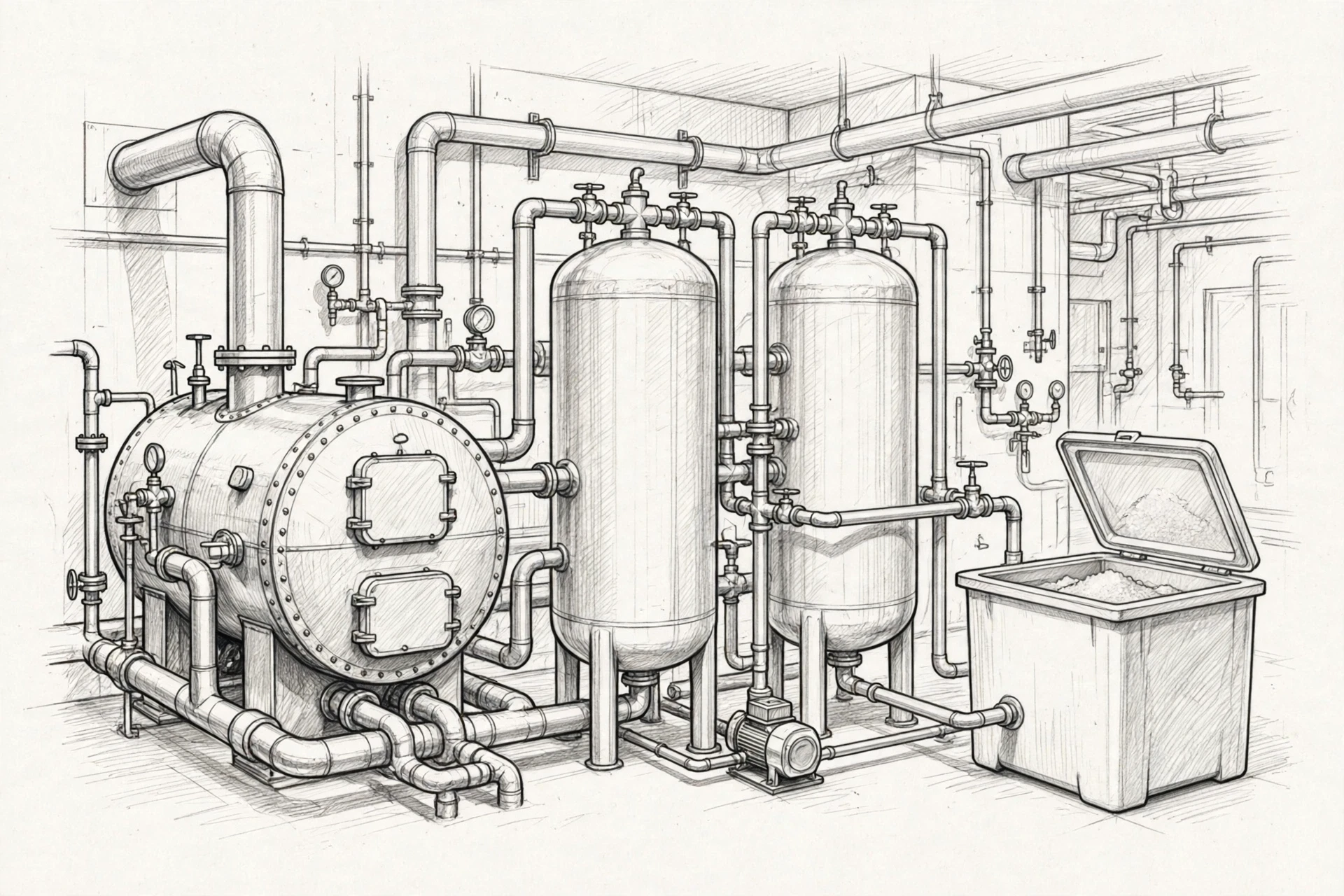
1. Ion Exchange Water Softening for Makeup Water
Take the hardness out before the boiler ever sees it. On 18 to 22 gpg make-up water, a properly sized boiler water softener for feedwater cuts the scale load so sharply that many plants shrink their internal inhibitor program entirely. It removes the one problem Ohio plants actually have.
Highlights
- Cuts blowdown volume and the fuel and water lost with it, since blowdown can reach 8 to 10% of feedwater
- Extends boiler tube life by keeping heat transfer surfaces clean
Specs
- Best for: Plants on hard city or well make-up water
- Capital and effort: Medium capital, low daily operator effort
- Still needs: Oxygen control, alkalinity management, and blowdown
Pros
- Largest single reduction in scale risk for hard-water plants
- Simple, proven technology with parts and service availability everywhere
- Pays back fast in fuel savings once blowdown drops
Cons
- Does nothing for dissolved oxygen corrosion
- Resin still needs salt, regeneration, and monitoring
- Only as good as the makeup and bypass configuration around it
It ranks first because it removes the root cause of hard water instead of managing the consequences. Last updated: October 25, 2026
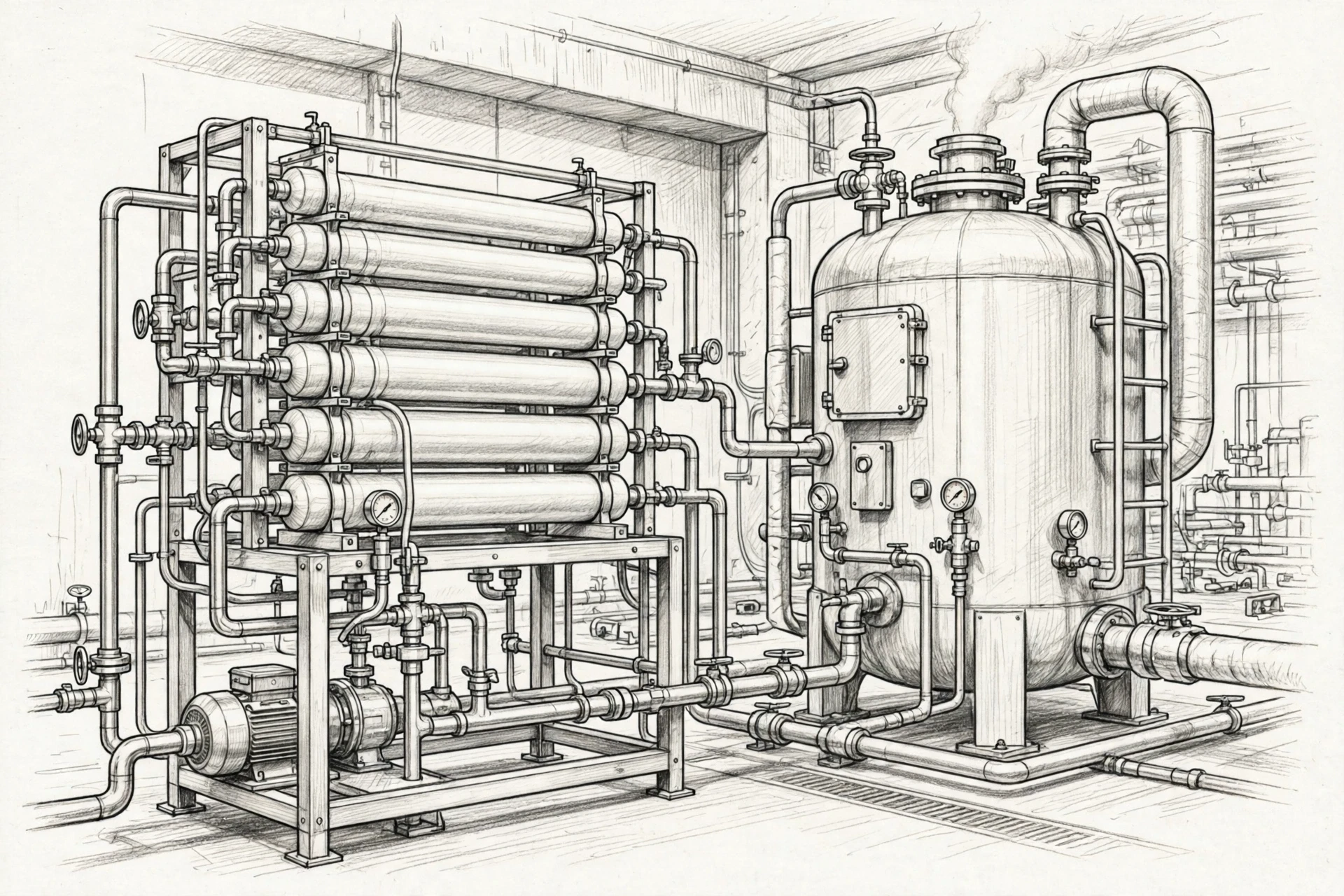
2. Reverse Osmosis Makeup Treatment
A softener swaps hardness for sodium; reverse osmosis removes dissolved solids, alkalinity, silica, and chlorides outright. That makes reverse osmosis boiler feedwater treatment the strongest physical option for high-pressure steam and plants with strict purity standards.
Highlights
- Removes alkalinity, silica, and chloride, not just calcium and magnesium
- Supports high-pressure and high-purity steam applications
- Greatly reduces blowdown and chemical feed demand
- Cuts scale and carryover risk in food, beverage, and pharmaceutical lines
Specs
- Best for: High-pressure steam and strict purity requirements
- Capital and effort: High capital, moderate operator effort
- Still needs: Softener pretreatment, deaeration, and blowdown control
Pros
- Broadest contaminant removal of any physical option
- Extends boiler life in corrosive, high-cycles applications
- Reduces chemical demand more than softener-only setups
Cons
- Higher capital and maintenance than softening
- Requires antiscalant control and reject management
- Membrane pretreatment must be designed correctly to avoid fouling
It ranks second because it protects more than a softener does, but capital cost, pretreatment needs, and reject water handling make it the more demanding choice for most facilities.
Last updated: October 25, 2026
3. Thermal Deaeration and Feedwater Tank Fixes
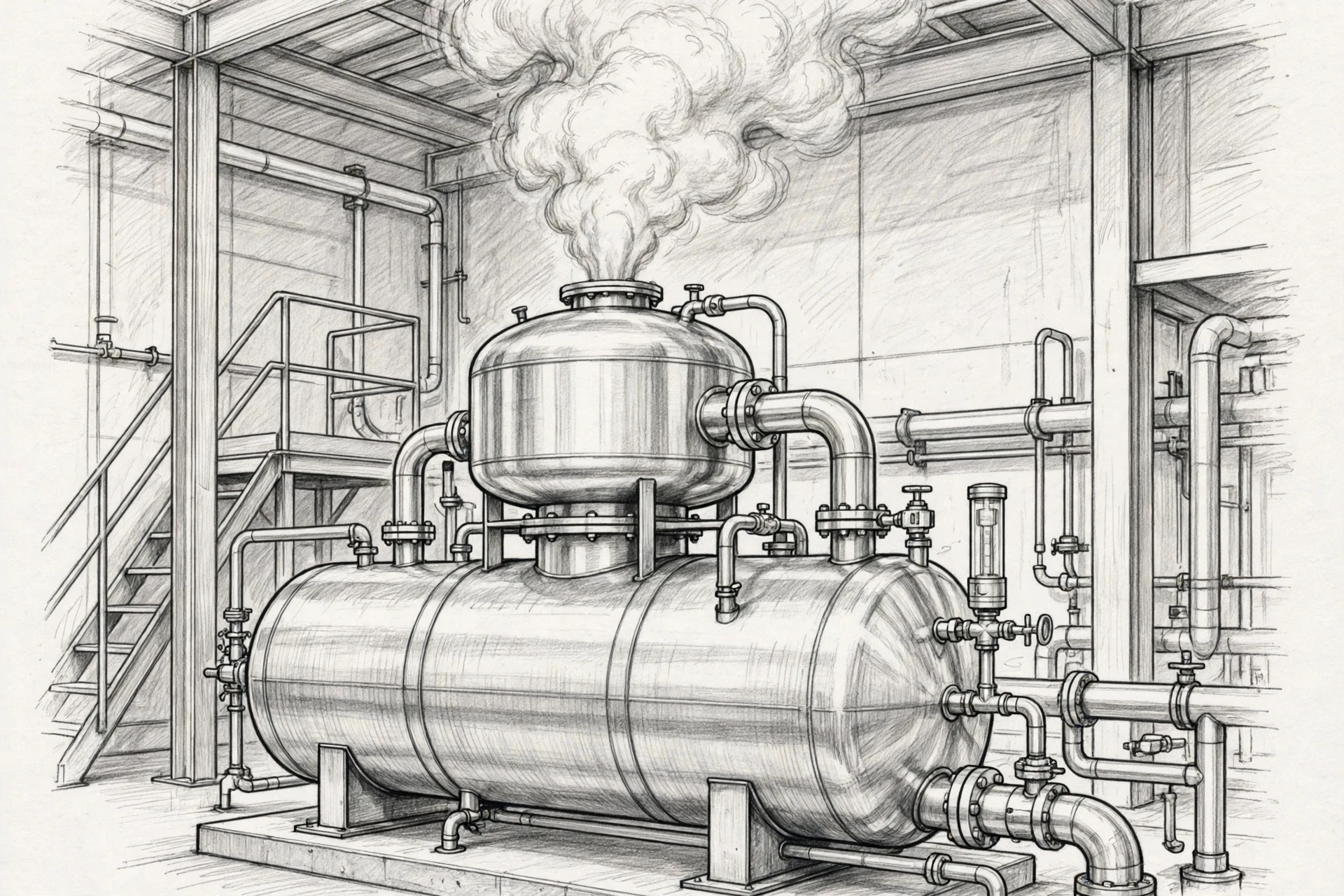
Does a deaerator replace chemical oxygen scavengers? Not fully, but it removes most of the job. A well-sized, well-vented deaerator heats and scrubs industrial boiler water with steam to strip dissolved oxygen down to about 7 ppb, so the scavenger dose can shrink or drop.
Highlights
- Removes the bulk of dissolved oxygen mechanically, per Veolia's deaeration handbook
- Reduces or eliminates chemical oxygen scavenger demand
- Lowers feedwater and condensate corrosion rates
- Improves steam system reliability and feedwater stability
Specs
- Best for: Plants with corrosion pitting and high condensate returns
- Capital and effort: Medium to high capital, moderate operator effort
- Still needs: Hardness removal, residual oxygen scavenging, and blowdown control
Pros
- Cuts scavenger chemical use and its carryover into steam
- Protects feedwater lines, economizers, and condensate piping
- Payback is strong where feedwater temperature is already high
Cons
- Residual oxygen still needs a plan
- Underperforming deaerators are common and hard to spot
- Tank venting and temperature control must be verified in the field
It takes third because it targets corrosion rather than scale, and a deaerator only performs as well as its venting, storage, and feed arrangement.
Last updated: October 25, 2026
4. Automatic Conductivity-Controlled Blowdown
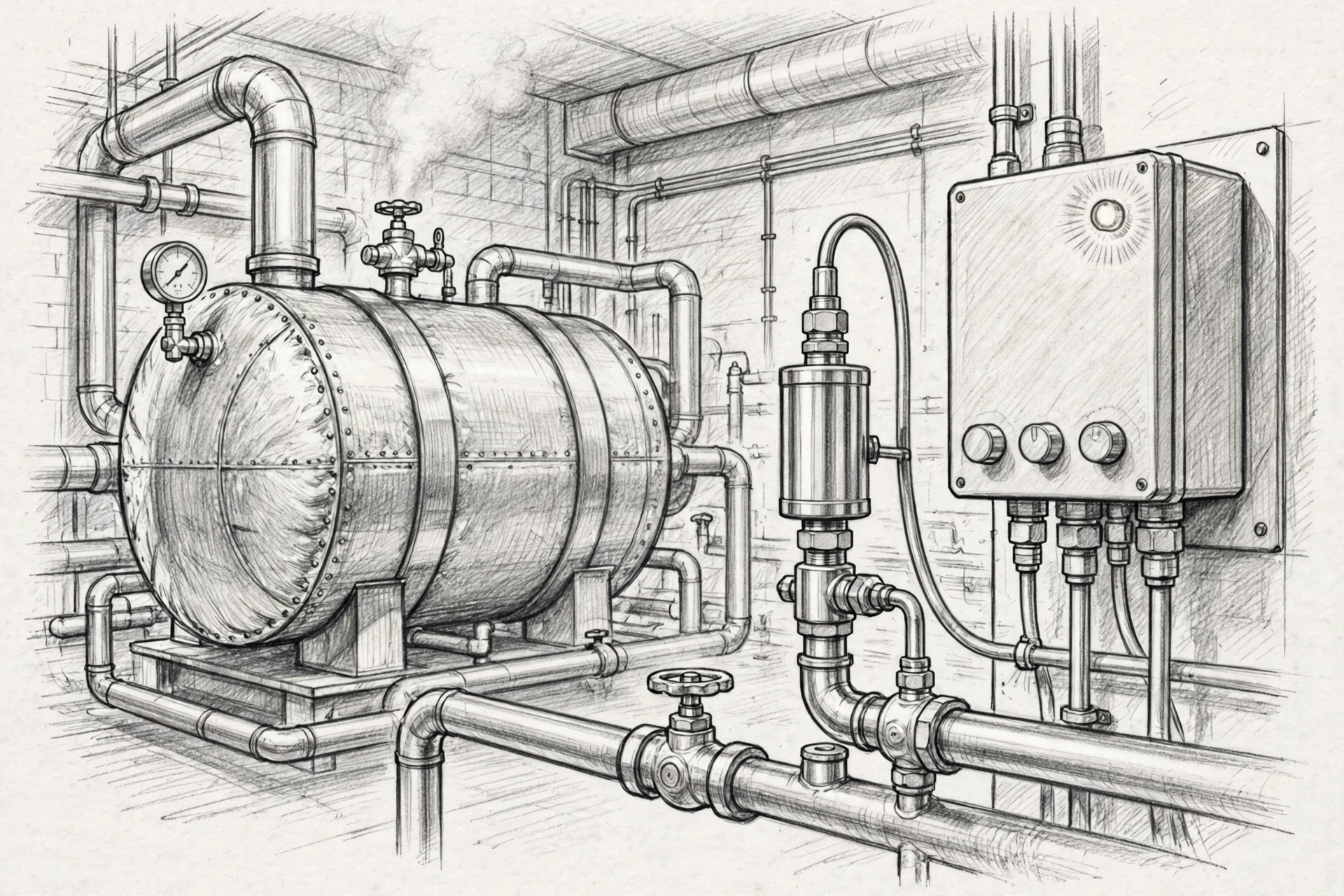
Fixed or hand-set blowdown wastes water in most boiler rooms. Automatic boiler blowdown control blows down on measured conductivity instead of a calendar, so the controller holds your cycles of concentration and cuts makeup water, fuel, and chemical loss together. Upgrading from manual control can cut a boiler's energy use by 2 to 5 percent and blowdown losses by up to 20 percent, per Yokogawa's application notes. The DOE recommends these systems for surface-blowdown service.
Highlights
- Holds steady cycles of concentration with far less water discarded
- Reduces fuel, water, and chemical loss together
- Limits operator error and blowdown spikes
- Gives you the data to size any chemical program more accurately
Specs
- Best for: Any plant currently on timed or manual blowdown
- Capital and effort: Low to medium capital, low daily effort
- Still needs: Correct make-up quality and a baseline chemistry program you can monitor for scale and corrosion
Pros
- Quickest measurable payback on the list
- Reduces operator workload and water discharge
- Improves consistency of boiler water chemistry
Cons
- Only as good as the controller calibration and probes
- Cannot correct bad make-up water entering the system
- Poor installation causes over-blowdown, which is worse than none
It makes the top four because DOE data shows savings in weeks, and steady chemistry sharpens every other treatment decision you make.
Last updated: October 25, 2026
Honourable Mentions
These five round out the list. They work best as layers inside a single plan rather than headline answers on their own, so fold them into whatever combination you choose.
- Side-Stream Filtration of Boiler Water - Pulls sludge and suspended solids out so deposits never settle on heat transfer surfaces.
- Condensate Return Recovery and Steam Trap Management - Returns hot, clean water to the boiler, cutting fuel use, makeup demand, and chemical feed in one move.
- Non-Chemical Scale Control Technologies - Electromagnetic and electrolytic devices that help keep scale in suspension, useful as a backup layer, not a replacement.
- Monitoring-Driven Boiler Control and Corrosion Coupons - Replaces scheduled dosing with data, so you act on measured cycles and oxygen levels.
- Materials Upgrades and Condensate Line Replacement - Corrosion-resistant alloys and fixed condensate lines remove the root cause of pitting.
How to Choose the Right Alternative for Your Boiler Room
Start with a make-up water analysis, not a product. If hard water drives the load, softening or reverse osmosis comes first.
- Match the option to pressure and steam contact - food, pharma, and healthcare purity limits rule some choices out
- Ask what your provider can't do - a chemical-only vendor shouldn't propose a chemical-free rebuild
- Layer the wins - pretreatment plus deaeration plus automatic boiler blowdown control beats any single fix
- Price the full picture - water, fuel, chemical, labor, and outage cost before judging payback
For Ohio plants on 15 to 25 gpg water, Hoffman Soft Water fits these criteria best: engineered pretreatment built on a water analysis first, plus monitoring and 24/7 support, rather than a drum-and-dose program.
Cutting chemical use starts with pretreatment that fits your water. Talk to Hoffman Soft Water about an engineered system for your Ohio plant.
Frequently Asked Questions
Q1: What are the top alternatives to chemical boiler treatment?
Softening make-up water, reverse osmosis feedwater, thermal deaeration, and automatic boiler blowdown control lead the list, with filtration, condensate recovery, monitoring, and metallurgy as supporting layers.
Q2: Can I run a boiler with no chemicals at all?
Most facilities can't fully. Physical pretreatment removes scale and most oxygen, but a small residual dose usually stays for oxygen scavenging and condensate corrosion control.
Q3: Which alternative pays back fastest?
Automatic conductivity-controlled blowdown. It's low capital and can cut energy use 2 to 5 percent within weeks.
Q4: Where should a plant on 20 gpg hard water start?
With a make-up water analysis, then softening or reverse osmosis to remove hardness before it reaches the boiler.