 Hoffman Soft Water
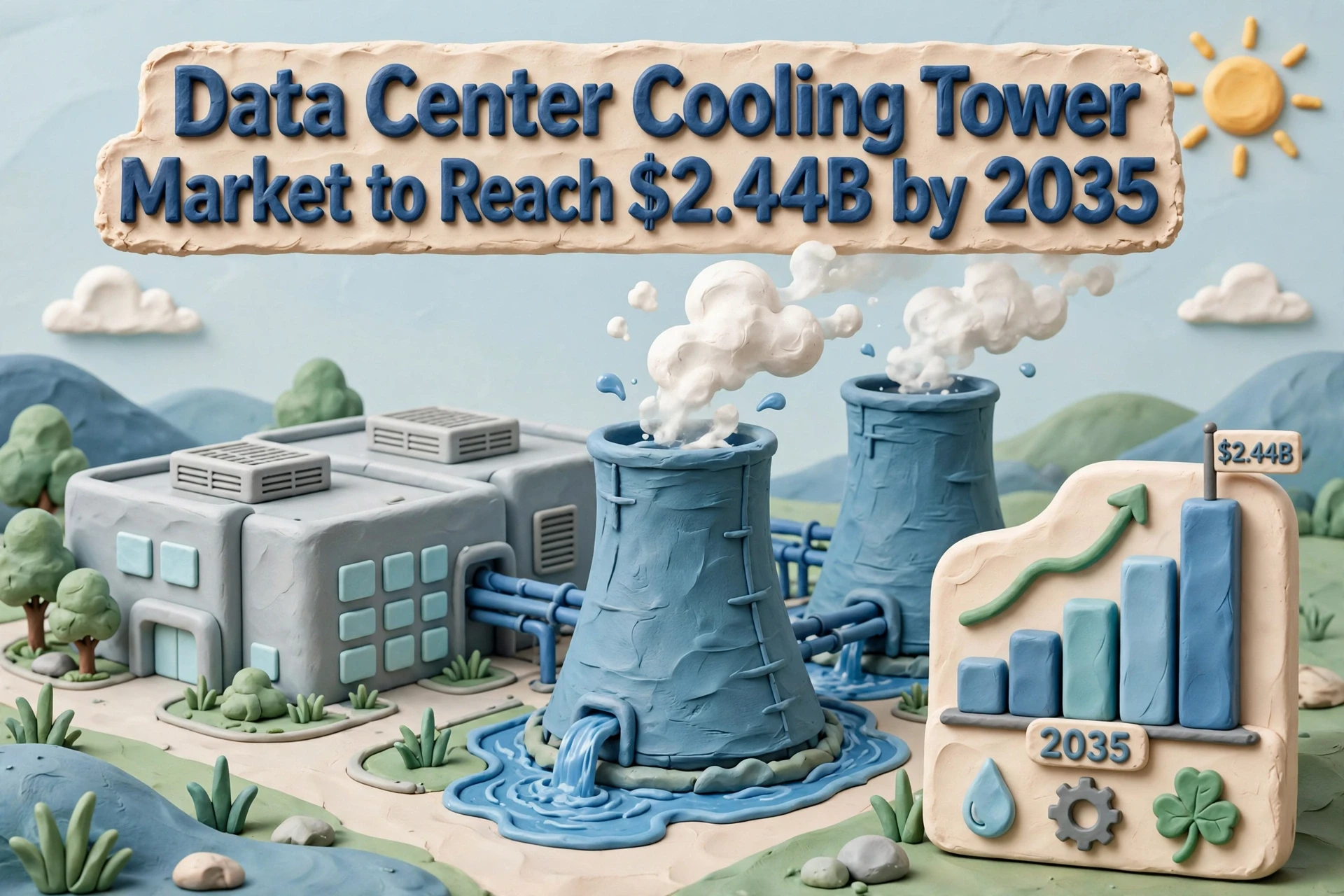
Quick Summary: The data center cooling tower market should grow from $1.12 billion in 2025 to $2.44 billion by 2035, an 8.06% annual growth rate. AI demand and 45°C racks are pushing operators toward hybrid, adiabatic, and dry cooling systems, while service, filtration, softening, metering, and Legionella controls claim a larger share of spending. As evaporative capacity rises 55%, water quality and proactive side-stream filtration become critical for controlling scale, sediment, and equipment efficiency.
The global data center cooling tower market was worth USD 1.12 billion in 2025 and should reach USD 2.44 billion by 2035, an 8.06% CAGR. New evaporative capacity still grows 55% by 2035, but capital now follows water. Disclosure rules and 45 °C AI racks are shifting purchases toward hybrid and adiabatic designs, which changes everything for your make-up water, filtration and Legionella controls.
The Forecast: Cooling Tower Spending More Than Doubles by 2035
How big is the data center cooling tower market? It was worth USD 1.12 billion in 2025 and should reach USD 2.44 billion by 2035, a cooling tower market growth rate of 8.06% a year. That makes this one of the faster-moving corners of the wider cooling industry, which is itself expanding as AI campuses add heat faster than chips can shed it.
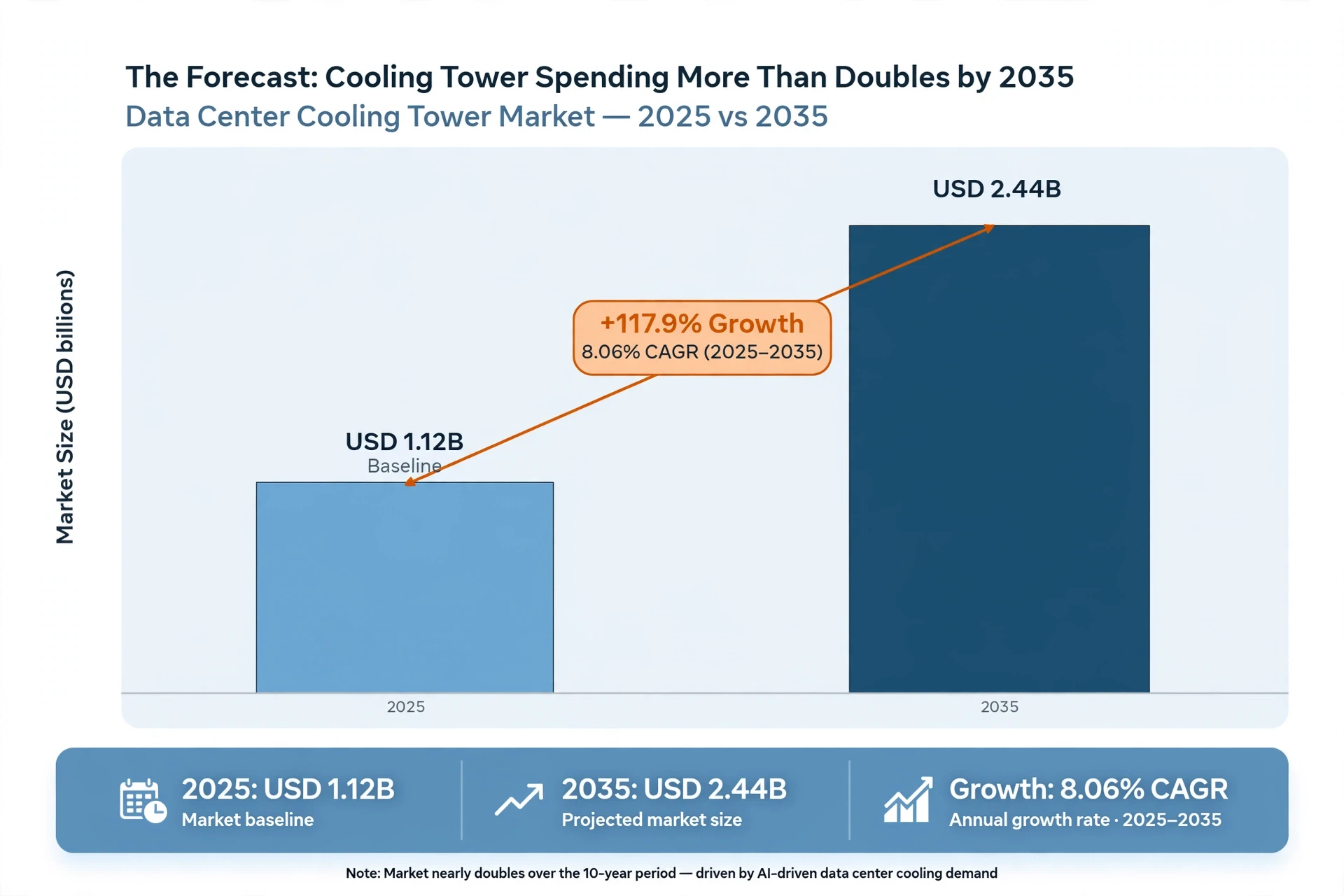
| Year | Market Size | Annual Growth |
|---|---|---|
| 2025 | USD 1.12 billion | Baseline |
| 2035 | USD 2.44 billion | 8.06% CAGR |
How the 2026 Estimate Compares With Adjacent Cooling Forecasts
The tower numbers sit inside a larger evaporative cooling story. Annual evaporative capacity should climb from 5,448 MW to 8,467 MW, roughly 55% more heat rejection by 2035. Yet towers do not capture all of it. Hybrid and adiabatic coolers are growing faster, and dry cooler substitution keeps pulling spending away from open-circuit designs. Replacement parts and service contracts grow steadily too, which is why recurring demand matters as much as new sales. For facility teams, the practical takeaway is simple: more evaporative load means more make-up water, and Ohio's 15-25 gpg hardness makes scaling and filtration decisions the difference between a tower that runs for decades and one that fails early. Choosing cooling tower filtration before capacity arrives costs far less than after.
How Is the Data Center Cooling Tower Market Changing in 2026?
The data center cooling tower market is shifting from new evaporative builds toward hybrid, adiabatic and dry cooler systems, while replacement and service work grows faster than new tower sales. Four changes define the year:
- Design mix: hybrid and adiabatic units are winning site plans over plain open-circuit towers
- Substitution: dry coolers are taking share where water is scarce or costly
- Spending mix: capital now favors make-up water quality, filtration and metering
- Installed base: the towers already running need more service, not replacement
Hybrid, Adiabatic and Dry Coolers Reshaping Site Selection
Site selection now weighs water risk as heavily as power. AI campus cooling loads pushing racks toward 45 °C make hybrid coolers, which blend evaporative and dry modes, the default choice for new builds. Dry coolers win in water-stressed regions. Because reclaimed water and closed-circuit fluid coolers change hardness and solids loading, pretreatment decisions now shape the site plan itself.
Replacement and Service Outgrowing New Build
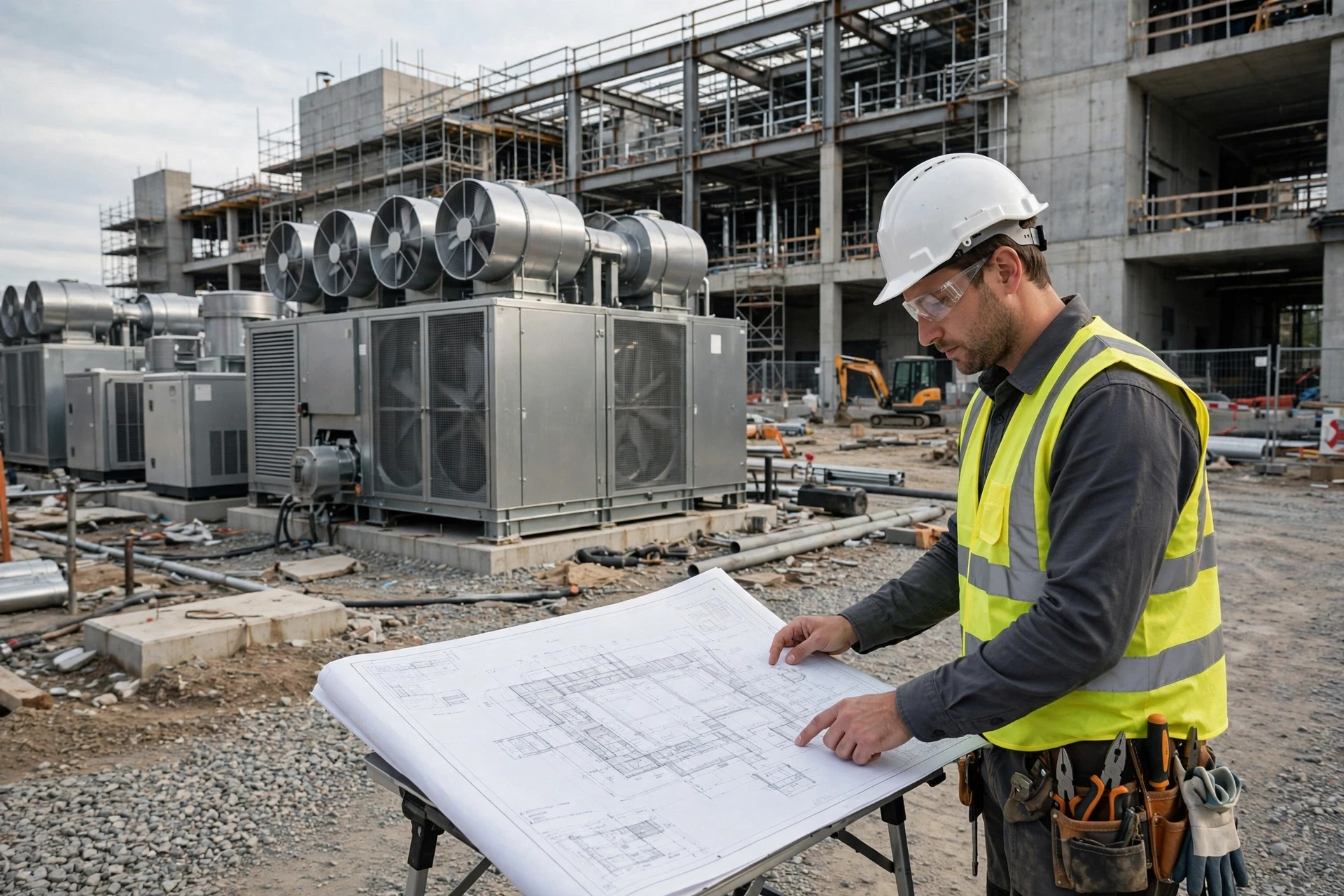
The installed base is aging, and that is where cooling tower market growth shows up most. Replacing fills, drift eliminators and basin components, plus water-side service contracts, now outpaces new unit sales in many regions. For operators, that means filtration, Legionella controls and metering matter more each year, since a retrofit only performs as well as the water feeding it.
What the Shift Means for Cooling Tower Water Filtration
Filtration Demand Follows the Installed Base, Not Just New Builds
Evaporative cooling still does the heavy lifting in data centers. Annual capacity climbs from 5,448 MW to 8,467 MW by 2035, so roughly 55% more heat rejection will run through towers that all need clean make-up water. Treatment equipment spending tracks that curve: the water and wastewater treatment equipment market for data centers is projected to grow from USD 3.3 billion in 2026 to USD 5.9 billion (MarketsandMarkets).
That growth lands hardest on water-side basics. Hybrid coolers cycle between wet and dry modes, so basin sediment, hardness scaling and Legionella controls matter more, not less. In Ohio's 15-25 gpg water, side-stream filtration and softening are what keep those cycles efficient; side-stream filtration cuts the scale and sediment that otherwise choke heat exchange.
Cooling Demand Growth Behind the Forecast
The data center cooling tower market grows because AI campuses keep adding heat that only evaporative systems reject efficiently. According to the October 2026 forecast, annual capacity climbs from 5,448 MW to 8,467 MW by 2035. Every new megawatt also means more make-up water, so cooling tower market growth now depends on filtration, softening and metering as much as on hardware.
As Ohio towers take on more load, protect yours with cooling tower filtration and softening built for 15-25 gpg water. Talk to Hoffman Soft Water today.
Frequently Asked Questions
Q1: How is the data center cooling tower market changing in 2026?
Spending is shifting from open-circuit towers toward hybrid and adiabatic designs, with water-side upgrades driving most growth.
Q2: Why does make-up water quality matter more now?
More evaporative load means harder-working towers, so scaling, sediment and Legionella risks rise with each cycle.
Q3: Should existing towers be replaced or retrofitted?
Most aging towers benefit from filtration, softening and service contracts before full replacement is justified.
Conclusion
The data center cooling tower market will more than double by 2035, but cooling tower market growth now hinges on water-side choices. Filtration, softening, metering and Legionella controls decide whether expanding capacity runs efficiently or fails early. Plan those systems before new load arrives.