 Hoffman Soft Water
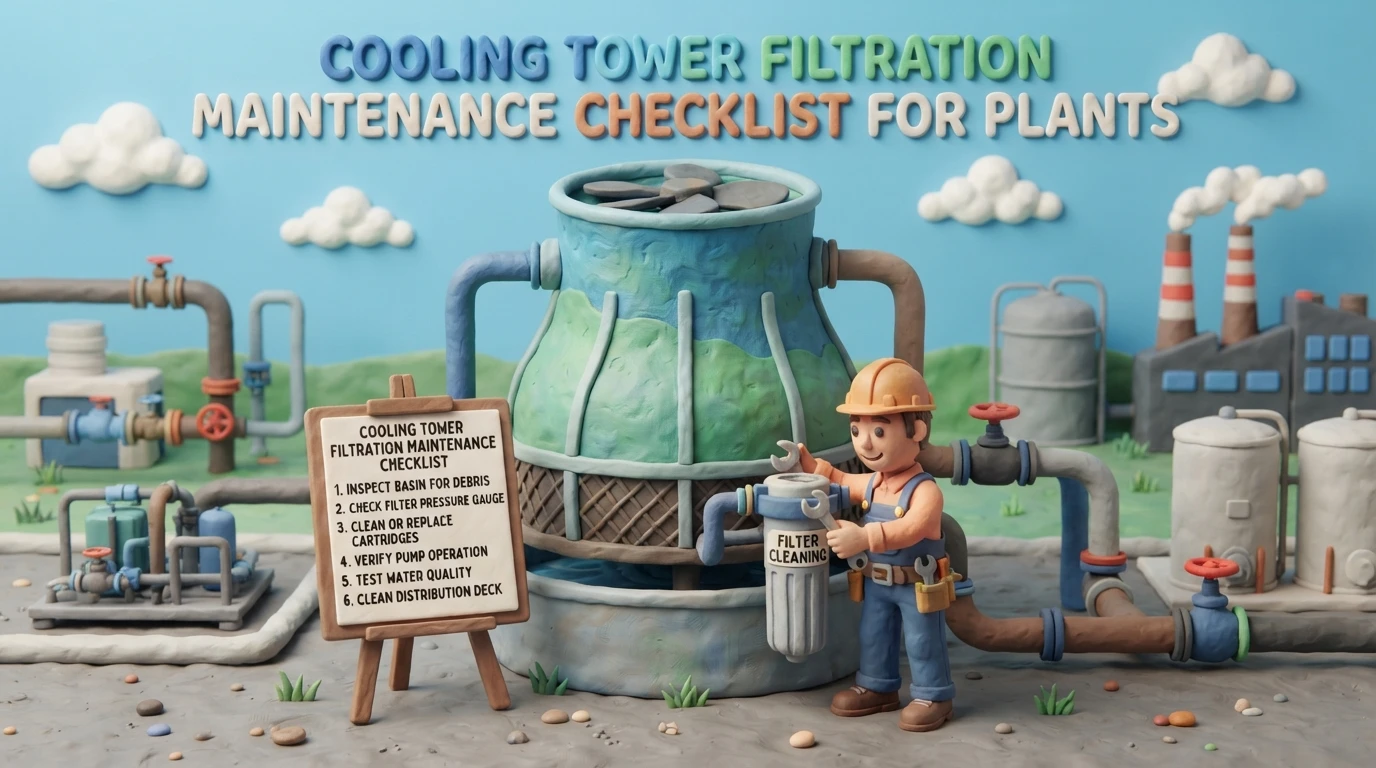
Quick Summary: Cooling tower filters in hard Ohio water need frequent, measurable maintenance: check pressure and turbidity daily, verify blowdown weekly, inspect media monthly, clean strainers quarterly, and replace media annually. Backwash when differential pressure rises 10-15 psi above the clean baseline, and size side-stream filtration at 5-10% of total tower flow. Hard water often requires twice-monthly media inspections, while storms and process upsets justify early service. A tower filter never fails loudly. It quietly loads up with the calcium, silt and biofilm that 20 gpg Ohio well water keeps pushing into the basin, and the first sign is rising blowdown and a warmer return line. This checklist gives you filter-specific service intervals and numeric triggers, so your crew can run tower filtration maintenance on a schedule instead of on alarms. We've spent decades treating hard industrial water across Ohio, and this is what actually works.
How Often Should Industrial Cooling Tower Filters Be Serviced?
The Service Interval Answer, in Plain Numbers
Most filters fail on a calendar nobody wrote down. Use these intervals instead:
- Daily: check basin turbidity and log the pressure gauge reading.
- Weekly: verify blowdown rates and cycles of concentration.
- Monthly: inspect filter media and review the differential pressure trend.
- Quarterly: clean strainers and test biocide residual.
- Annually: replace media and inspect the underdrain.
Hard water shortens every interval. With Ohio well water running 15-25 gpg, monthly media checks often need to happen twice as often.
Trigger Values That Override Your Calendar
Numbers beat dates. Backwash when differential pressure climbs 10-15 psi above the clean baseline, and keep cycles running 3-5 minutes until the discharge runs clear. Size side stream filtration at 5-10% of total tower flow. After a storm or process upset, service early no matter what the calendar says. Consistent trending catches fouling before fill media plugs and flow drops.
Running the Daily, Weekly, and Monthly Filter Tasks
Gauge Check and Shift Log
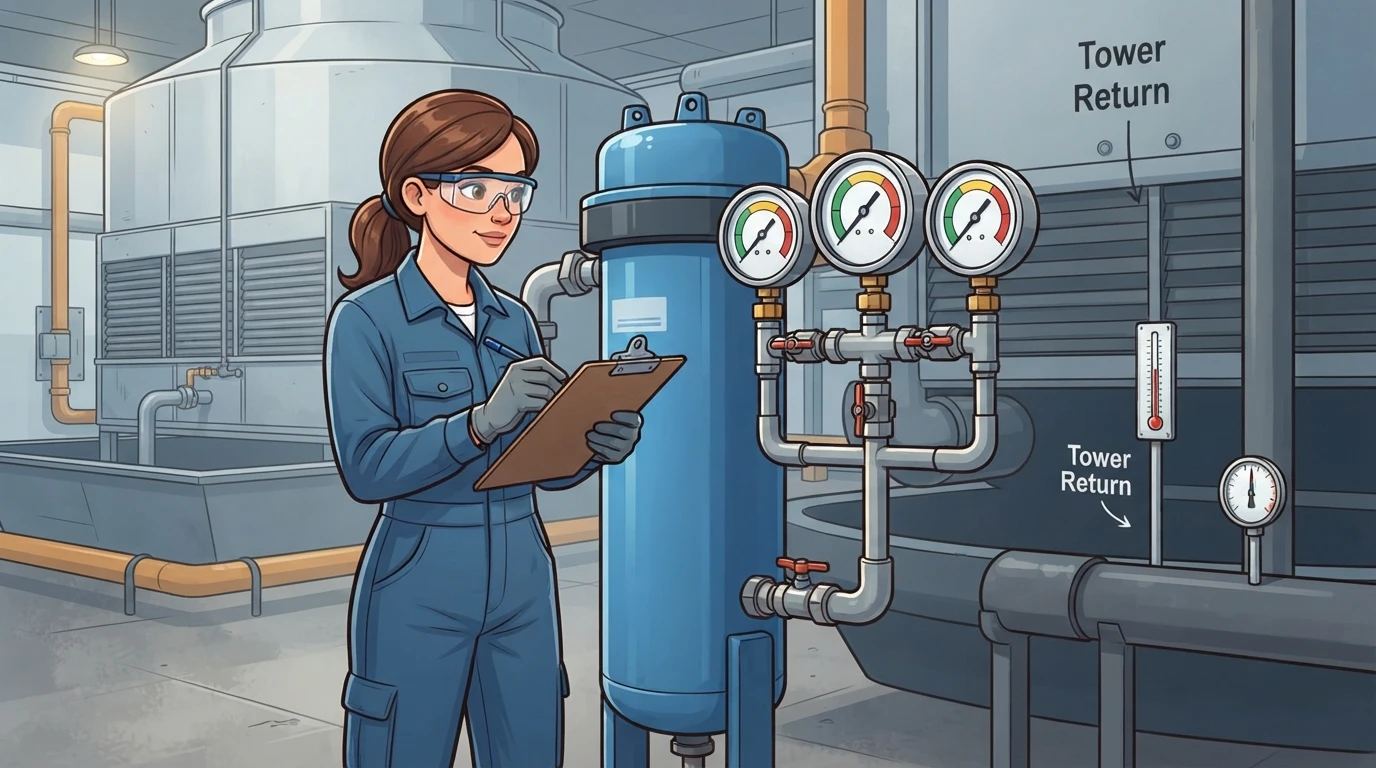
Start every shift with the filter differential pressure gauge. Record the reading next to the clean baseline, and log basin turbidity and tower return temperature at the same time. When pressure climbs 10-15 psi above baseline, schedule a backwash rather than waiting for the weekly round. A short log line takes seconds and catches fouling early.
Backwash and Mechanical Inspection
A full cooling tower filter backwash cycle, including the rinse phase, should run 10-15 minutes; the backwash stage itself runs 3-5 minutes until the discharge runs clear. Stop early and sediment settles back into the media, so verify the discharge visually before closing.
Weekly, inspect the pump strainer, check the side stream loop drawing 5-10% of tower flow, and look for media carryover at the underdrain. Monthly, pull a media sample in hard-water plants because scale buildup can blind media in weeks. Consistent monitoring like this is part of how cooling tower filtration programs prevent the scale and sediment that drive most tower fouling.
Quarterly and Annual Filter Service for Hard Water Basins
Media Inspection and Replacement
Every quarter, pull a media sample from the filter bed. In basins fed by 15-25 gpg Ohio water, sand and multimedia load with calcium and silt faster than spec sheets assume, so check for channeling, clumping and fines carried out at the underdrain. If backwash no longer restores a clean pressure baseline, replace the media rather than adding another cycle. Damaged underdrain laterals should be fixed at the same time.
Annual Review of Pretreatment Performance
Once a year, compare the numbers: cycles of concentration, basin turbidity, biocide residual and blowdown volume against last year's log. Rising hardness in the basin points to softener or filter undersizing, not operator error. This is also the time to confirm the side stream loop still draws its target share of tower flow. For plants chasing tighter scale control, a review of industrial water pretreatment options often pays for itself in one season.
Need help keeping your tower filters ahead of Ohio's hard water? Hoffman Soft Water designs and services filtration systems that match these intervals. Request a maintenance assessment today.
Frequently Asked Questions
Q1: How often should industrial cooling tower filters be serviced?
Run daily pressure and turbidity checks, weekly blowdown verification, monthly media inspection, quarterly strainer cleaning, and annual media replacement. Hard water doubles the monthly frequency.
Q2: When should I backwash my cooling tower filter?
Backwash when differential pressure rises 10-15 psi above the clean baseline, or after storms.
Q3: What size should side stream filtration be?
Size the side stream loop at 5-10% of total tower flow.
Conclusion
A cooling tower filtration maintenance checklist works when crews follow numbers, not guesswork: backwash at 10-15 psi above baseline, keep the side stream loop at 5-10% of tower flow, and inspect media monthly in hard Ohio water. Compared with generic filter guidance, these are the cooling tower filtration trigger points that catch fouling early.