 Hoffman Soft Water
Quick Summary: A 100-GPM cooling tower filter costs around $50,000, but a 1,000-GPM system jumps to $300,000-before installation and service. Pricing varies wildly based on piping access, controls, and water chemistry, which is why vendors like Hoffman Soft Water require a site review to avoid hidden costs. Installation adds labor, permits, and startup testing, while service contracts often cover critical parts and emergency response. Always compare bids by breaking down equipment, site work, and long-term maintenance, not just the upfront price.
A 100-GPM side-stream filter can cost far less than a 1,000-GPM system, but piping access, controls, water chemistry, and service needs can quickly change the quote. This guide separates equipment, install, and upkeep costs. It also explains why Hoffman Soft Water pricing needs a site review. Use this framework to compare bids, spot missing scope, and ask for clear Hoffman Soft Water pricing.
What Commercial Cooling Tower Filtration Typically Costs
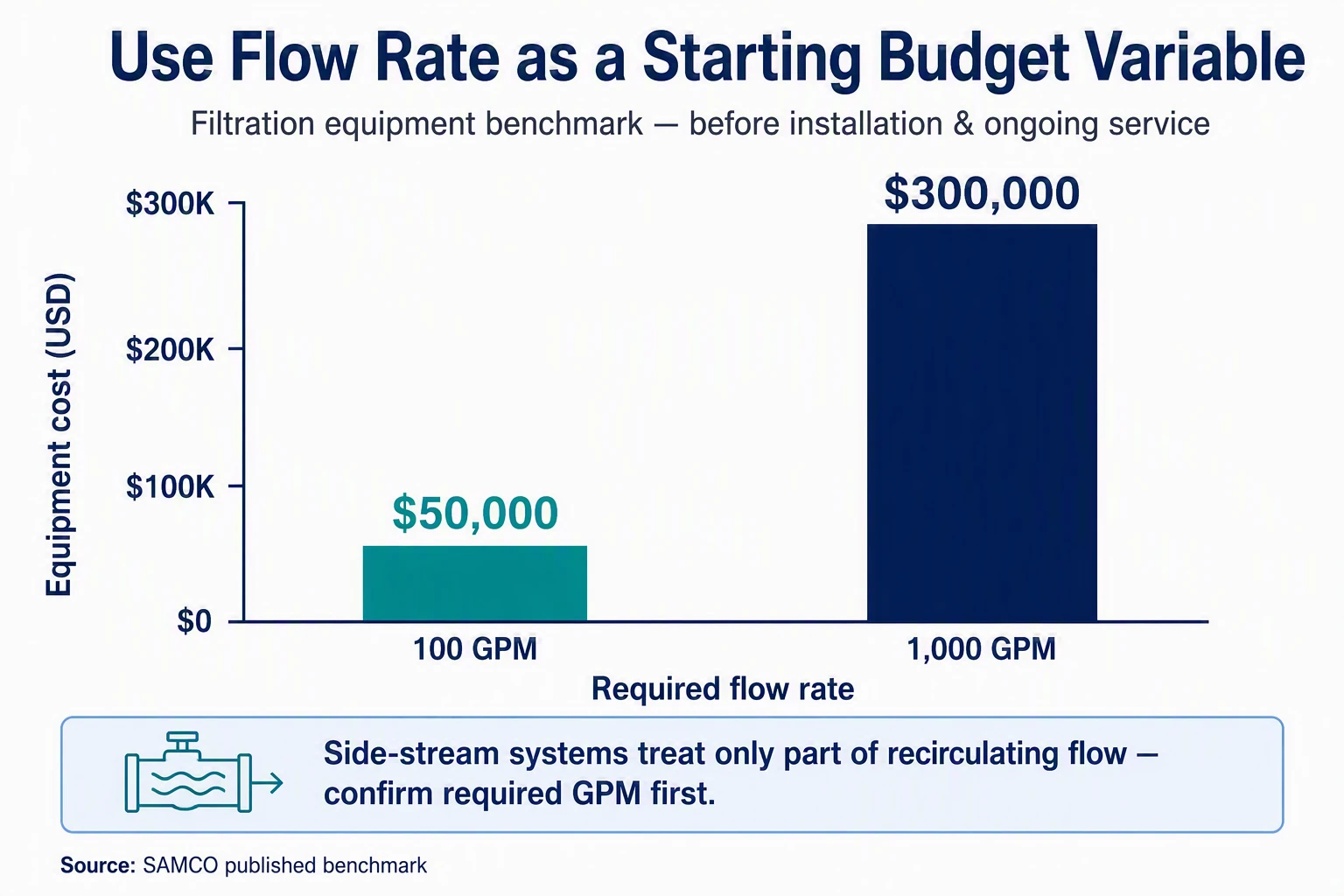
Use Flow Rate as a Starting Budget Variable
Budget equipment at roughly $50,000 for 100 GPM up to $300,000 for 1,000 GPM, before installation and ongoing service, based on SAMCO's published benchmark. Side-stream systems usually treat only part of recirculating flow, so confirm the required GPM first.
Cost rises with filtration level, pump duty, controls, redundancy, and corrosion-resistant materials.
Know What the Equipment Quote Includes
Ask vendors to list each item, not one bundled number:
| Quote item | Confirm |
|---|---|
| Filter skid | Media, vessels, pump, valves |
| Controls | Sensors, panel, alarms, BMS tie-in |
| Site work | Piping, electrical, pad, startup |
Hoffman Soft Water prices after a site assessment because water quality, space, tower flow, and service access change the real scope.
Also Read: Water Softening Case Studies | Hoffman Soft Water
How Installation and Commissioning Change the Final Price
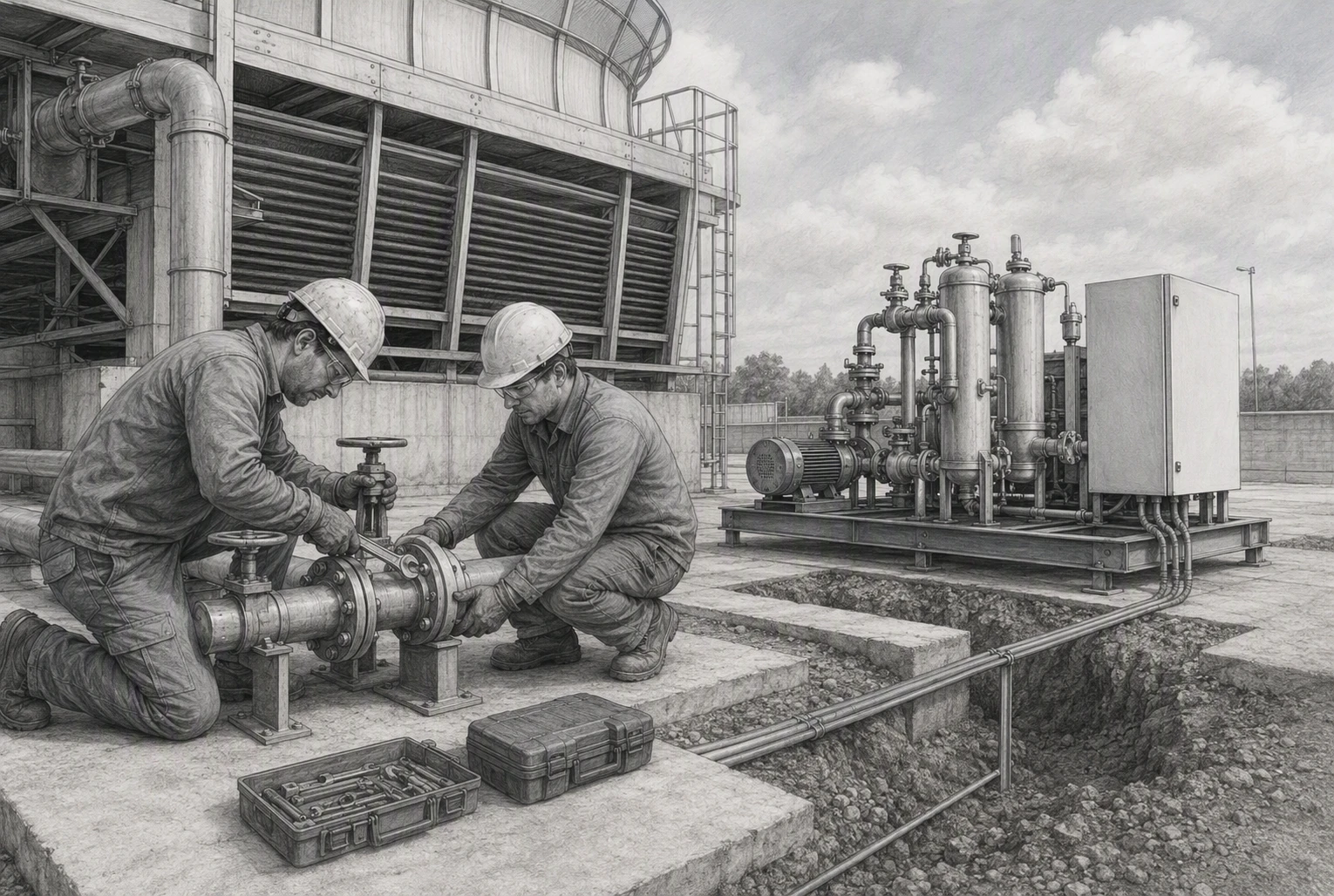
Separate Site Work from the Skid Price
A skid quote is not the project total. Ask for site work as its own line item:
- Piping, isolation valves, drains, and electrical feeds
- Concrete pad, crane access, and controls tie-in
- Shutdown labor, permits, and disposal of removed equipment
The Department of Energy notes that filter location and sizing depend on each tower’s design and water quality. That is why Hoffman Soft Water assesses the site before pricing installation.
Confirm Startup and Performance Testing
Include commissioning in writing. The scope should cover:
- Flow and pressure checks
- Backwash and alarm tests
- Baseline water readings and operator training
Tip: Do not accept "startup included" without a test list and sign-off record.
| Commissioning item | Why it matters |
|---|---|
| Flow verification | Confirms the filter treats the planned side stream |
| Controls test | Prevents missed backwash cycles or alarms |
Also Read: Blog & Insights | Hoffman Soft Water
What Hoffman Soft Water Pricing Usually Depends On
Information Hoffman Needs to Build a Quote
Hoffman Soft Water prices each system from site data, not a generic package. Share:
- Tower recirculation rate and side-stream flow
- Water test results, solids load, and hardness
- Space, power, drain, and pipe access
- Required uptime and control needs
The DOE notes that tower design, environment, and water quality change filtration needs.
Tip: Send recent water reports and tower drawings first. It speeds up a usable quote.
Compare Service Coverage, Not Just the Purchase Price
Ask what the monthly scope covers.
| Quote item | Confirm |
|---|---|
| Service visits | Frequency and water testing |
| Parts | Filters, media, and wear items |
| Response | Emergency callout terms |
A lower equipment price can cost more if service, monitoring, or critical parts sit outside the agreement.
Also Read: About Doug Hoffman | Hoffman Soft Water
How to Compare Cooling Tower Filtration Proposals
Ask These Questions Before Approving the Project
Do not compare only the bottom-line price. Ask each bidder:
- What flow rate, micron rating, and water test support the filter size?
- Does the quote include pumps, controls, piping, electrical work, startup, and training?
- What labor, media, parts, backwash water, and service visits cost each year?
- Which risks does filtration address, and which still need chemical treatment?
| Proposal item | What to verify |
|---|---|
| Scope | Clear inclusions and exclusions |
| Performance | Target solids removal and pressure drop |
| Service | Response time and annual fee |
The DOE notes that side-stream filtration removes suspended solids, not dissolved minerals.
Warning: Reject a proposal that promises to solve scale, corrosion, and biological growth without water chemistry data.
Get a site-specific cooling tower filtration quote from Hoffman Soft Water and control equipment, installation, and service costs before problems grow.
Frequently Asked Questions
Q1: How much does commercial cooling tower filtration cost?
Costs vary by flow rate, debris load, controls, and piping access. Budget for equipment, installation, and service separately. A site review gives the most reliable total.
Q2: What drives installation costs?
Long pipe runs, shutdown needs, electrical work, crane access, and tight mechanical rooms raise labor costs.
Q3: Are service contracts worth it?
Yes, if staff lack time for inspections. Regular service helps prevent clogged strainers, pump wear, and poor tower heat transfer.
Conclusion
Compare equipment, installation, and service as separate costs. Size filtration to water quality and solids load. DOE guidance confirms site conditions drive the right system and long-term value.