 Hoffman Soft Water
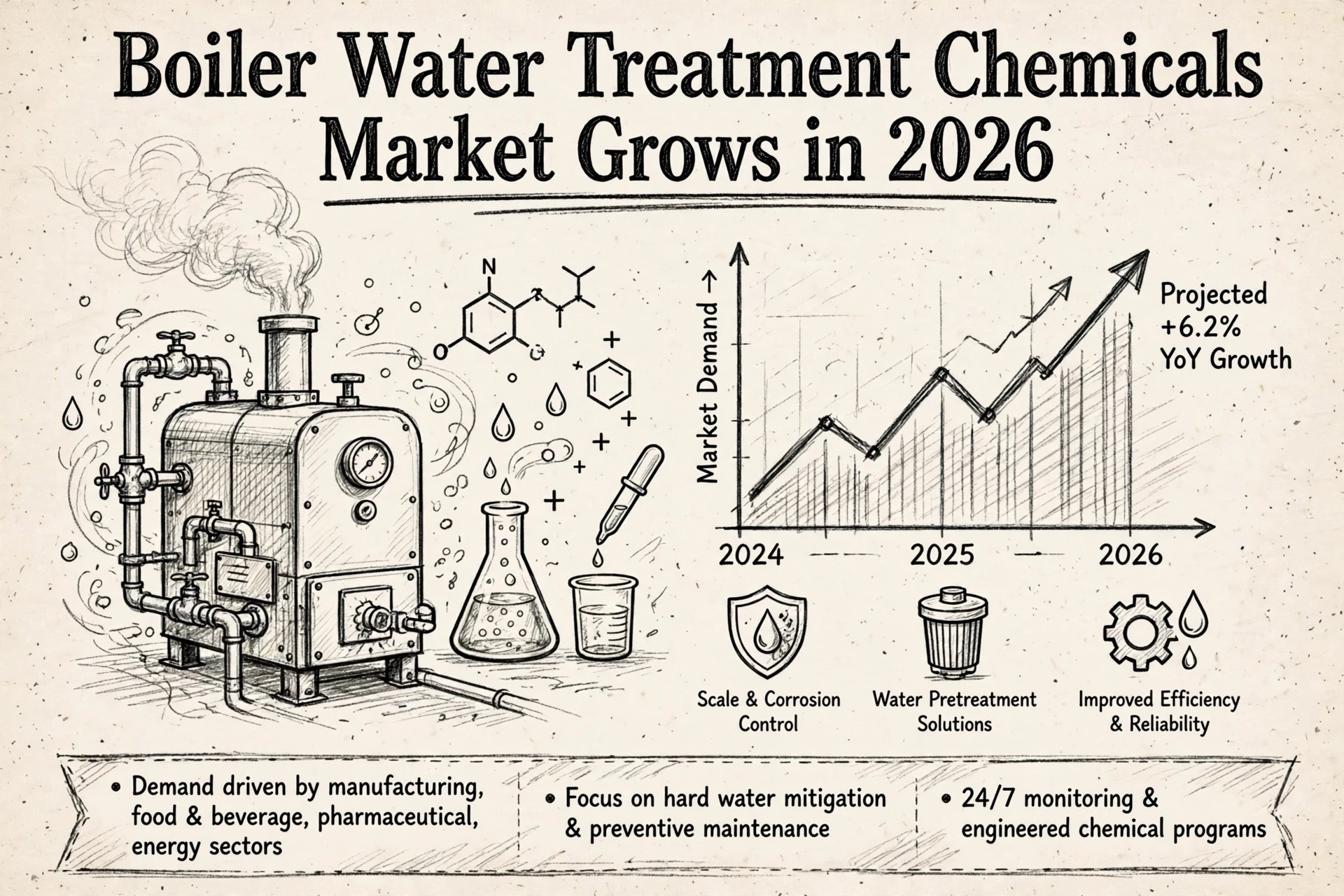
Quick Summary: Boiler treatment chemical spending is projected to grow from about $5.23 billion in 2026 to $8.80 billion by 2034, driven by rising steam demand, stricter discharge rules, and hard water. Ohio facilities should not respond by buying more chemicals alone, because feedwater at 15 to 25 grains per gallon continues to cause scale even with treatment. Softening or filtering the water first reduces scale, lowers chemical needs, and improves boiler efficiency.
The boiler treatment chemical market is set to grow from about $5.23 billion in 2026 to roughly $8.80 billion by 2034, a CAGR near 6.7 percent, with the US forecast at 4.4 percent. For Ohio plants, that growth matters less as news than as a warning: cheap chemical-only programs are being quietly sold while 15 to 25 gpg hard water keeps scaling boilers. This piece explains what is driving the boiler treatment chemical market and how proper pretreatment protects the equipment you own.
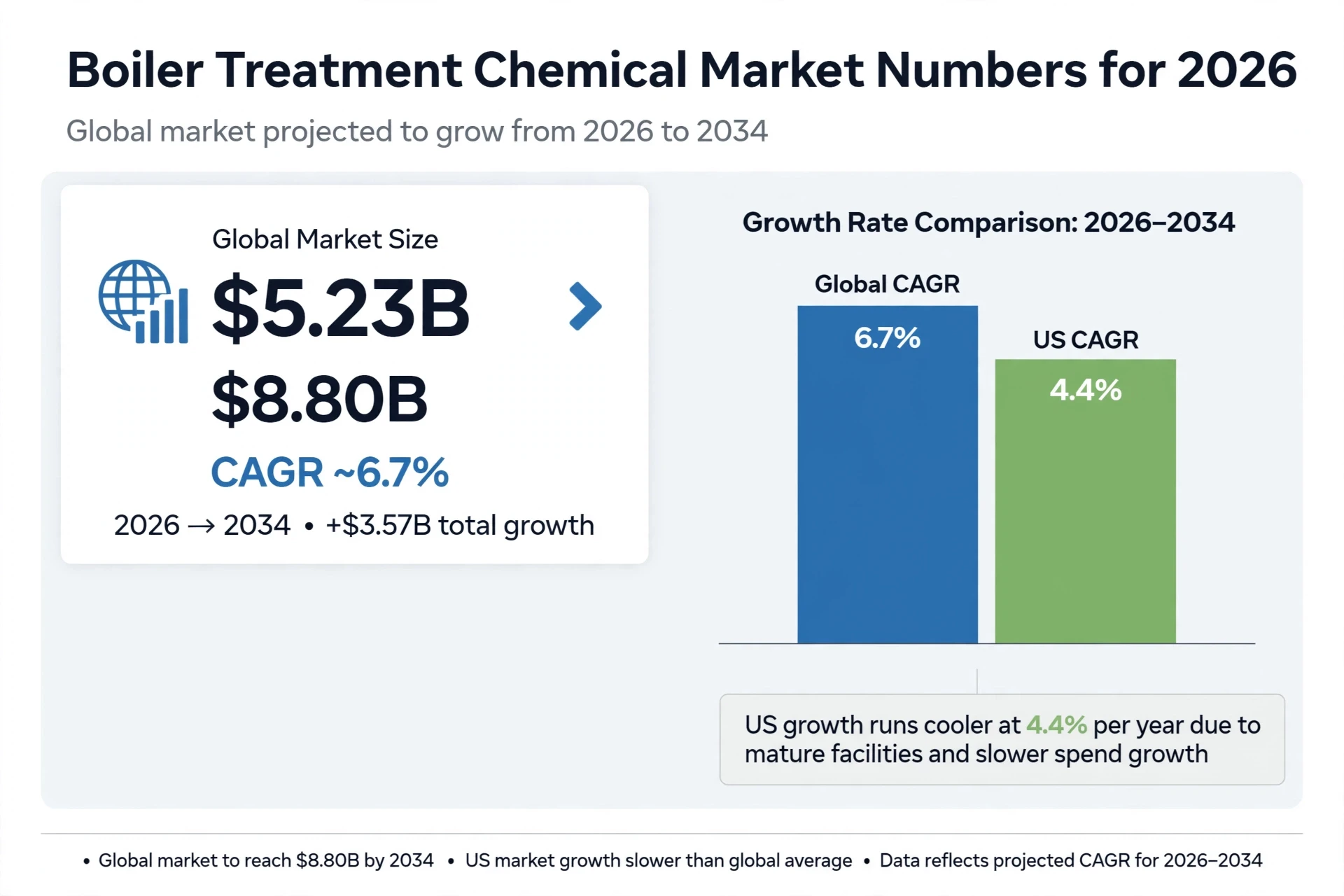
Boiler Treatment Chemical Market Numbers for 2026
The global boiler treatment chemical market will reach about $5.23 billion in 2026 and climb to roughly $8.80 billion by 2034, a CAGR near 6.7 percent. The US forecast runs cooler, at about 4.4 percent per year, because mature facilities already treat water and add spend slowly.
Global Forecast Versus the US Picture
Global reports show faster growth than US ones. Worldwide spending rises with new plants across Asia and heavy industry, so published CAGRs land between about 6 and 10 percent. American figures sit lower, near 4.4 percent, since most existing boiler systems already run a treatment program and grow mainly through price and demand.
Why Estimates Vary So Widely
Analysts draw the market's edges differently. Some count only internal conditioning chemicals; others include oxygen scavengers, pretreatment, and service. That is why totals for the same year can differ by billions. Treat any figure as a trend signal, not a budget benchmark for your plant.
Featured-snippet answers are already covered above.
What Is Driving Growth in Boiler Water Treatment Chemicals
Three forces push the boiler water treatment chemicals market upward: rising power and steam demand, industrial expansion with tighter water rules, and hard feedwater that destroys untreated boilers. Here is how each one works.
- Power and steam demand keeps climbing as data centers, hospitals and plants add load.
- New factories and stricter discharge rules force more facilities into formal treatment programs.
- Hard water accelerates scale, so operators buy more chemicals and pretreatment to survive it.
Power and Steam Demand Is the Big Engine
Steam still runs much of the world's industry, and demand for reliable steam keeps growing. New combined-cycle power plants, expanded data center capacity, and manufacturing builds across Asia all need boilers that run clean for decades. Every new boiler added is a customer for oxygen scavengers, scale inhibitors and condensate treatment, which is why analysts project steady growth through 2034.
Industrial Expansion and Regulatory Pressure
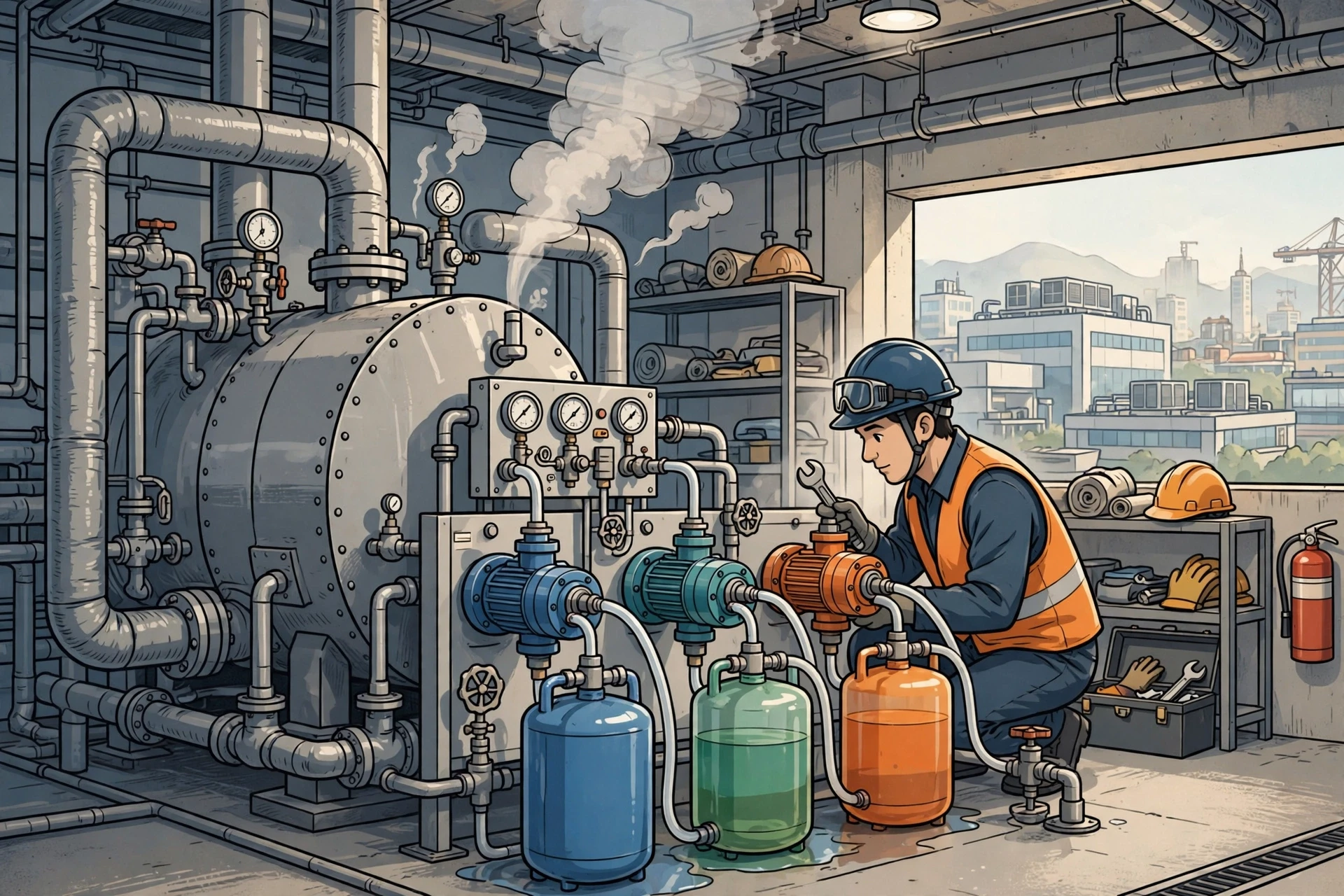
New plants mean new treatment contracts. At the same time, regulators keep tightening limits on blowdown discharge, boiler carryover and water reuse, especially in food and pharmaceutical plants where water quality touches the product. Facilities that once relied on occasional chemical dumps now need documented, consistent programs, and that compliance spending shows up directly in market forecasts.
Hard Water Does Not Take Days Off
In Ohio, feedwater often runs 15 to 25 grains per gallon, and every degree of heat concentrates that hardness into scale on heat transfer surfaces. Scale wastes fuel and drives up chemical demand, because softening alone cannot control oxygen, pH or condensate corrosion. External pretreatment paired with internal conditioning is the full answer, and softening plus chemical programs work best when hardness is measured first, not guessed.
What the Growth Means for Ohio Facility Operators
More Chemical Is Not the Same as More Protection
Should you add more boiler chemicals or treat hardness first? Treat hardness first. With Ohio feedwater at 15 to 25 grains per gallon, chemicals alone fight scale they cannot win against, so dollars vanish into scale while transfers stay fouled. A softener or filter ahead of the boiler lowers the chemical load you actually need.
If your plant is weighing options, pretreatment before chemical dosing is often the cheaper fix.
Questions to Ask Before You Sign a Supply Agreement
Ask any vendor how many pounds of chemical your system needs if hardness were cut in half. If the quote never changes, you are buying product, not results. Good questions to press:
- Does pricing drop when water quality improves?
- What scale readings trigger a program review?
- Who inspects, and how often?
How Boiler Water Treatment Got Here
Internal Versus External Conditioning
Boiler water treatment has always split into two jobs. External conditioning removes hardness before water enters the boiler, through softening and filtration. Internal conditioning adds chemicals inside the boiler to control what slipped through: scale, oxygen, and carryover. Older plants leaned on chemicals alone, but that approach struggles where Ohio feedwater runs 15 to 25 grains per gallon. Modern practice pairs both, and well-designed industrial water softening systems carry most of the load.
Ohio's 15 to 25 gpg water needs more than chemicals. Talk to Hoffman Soft Water about a pretreatment plan that stops scale at the source.
Frequently Asked Questions
Q1: What is driving growth in the boiler water treatment chemicals market?
Rising steam demand from data centers and industry, stricter discharge rules, and hard feedwater that scales boilers. Growth runs near 6.7 percent globally and 4.4 percent in the US through 2034.
Q2: Should Ohio plants add more chemicals or soften water first?
Soften first. With feedwater at 15 to 25 grains per gallon, pretreatment cuts the chemical load you actually need.
Q3: What should I ask before signing a chemical supply agreement?
Ask whether pricing drops if hardness improves, what scale readings trigger a review, and who inspects the system.
What Ohio Operators Should Do With This News
Market growth through 2034 signals steady chemical demand, but your costs depend on water quality. Soften Ohio's 15 to 25 gpg feedwater first, then treat what's left, and hold vendors to results.